Plectasin, a type of defensin that was the first to be isolated from a fungus. It shows a lot of promise when it comes to developing antibiotics against antimicrobial resistance. Defensins are cationic peptides having an antimicrobial process and is an essential component of innate immunity.
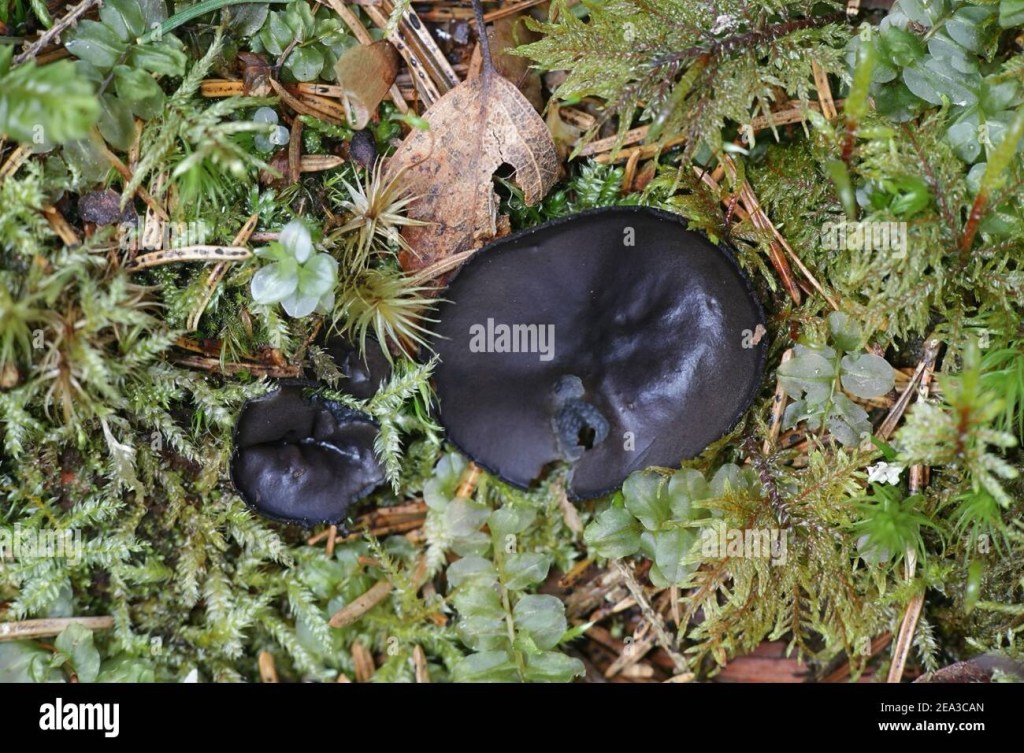
The fungus is Pseudoplectania nigrella. The research team decided to map out how the Velcro structure is formed. Biologist Markus Weingarth and biochemist Eefjan Breukink at Utrecht University were the leaders of the research group. They aimed to delve further into the inner mechanisms of plectasin. Their findings reveal that its mechanism is much more intriguing and intricate than just a key fitting into a lock, referring to its binding ability to Lipid II, which is important for bacterial cell wall synthesis. It uses a velcro-like mechanism to kill bacterial cells.
Weingarth compares its structure to a velcro, wherein, plectasin forms microscopic hooks that attach to bacterial ‘loops’, if one of the bacteria breaks free from its hooks, it is still trapped by the entire structure. They also realised that calcium ions enhances its antibacterial abilities. The ions coordinate within the specific regions of plectasin, inducing structural changes that lead to improvement of the antibacterial effectiveness. The fact that the ions play a crucial role was first discovered by PhD students, Shehrazade Miranda Jekhmane and Maik Derks, who are the co-authors of the study. They realised that plectasin had a peculiar colour, giving hints about the presence of ions. Markus Weingarth also states that these findings could open new doors when developing superior antibiotics.
Their discovery has already been published in the journal Nature Microbiology on 23rd May, 2024.
This fundamentally changes the way we see how the antibiotic plectasin works!
Nivea Vaz
Manipal College of Medical Sciences, Pokhara
 Scriveners Online©