With funding now no longer being a problem for research, researchers can now focus on developing a synthetic ‘plug’ that has the potential to heal the joint area and serve as another alternative for osteochondral defect treatments. Researchers aim at improving the inner functioning of these CC-ROPs for real-life use.
An osteochondral defect, medically abbreviated as OCDs, damages the regions of articular cartilage and a piece of bone. These are from arthritis or acute traumatic injury. Acute traumatic injury can lead to arthritis, chronic pain and eventually loss of joint functions and mobility. Traditionally speaking, the knee OCDs can be resolved through joint immobilisation and pain medications. This is not applicable if the surgery is severe, so much so, that surgery of total knee replacement would be deemed an option.
A grant was received from the National Institute of Arthritis and Musculoskeletal and Skin Disease which is a section of the National Institutes of Health (NIH), to invent their cartilage-capped regenerative osteochondral plugs (CC-ROPs), which is essentially a synthetic device for total knee replacement surgery. Melissa Grunian, a professor in the University’s Department of Biomedical Engineering, informs that the chronic knee pain and disability are caused by cartilage loss and OCDs that stems from the arthritis including osteo-arthritis and post-traumatic arthritis, that causes pain to the individual and limits their comfort and mobility. She adds that the grant will increase the impacts that CC-ROPs have by collecting data on the efficacy.
The procedure of autografting is done before total knee replecement surgery. Harvesting of the cylindrical plugs is done from the non-damaged parts of the patients’ knees and then it is implanted in a hole or with the holes drilled in the affected area. As time progresses, the implants enable the bone and cartilage to grow into the damaged area. But there are limitations; especially when the patient is older or that the OCD is particularly large. Here, the only choice that the patient could possibly have would be knee replacement.
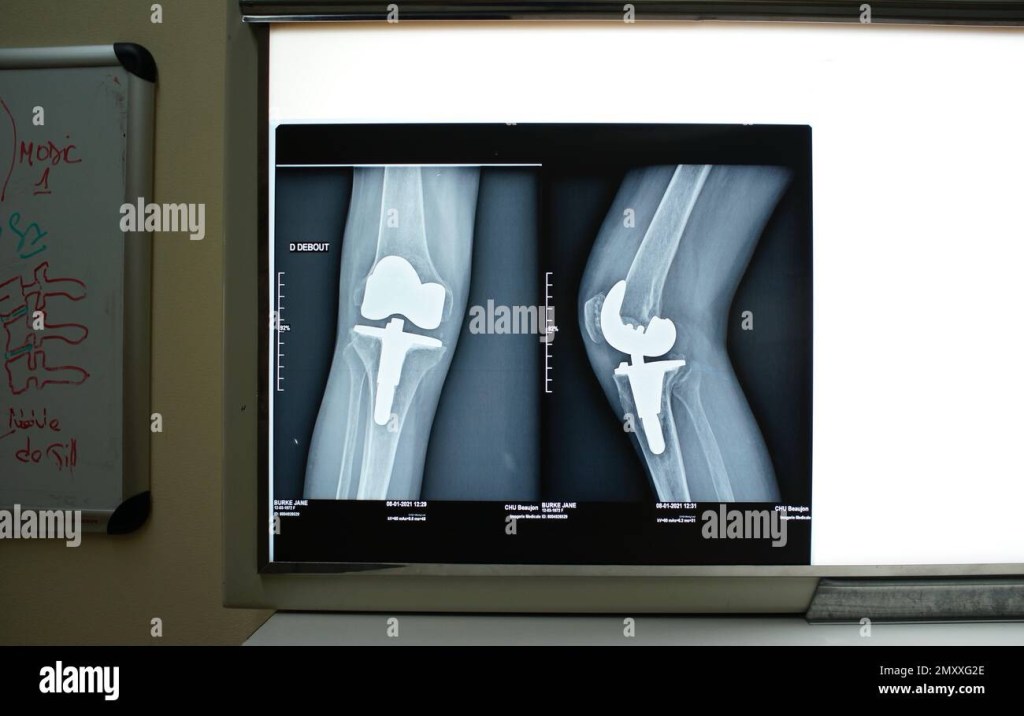
In total replacement knee surgery, the surgeon replaces the surfaces of the bones, by removing the damaged cartilage and a small part of the underlying bone, replacing it with metal components in order to recreate the joint surface. A plastic spacer is placed in between the metal components for a smooth gliding functionality. Around 790,000 total knee replacements are performed each year in the US. CC-ROPs are an ultra-strong hydrogel cap that can duplicate the role of a natural cartilage in the body and form a porous polymer scaffold base. Similar to an autograft for knee replacement surgery, it follows the mechanism of being implanted into a drilled hole, the porous base of the CC-ROP induces the growth of bony tissue, and the cap gives the much needed cartilage grip for joint function. However, it is important to note that patient age doesn’t hinder its capabilities and it doesn’t depend on loading of cells or growth factors for the much needed healing!
Nivea Vaz
Manipal College of Medical Sciences, Pokhara
 Scriveners Online©