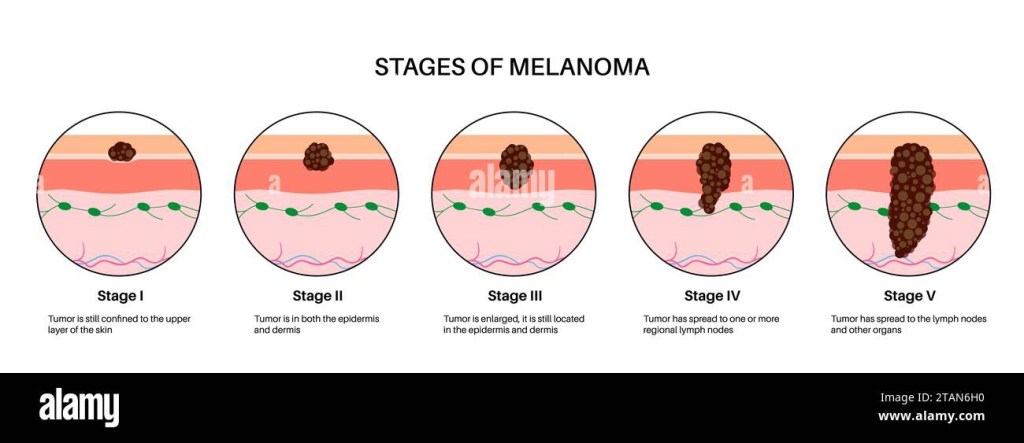
Melanoma is a serious and aggressive forms of cancer. If diagnosed early it can be surgically removed, metastasis occurrence makes melanoma difficult to treat putting a restriction on the patient’s recovery.
International research led by scientists at the University of Liège have come across a novel therapy that could solve the problem of melanoma resistant therapies. The VARS enzyme inhibition could stop this resistance against therapies by resensitisation of the tumours. Their work has been published in the Nature Cell Biology. Yearly in Belgium, around 3,000 people are diagnosed to have melanoma.
Patients suffering from melanoma have a mutation in the BRAF gene which is responsible for the production of B-Raf; a protein that promotes the development of cancer. A researcher at the University of Liège, Pierre Close says, “This mutation is found in over 50% of patients. While targeted therapies are highly effective in shrinking tumours, almost all the patients who use them will develop acquired or secondary resistance to these therapies, which limits the long-term therapeutic response.” So, it is crucial to understand the mechanisms of the resistance to these targeted therapies to develop new therapeutic strategies for melanoma patients.
The Cancer Signalling Laboratory (ULiège) research team have made an interesting discovery. Najla El Hachem, a Researcher at the Belgian Foundation Against Cancer, explains, “Thanks to the analysis of the data collected, we were able to observe that the adaptation of melanoma cells to targeted therapy was associated with a reprogramming of protein synthesis. We combined a number of protein and RNA sequencing approaches and discovered that therapy-resistant cells developed a dependence on certain essential players in protein synthesis, regulating transfer RNAs (tRNAs).” The enzyme VARZ (Valyl tRNA synthetase), regulates aminoacylation-the process of an amino acid attaching to a tRNA and promotes the resistance in melanoma cells. When the VARS enzyme is inhibited, prevention of the therapeutic resistance and resensitisation to the targeted therapies takes place.
Pierre Close adds, “The promising results of this research pave the way for new treatment combinations for malignant melanoma. This discovery shows the regulation of transfer RNAs plays an important role in therapeutic resistance.” This could potentially enhance the efficacy of the targeted therapies that was once lost and reduce the development of resistance to the treatments being made. Results could develop novel targeted therapies offering newfound hope to patients suffering from persistent melanoma. Researchers plan on continued efforts to transform the discovery that has been made into a therapeutic treatment option.
 Scriveners Online©