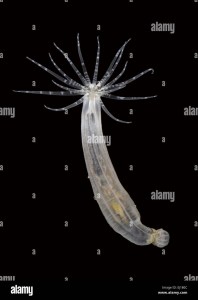
The starlet-shaped sea anemone Nematostella vectensis give us clues as to how to it can regenerate its stem cells giving it the chance to be ageing-free. With molecular genetic methods in-hand, the University of Vienna’s developmental biology researchers were able to identify the cells of this organism. This was through the new ‘Single Cell Genomics’ method, they finally pinpointed that stem cells are actively present and play a part in this organism’s biological processes.
Ulrich Technau led the team in this field of research. In humans sperm and egg cells is the equivalent of this multipotent stem cells property. The results are currently being published in Science Advances and researchers think that this can hold the key to giving us more information about the human ageing process. The team identified it (cells) based on its specific transcriptome profiles and were able to determine which stem cells have been developed by them. They have not been discovered till now because of how small they are. These potential stem cells express the genes nanos and piwi which are crucial in evolution and are present in other animals for the production of gametes. These genes are integral for the development of germ cells in humans.
The First Author of study, who also works at the University of Vienna, Andreas Denner explains, “By combining single-cell gene expression analyses and transgenesis, we have now been able to identify a large population of cells in the sea anemone that form differentiated cells such as nerve cells and glandular cells and are, therefore, candidates for multipotent stem cells.”By successfully mutating the nanos2 gene using the CRISPR gene scissors, they were able to prove the fact that this specific gene was responsible for the formation of germ cells in sea anemones.
 Scriveners Online©