How often is it that we as doctors are truly able to figure out what our patient has? There are times when the inevitable happens and you rely on your colleagues to aid you in a quest to rationally explain a patient’s symptoms and pin-point the disease. Your textbook isn’t always in your hands. Some days are good and some days are bad if not much worse.
Detectives and doctors are no different; there’s a critical need to understand, solve and explain. Cases for the doctors; mysteries for the detectives. Doctors miss by not seeing and rather focusing on knowing. If you like to be a detective in the field of medicine, working as an internist is the job for you! Illness scripts provide informational equipment on the disease, that can come in the form of a pocket card size or be a one chapter long book-page size. It’s usually used for rare diseases and rules out other possible diseases quickly based on key distinguishing features. In certain complicated cases, progression of the disease and a little bit of luck are needed in solving the mystery. Dr Lisa Sanders runs her column on the ‘The New York Times Magazine’ she delves in deeper into medical cases that require more than one brain to diagnose, intervene and explore treatment options. After all, two or more brains are better than one when it comes to the most complicated and rare cases that have a chronically ill patient. Occam’s razor is a principle that says one must prefer the simpler explanation of the two when both are competing over the same phenomenon.
She served as a consulting director on the popular TV show House M.D. that reflected on the lives of physicians, their relationships and the drama that follows along with the patients’ diagnoses. A lot of the cases presented on the TV show were inspired by her magazine column.

‘The barracuda wasn’t that great!’
A young man was admitted to the hospital emergency ward on a stretcher. The night wasn’t supposed to end this way, he was out partying it like no other in the Bahamas to celebrate his birthday. They snorkelled and swam all day, afterwards they had headed out to a restaurant which was all the rage. He devoured the barracuda while his girlfriend went in for the red snapper. What followed him was an intense pain that was knifing at his gut. He decided to go to the bathroom, the abdominal cramps and diarrhoea was not going to stop. He gave up and secluded himself from the party, his girlfriend and the night. Dr Kurtland Ma viewed his case. The 28 year old male patient presented with pain and nausea. The medications had slowed down the diarrhoea and had stopped the vomiting.
The doctor suspects the culprit to be a case of bacterial food poisoning like E. coli, Salmonella, Staph aureus or maybe even Vibrio parahemolyticus-seafood poisoning linked to sushi-that could possibly be it, he thought to himself but the food was cooked well. His girlfriend had made it clear. Dehydration had to be maintained, the patient improved but he had to be given antibiotics and another medication for nausea and was sent back to the hotel, after two days of sleep he had recovered enough. His hands, however spoke of a whole other tale, they were clumsy and his feet still felt numb. There’s a tingling sensation to both the extremes. The drink his girlfriend brought out, a smoothie was spat out for it felt hot rather than cold. The patient was fed up of everything that had happened to him over the course of his stay at the hospital. His girlfriend flew back to New York while he stayed at the hospital.
Dr Ma was focusing on his notes when the patient narrated of his experiences of his stay in the Bahamas and all. But once he heard speak of his hot-cold sensations made him arrive at his ‘eureka moment.’ He exclaimed out of sheer excitement, ‘I know what this is! He doesn’t need a head CT. He has Ciguatera poisoning!’
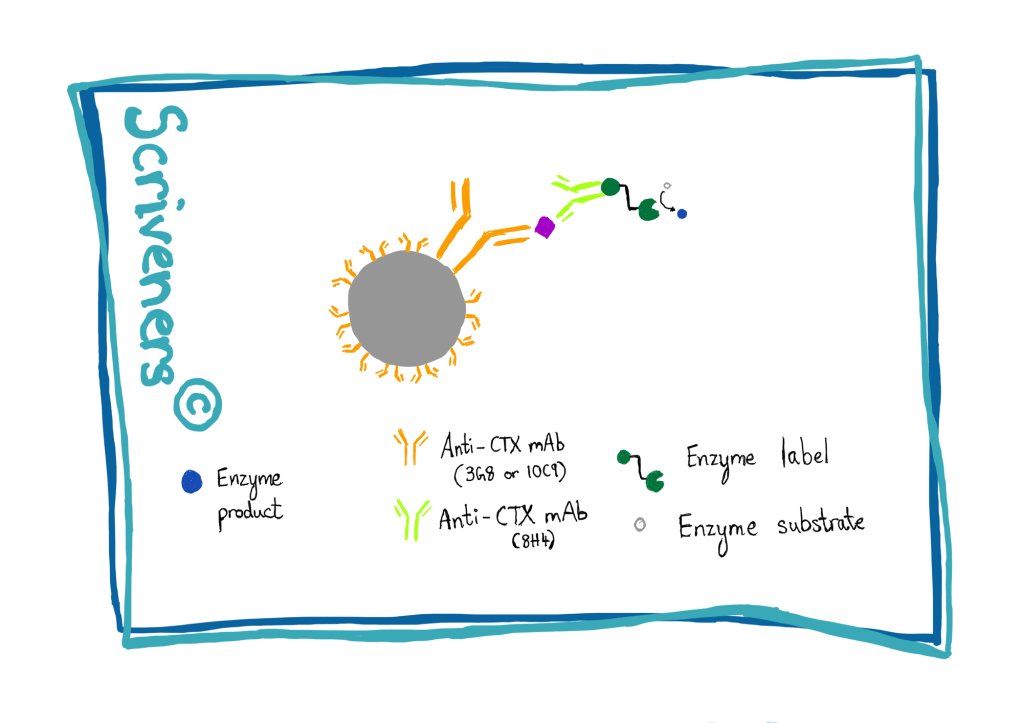
Ciguatera poisoning occurs due to an intoxication following the consumption of fish contaminated with ciguatoxins (CTXs). It works by activating the sodium channels increasing the sodium permeability which in turn depolarises the nerve cells. The clinical presentation varies from individual to individual and geographical occurrence. Gastrointestinal symptoms can precede or accompany the neurological symptoms, this can appear from 2 to 48 hours after eating the fish. Symptoms include nausea, vomiting, diarrhoea, abdominal cramps, parathesia of the lips, tongue and extremities, cold allodynia (as presented here!), a metallic taste in the mouth, arthralgia, myalgia, pruritus w/o urticaria/erythema, muscle weakness, blurred vision, painful intercourse, hypotension and bradycardia.
After over six months, returning from the Caribbean, the patient never made a complete recovery. He still had the occasional numbness and weakness.

Credit: All clinical cases from Diagnosis: Solving the Most Baffling Medical Mysteries-Lisa Sanders. (Cases go in no particular order!)
If anyone is interested to know more about illness scripts…
Sources and Illness Scripts link: Exercises in Clinical Reasoninghttps://clinicalreasoning.org › …Illness Scripts, https://clinicalproblemsolving.com/illness-scripts/?amp
Dr Lisa’s website: https://www.nytimes.com/by/lisa-sanders-md
Sources: https://www.ecdc.europa.eu/en/infectious-disease-topics/ciguatera-fish-poisoning/factsheet-health-professionals-ciguatera-fish, https://www.mdpi.com/2304-8158/12/10/2043, https://books.google.com.np/books/about/Immunosensors.html?id=_YmsDwAAQBAJ&source=kp_book_description&redir_esc=y, https://www.newscientist.com/definition/occams-razor/#:~:text=Occam’s%20razor%20is%20a%20principle,should%20prefer%20the%20simpler%20one.
 Scriveners Online©