“At the turn of the millennium, allergy means money.”
-Mark Jackson, English Doctor and Global Health History Researcher, Director of Wellcome Centre and Co-Director of WHO Collaborating Centre on Culture and Health.
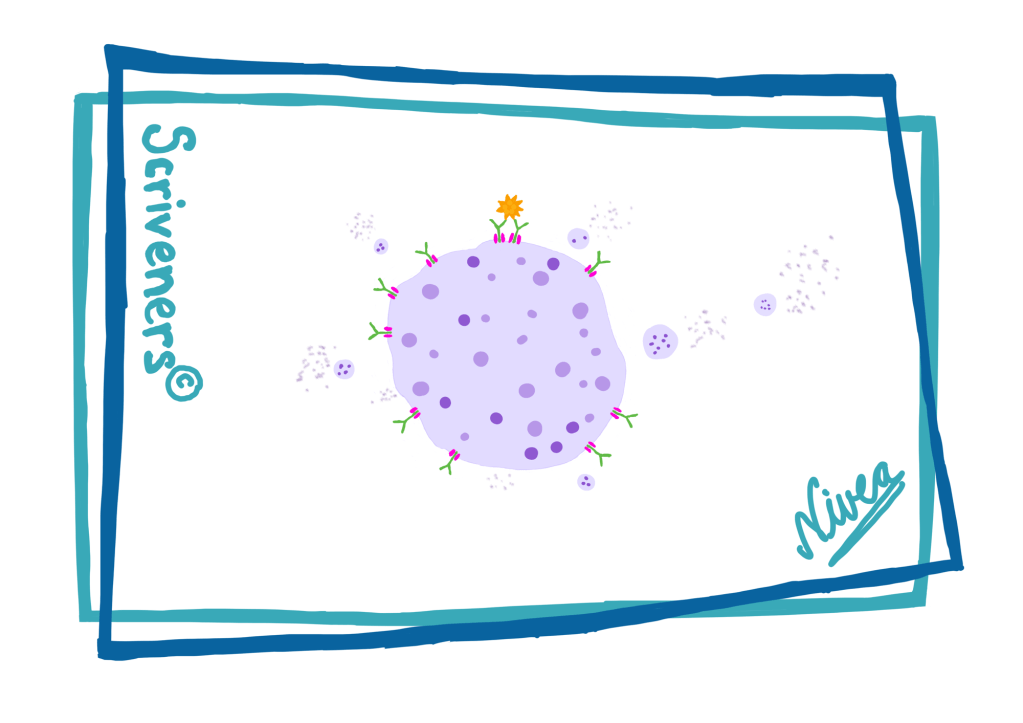
Allergy and hypersensitivity are the two complex processes to understand and to explain even in the eyes of a medical anthropologist. A lot of patient’s diagnoses’ are difficult to treat as they tend to have an atypical pattern. There are two types of T Helper cells: T helper cells type 1 and T helper cells type 2. The T helper cells type 2 signal B cells to produce IgE antibodies. Most allergic responses involve activation of IgE. A genetic predisposition to IgE sensitisation to allergens in the environment is called atopy. An allergy can occur without an IgE response whereas an atopic reaction cannot occur without IgE. The link between IgE and atopy is what led to newer discoveries in devising a treatment for allergic responses.
Even today, there’s still a lot we do not know about allergy. The immunologic mechanisms behind many allergies is still not understood.
The Hygiene Hypothesis is still used now in an attempt to explain the mystery surrounding the most rare allergies. The changes in our environments especially when it comes to the lack of exposure to a wide variety of microorganisms can trigger an overactive immune system. There was a time when it was thought that ‘allergy’ was associated to be with the ‘Rich, white, and well.’ But the reality is far from it, the wealthy were affected by the hypersensitive reactions as they were not exposed to the everyday microbes. Only Europeans and Americans of European descent were categorised as that white group who were capable of experiencing allergic responses. By the late 1800s, it was common for wealthier patients to travel to “health resorts” that would be located in the mountains/deserts, to avoid the pollen and city air. ‘The farmhouse effect’ is another theory that supports this. Farmhouses and the fertile soil come with all kinds of bacteria, viruses, and parasites and a diverse microbiota that can train our microbiota. Its also a fact that antibiotics tend to kill of the gut bacteria not just the harmful ones that cause strep throat and sinus infections. By the the 1930s, a patient would be recommended to undergo treatment with an ‘elimination diet’. Alpha-gal allergy is a new, 21st century allergy.
Medical treatments in this day and age are expensive for a life-time of allergies. Immunotherapy is a process in which a small amount of allergen is administered to a patient over time in order to build up the immune tolerance. The three basic types of immunotherapy are: subcutaneous (SCIT), sublingual (SLIT), and oral (OIT). SCIT and SLIT are used for treating the environmental allergies and OIT is used for treating the food allergies. The gold standard for the treatment of most of the allergies has been SCIT. For all the three types of treatment the patient undergoes immunotherapy in a clinical setting. In the past decades, statistics reveal that even though westernised nations continue to remain to have higher rates of allergies, the rates seem to climb quickly in the other areas.
The EpiPen Narrative
Mylan Pharmaceuticals acquired the manufacturing rights for the EpiPen in 2007. Every few years, Mylan Pharmaceuticals would increase the cost by a couple of hundred dollars and no one would complained until the final price rise in 2016. In the summer of 2018 there were a supply shortage and throughout this the EpiPen was continued selling over $600 for a standard two pack. In August of 2017, Mylan paid $465 million in a settlement, after the Justice Department filed a claim against it for overcharging the federal government for EpiPen under its Medicaid program and Sanofi SA filed an anti-competition complaint as well against the pharmaceutical company. In 2019, Mylan agreed to pay an additional $30 million in a settlement with the US Securities and Exchange Commission (SEC). To aid for a drug access in emergency medicine, the FDA approved the 1st generic version of the EpiPen and the EpiPen Jr in August 2018.
An EpiPen is not available in India, it is too expensive. Instead, patients depend on vials of epinephrine and run to the doctor when they have a food allergy attack. This reflects on the statistics wherein the death rate from anaphylaxis in India is much higher than it is in the United States. Patients have to wait for hours in long lines just to receive treatment for their allergies.
Source: Allergic-Theresa MacPhail
Image Idea: Alila Medical Media
 Scriveners Online©