Cat Tranquilliser, Cat Valium, Jet K, Kit Kat, Purple, Special K, Special La Coke, Super Acid, Super K, and Vitamin K are the common names of ketamine.
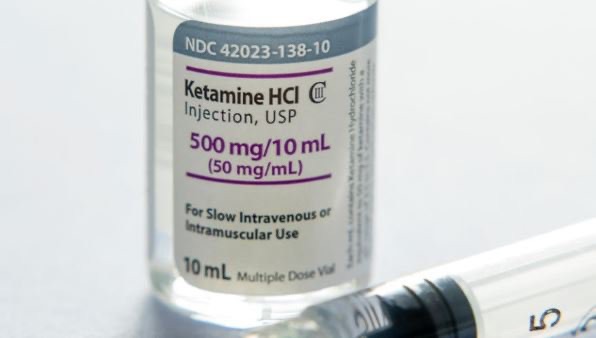
Ketamine should only be administered by, or under the direct supervision of, personnel experienced in its use, with adequate training in anaesthesia and airway management, and when resuscitation equipment is available. Ketamine is a dissociative anaesthetic that has some hallucinogenic effects. It distorts perceptions of sight and sound and makes the user feel disconnected and not in control. It is an injectable, short-acting anaesthetic for use in humans and animals. It is referred to as a “dissociative anesthetic” because it makes patients feel detached from their pain and environment. Ketamine can induce a state of sedation (feeling calm and relaxed), immobility, relief from pain, and amnesia (no memory of events while under the influence of the drug). It is abused for its ability to produce dissociative sensations and hallucinations. Ketamine has also been used to facilitate sexual assault.
Ketamine produces hallucinations. It distorts perceptions of sight and sound and makes the user feel disconnected and not in control. A “Special K” trip is touted as better than that of LSD or PCP because its hallucinatory effects are relatively short in duration, lasting approximately 30 to 60 minutes as opposed to several hours.
Slang for experiences related to Ketamine or effects of ketamine include:
- “K-land” (refers to a mellow & colourful experience)
- “K-hole” (refers to the out-of-body, near death experience)
- “Baby food” (users sink in to blissful, infantile inertia)
- “God” (users are convinced that they have met their maker).
The onset of effects is rapid and often occurs within a few minutes of taking the drug, though taking it orally results in a slightly slower onset of effects.
Hallucinogen Persisting Perception Disorder (HPPD) has been reported several weeks after ketamine is used and may include experiencing the negative side effects that occurred while taking the drug initially. Ketamine may also cause agitation, depression, cognitive difficulties, unconsciousness, and amnesia.
CONTRA-INDICATIONS
Acute porphyrias • eclampsia • head trauma • hypertension • pre-eclampsia • raised intracranial pressure • severe cardiac disease • stroke
CAUTIONS
Acute circulatory failure (shock) • cardiovascular disease • dehydration • elderly • fixed cardiac output • hallucinations • head injury • hypertension • hypovolaemia • increased cerebrospinal fluid pressure • intracranial mass lesions • nightmares • predisposition to seizures • psychotic disorders • raised intra-ocular pressure • respiratory tract infection • thyroid dysfunction.
SIDE-EFFECTS
▶ Common or very common
Anxiety • behaviour abnormal • confusion • diplopia • hallucination • muscle tone increased • nausea • nystagmus • skin reactions • sleep disorders • tonic clonic movements • vomiting
▶ Uncommon
Appetite decreased • arrhythmias • hypotension • respiratory disorders
▶ Rare or very rare
Apnoea • cystitis • cystitis haemorrhagic • delirium • dysphoria • flashback • hypersalivation
▶ Frequency not known Drug-induced liver injury
DIRECTIONS FOR ADMINISTRATION
For continuous intravenous infusion, dilute to a concentration of 1 mg/mL with Glucose 5% or Sodium Chloride 0.9%; use micro-drip infusion for maintenance of anaesthesia. For intravenous injection, dilute 100 mg/mL strength to a concentration of not more than 50 mg/mL with Glucose 5% or Sodium Chloride 0.9% or Water for Injections.
PATIENT AND CARER ADVICE
Driving and skilled tasks
Patients given sedatives and analgesics during minor outpatient procedures should be very carefully warned about the risk of driving or undertaking skilled tasks afterwards. For a short general anaesthetic the risk extends to at least 24 hours after administration. Responsible persons should be available to take patients home. The dangers of taking alcohol should also be emphasised.
Source: BNF, https://www.dea.gov/sites/default/files/2020-06/Ketamine-2020.pdf, https://adf.org.au/drug-facts/ketamine/
 Scriveners Online©