The prevalence of haemophilia diagnosis varies on a global scale in high income countries it’s as close as 100% while in low income countries it’s 12%. There is also an inequality of healthcare provided to haemophiliac patients when we consider the care indicators. In the research conducted, the results point out to a lag of about 40 years in the care provided in low income countries as opposed to the high income countries. Prophylaxis initiation showed an improvement in bleeding. World Haemophilia Day is marked on April 17. On April 17, 2025, the global bleeding disorders community will come together to celebrate World Haemophilia Day. This year’s theme is “Access for all: Women and girls bleed too”. #WeBleedToo #WHD2025 #LightItUpRed #WorldHemophiliaDay

People with mild haemophilia retain 5% to 40% of normal factor activity in their blood, and bleeding will mostly occur after major trauma or surgery. People with moderate haemophilia retain 1% to <5% of factor activity, leading to occasional spontaneous bleeding episodes or prolonged bleeding triggered by trauma or surgery. Severe haemophilia manifests clinically with spontaneous bleeding episodes into the joints or muscles with <1% of factor activity retention. Left untreated, people with severe haemophilia experience frequent bleeding episodes, arthropathy, reduced quality of life, and shortened life expectancy.
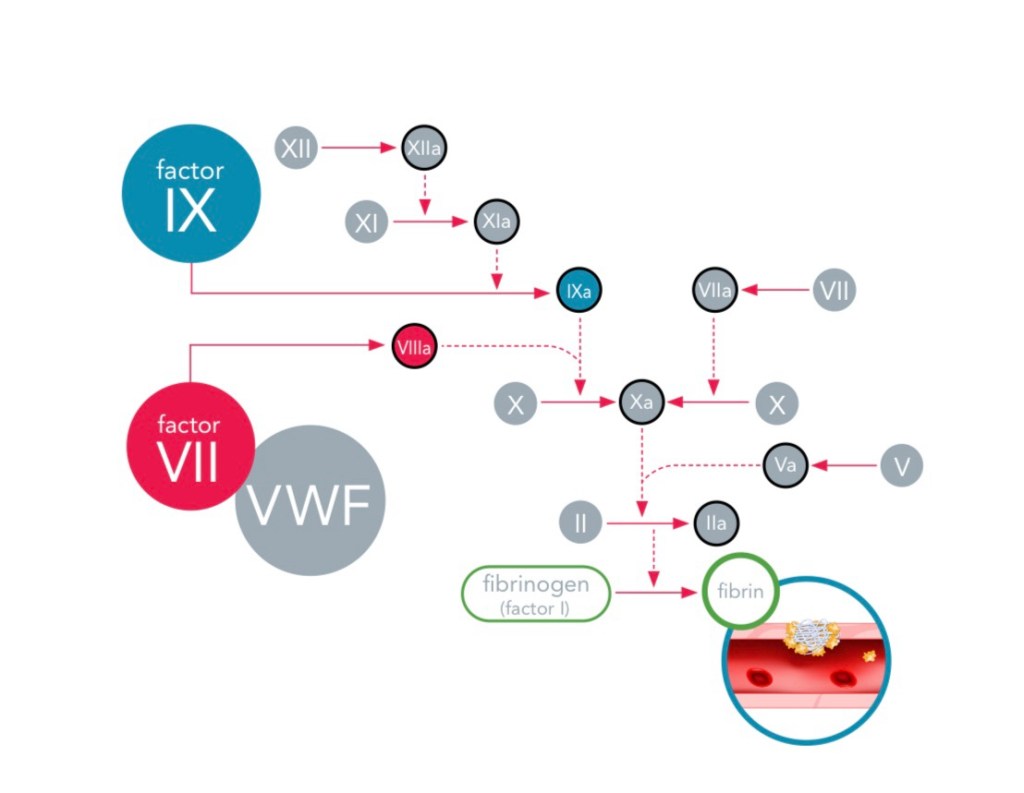
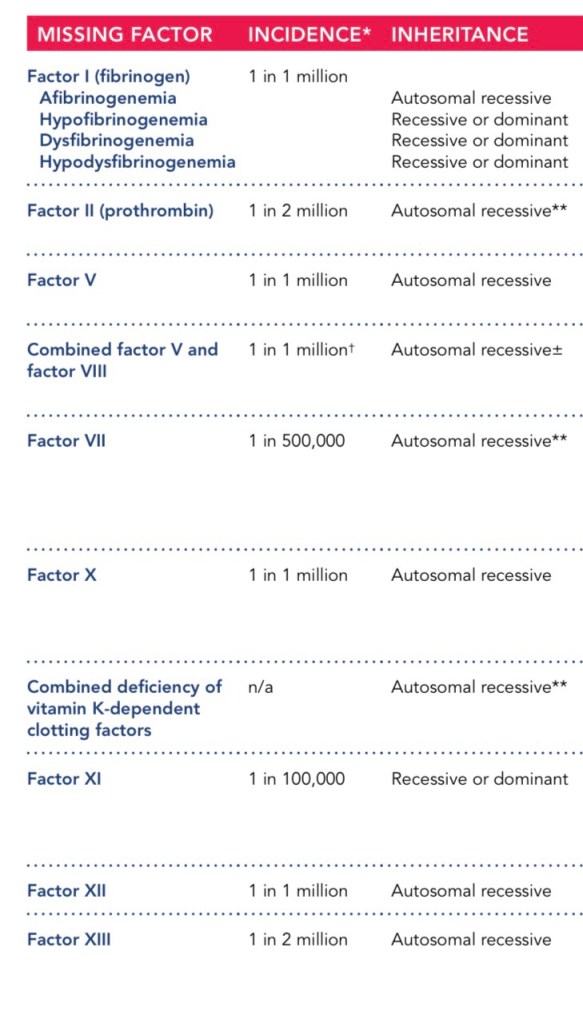
Deficiencies of factor VIII and factor IX are known as haemophilia A and B, respectively. Deficiency or defect of von Willebrand factor (VWF) is known as von Willebrand disease (VWD). Rare clotting factor deficiencies are bleeding disorders in which one or more of the other clotting factors (i.e., factors I, I, V, V+VIII, VII, X, XI, XII, or XIII) is missing or not working properly. Less is known about these disorders because they are diagnosed so rarely. All factor deficiencies are rare diseases, and rare clotting factor deficiencies are considered ultra-rare diseases, because they affect even fewer people. Humans have twenty-three pairs of chromosomes: twenty-two pairs of autosomal chromosomes (also called autosomes) and one pair of sex chromosomes (X or Y). Unlike hemophilia, which is due to mutations on the X chromosome, rare clotting factor deficiencies are due to mutations on the autosomes.
There is a lack of awareness that woman can have haemophilia too in the medical space. Haemophilia throughout history was thought to be a “man’s disease” but we now know that some women who carry the haemophilia gene have low enough levels of factors VIII or IX that they also have haemophilia, and that women with haemophilia will often experience similar symptoms and complications as men with haemophilia. There are many cases that go undiagnosed in low income countries, so there is a probability of a significant number of woman being in that group. Woman with these rare clotting factor deficiencies have an increased risk of bleeding due to menstruation and childbirth with more symptoms. They will most likely have heavy bleeding when menstruation begins and turn anaemic. There’s is also an increased risk of miscarriage in pregnant women affected by the disease.
Further reading on:
There’s an online self-administered tool that you can access;
https://letstalkperiod.ca/self-bat/
More on the test;
https://letstalkperiod.ca/about/
Additional resources:
https://wfh.org/wp-content/uploads/2025/02/WHD2025-advocacy-toolkit-EN.pdf
Sources:
https://wfh.org/world-hemophilia-day/
https://www1.wfh.org/publication/files/pdf-1337.pdf
https://pmc.ncbi.nlm.nih.gov/articles/PMC10772874/
https://hemaware.org/womens-health/6-facts-about-hemophilia-in-women
 Scriveners Online©