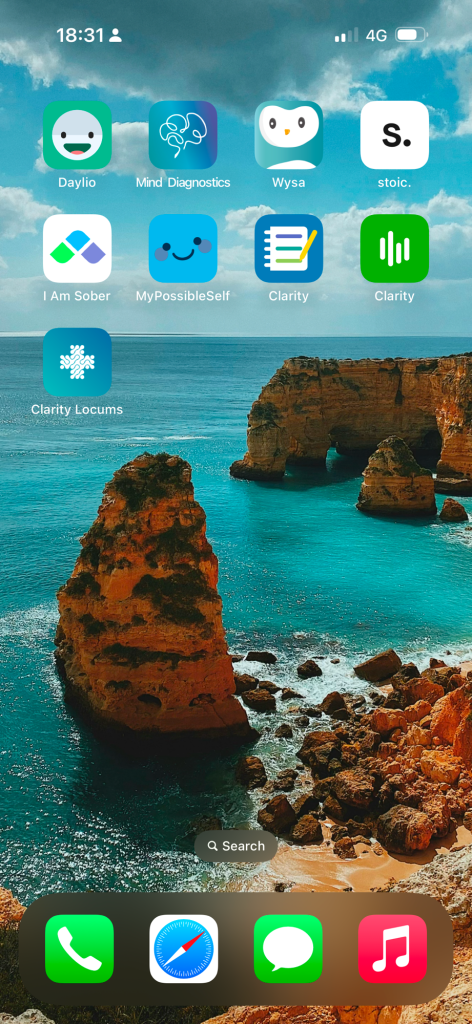
10,000 digital health technologies are available to us! App Store, Google Play and healthcare-based technologies may be used by either clinicians or patients or maybe both! These products and tools don’t necessarily meet the criteria regulating the standards in the UK.
One thing’s for sure though these healthcare-based technologies could ease the burden on the healthcare staff and ensure that the mental health interventions can be made available and possible for the patients who need them.
There are two women that want make sure that the digital tools used are safe and are shaping the future of healthcare. Holly Coole is a registered mental health nurse and is a senior manager for digital mental health at the MHRA. She is leading a digital mental health project in partnership with the National Institute for Health and Care Excellence (NICE) which is funded by Wellcome. The project is focusing on improving the outcomes for patients suffering with mental health conditions by ensuring that both the medical professionals and the general public have a safe and effective access to DMHTs.
This 3-year project is led by MHRA in partnership with NICE and is working with medical and public experts such as lived experience advisors, patients and the public, clinical experts, academia, industry experts, UK and international policy makers, regulatory bodies, evaluation agencies, and charities. Once published the results with the guidance will provide information on the regulations and evaluations of these medical digital technologies for the patients, the public, the healthcare professionals and the developers.
Holly has also experienced an eating disorder and post-natal depression. Holly is currently working to provide clarity to the public and healthcare professionals around the key considerations for the regulation and evaluation of DMHTs. Grace Gatera is a lived experience advisor to the project and had experienced the 1994 atrocities in Rwanda and she had to flee the country at a very young age. Some of the few examples supporting and suggesting that we can use healthcare technologies in a healthcare setting are:
- Assessment and triage tools for clinicians at the point of referral to a service
- Cognitive Behaviour Therapy (CBT) self-help apps and diaries
- Virtual reality software for exposure therapy
- Diaries for mood tracking over time and enabling people to monitor their results
It is advisable that the public look for references that cite proof of the clinical trials to check for its appropriateness for its use and the details of the product’s developmental process. “We would also advise that, with regards to medical devices and specifically in this context software as medical device (SaMD), that the public look for a CE or a UKCA accreditation to state that the technology complies with those particular regulatory standards. (This is provided that this particular tool meets the criteria or threshold for regulation in the UK, as they are not all regulated by us.) There are also all the other markers of a good digital product – such as cybersecurity, data protection and privacy policies that all need to be in place.”

Credits:
https://www.gov.uk/government/collections/digital-mental-health-technology
 Scriveners Online©