“If successfully commercialized, ADRIANA would offer a new pain management option that does not rely on opioids, contributing significantly to the reduction of opioid use in clinical settings,” says corresponding author Masatoshi Hagiwara, a specially-appointed professor at Kyoto University.
As Japan’s first non-opioid analgesic, ADRIANA has the potential not only to relieve severe pain for patients worldwide but could also play a meaningful role in addressing the opioid crisis — a pressing social issue in the United States — and thus contribute to international public health efforts.
Opioids can be naturally occurring (derived from the poppy plant-opium), semi-synthetic (made in a lab but similar in structure to naturally-occurring opioids), or synthetic (made in a lab and not similar in structure to naturally occurring opioids). Opioids attach to opioid receptors in the brain to reduce pain but cause additional effects like drowsiness.
Currently, the most commonly used opioids are:
- Prescription opioids: oxycodone, hydrocodone, oxymorphone, morphine, codeine, fentanyl
- Illicitly manufactured opioids: heroin and fentanyl
Illicitly manufactured fentanyl are markedly more potent than opioid medications or heroin. As small as three (3) milligrams of fentanyl can be fatal. Substances containing fentanyl are the biggest contributor to increasing numbers of overdose and death.
“We aim to evaluate the analgesic effects of ADRIANA across various types of pain and ultimately make this treatment accessible to a broader population of patients suffering from chronic pain,” says Hagiwara.
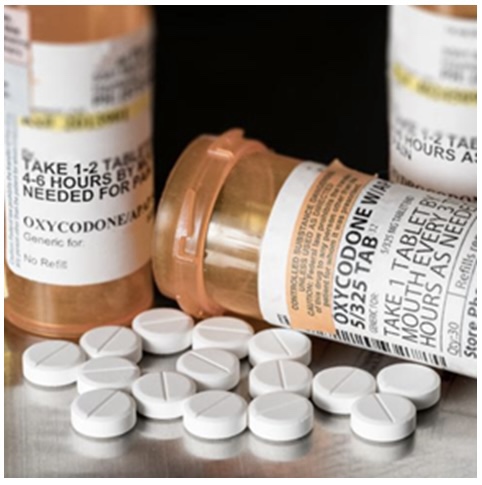
In the United States, however, the opioid OxyContin was once prescribed frequently triggering a surge in the misuse of synthetic opioids such as fentanyl. As a result, the number of deaths caused by opioid overdose surpassed 80,000 in 2023, escalating into a national public health crisis now referred to as the “opioid crisis.”

Opioids may soon have a rival, however. A team of researchers at Kyoto University has recently discovered a novel analgesic, or pain reliever, which exerts its effect through an entirely different mechanism. Clinical development of their drug ADRIANA is currently underway as part of an international collaborative effort.
As Japan’s first non-opioid analgesic, ADRIANA has the potential not only to relieve severe pain for patients worldwide but could also play a meaningful role in addressing the opioid crisis — a pressing social issue in the United States — and thus contribute to international public health efforts.
The research team was first inspired by substances that mimic noradrenaline, which is released in life-threatening situations andactivates α2A-adrenoceptors to suppress pain. However, these pose a high risk of cardiovascular instability. After observing noradrenaline levels and α2B-adrenoceptors, the team hypothesized that selectively blocking α2B-adrenoceptors could elevate noradrenaline levels, leading to activation of α2A-adrenoceptors and resulting in pain relief without causing cardiovascular instability.
To identify selective inhibitors of α2B-adrenoceptors and measure the activity of individual α2-adrenoceptor subtypes, the researchers employed a novel technology known as the TGFα shedding assay and conducted compound screening leading to their discovery of the world’s first selective α2B-adrenoceptor antagonist.
After success in administering the compound to mice and conducting non-clinical studies to assess its safety, physician-led clinical trials were conducted at Kyoto University Hospital. Both the Phase I trial in healthy volunteers and the Phase II trial in patients with postoperative pain following lung cancer surgery yielded highly promising results. Building on these outcomes, preparations are now underway for a large-scale Phase II clinical trial in the United States, in collaboration with BTB Therapeutics, Inc, a Kyoto University-originated venture company.
Sources & Image Credit:
https://www.sciencedaily.com/releases/2025/09/250901104649.htm
https://www.madisoncounty.ny.gov/2988/Opioids-Heroin-Prescription-Drugs
 Scriveners Online©