Japan has approved iPS cell treatments for Parkinson disease and severe heart failure, its pharmaceutical company Sumitomo Pharma will be manufacturing and selling Amchepry, the Parkinson’s disease treatment and the stem cells transplant needed. Japan’s Health Ministry has also approved ReHeart-heart muscle sheets that can form new blood vessels and restore heart function that was developed by Cuorips.
Treatments could be given as early as the summer of this month, making this a world’s first for medical products that are commercially made using iPS cells. A trial led by Kyoto University researchers indicated that the company’s treatment was safe and successful in improving symptoms. The study involved seven Parkinson’s patients aged between 50 and 69, with each receiving a total of either five million or 10 million cells implanted on both sides of the brain. The iPS cells from healthy donors were developed into the precursors of dopamine-producing brain cells, which are no longer present in people with Parkinson’s disease.
The study involved seven Parkinson’s patients aged between 50 and 69, with each receiving a total of either five million or 10 million cells implanted on both sides of the brain. The patients were monitored for two years and no major adverse effects were found, the study said. Four patients showed improvements in symptoms.
More on iPS
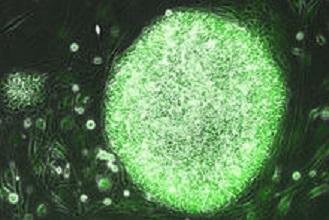
In 2006, Shinya Yamanaka made a groundbreaking discovery that would win him the Nobel Prize in Physiology or Medicine just six years later: he found a new way to ‘reprogramme’ adult, specialized cells to turn them into stem cells. These laboratory-grown stem cells are pluripotent – they can make any type of cell in the body – and are called induced pluripotent stem cells, or iPS cells. Only embryonic stem cells are naturally pluripotent. Yamanaka’s discovery means that theoretically any dividing cell of the body can now be turned into a pluripotent stem cell.
So how are these iPS cells made? Yamanaka added four genes to skin cells from a mouse. This started a process inside the cells called reprogramming and, within 2 – 3 weeks, the skin cells were converted into induced pluripotent stem cells. Scientists can now also do this with human cells, by adding even fewer than four genes.
Source;
https://medicalxpress.com/news/2026-03-japan-stem-cell-treatment-parkinson.html
https://www.eurostemcell.org/ips-cells-and-reprogramming-turn-any-cell-body-stem-cell
 Scriveners Online©