Is there a way to reverse the declining axon elongation?
Scientists at Cambridge have proved otherwise. The three-dimensional patient-specific induced pluripotent stem cell (iPSC)-derived organoids emerge as vital discovery models shedding light on human aspects of neural physiology and disease.
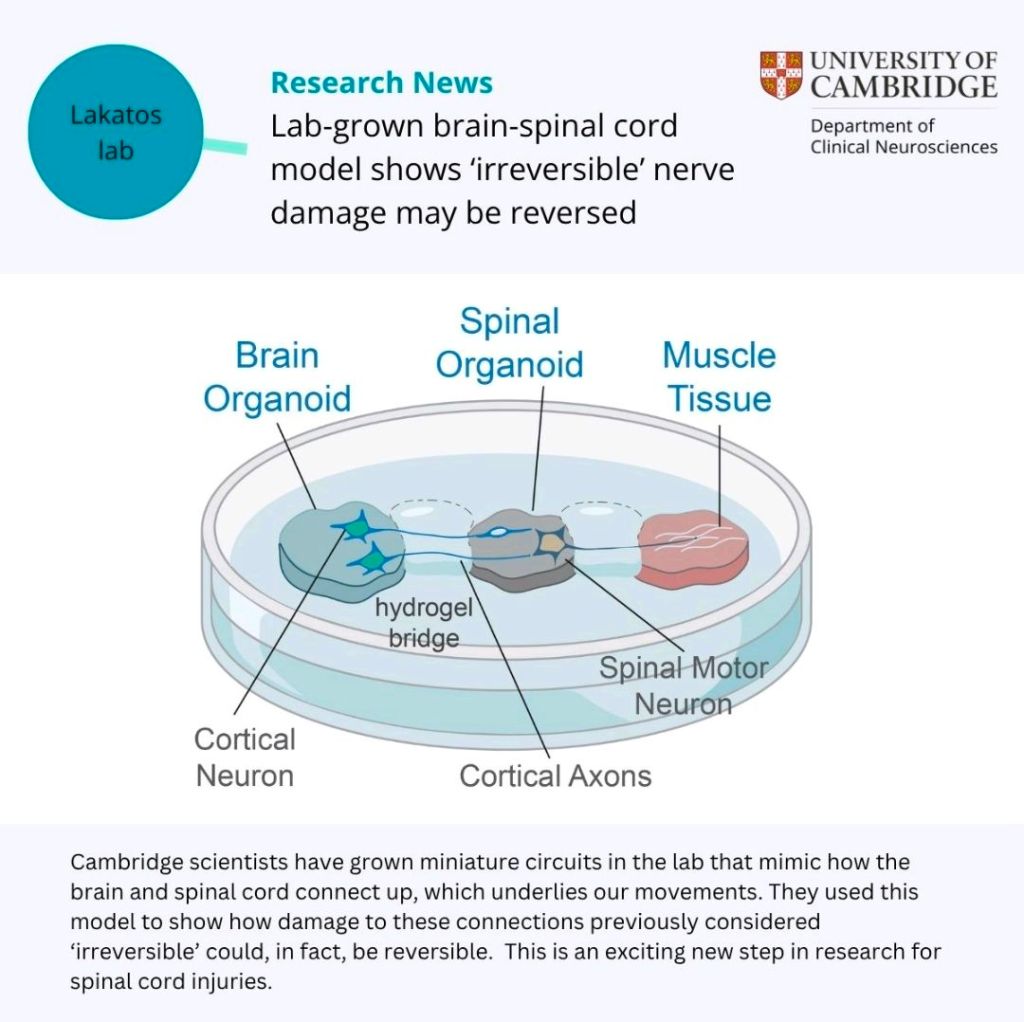
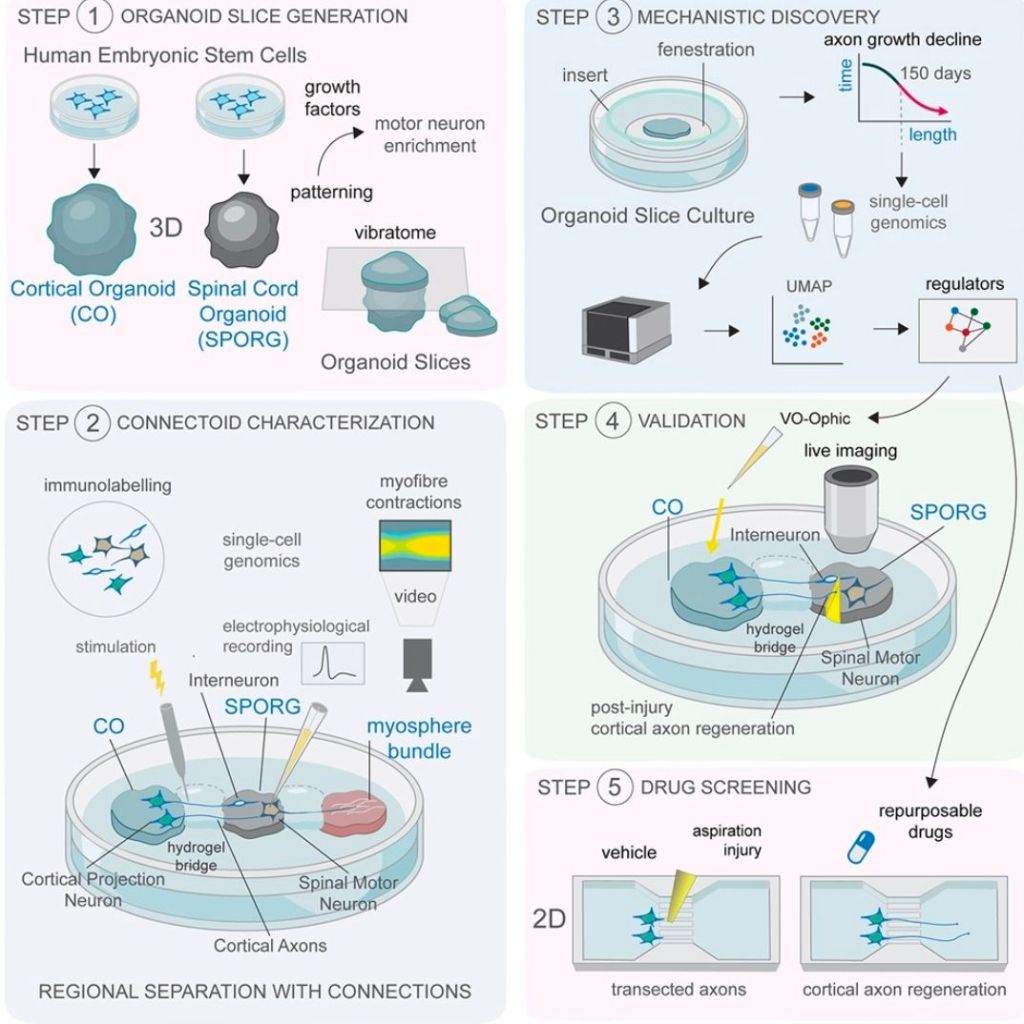
They generated and validated a human corticospinal connectoid system, comprising regionally segregated air-liquid interface cortical and spinal organoid slice cultures, while possessing functional synapses and motor output to myocyte spheres (myospheres). Utilizing an in silico drug pre-selection method and mid-throughput assays, they demonstrate that repurposable medications with a potential to reverse cortical projection neuron maturation-related transcriptional changes can enhance injury-evoked human cortical axon regrowth.
To put it in short, it is possible to reverse the physiological forms of spinal nerve damage. The team were able to identify a network of genes that acts as ‘switch’ restricting the axon growth ability while the neurons mature to form new connections (synapses). Amazingly, this switched back the the ability of the axon to grow by blocking key regulators.
Source;
https://www.cell.com/cell-reports/fulltext/S2211-1247(26)00477-8
 Scriveners Online©