
❝Never do anything by halves if you want to get away with it. Be outrageous. Go the whole hog. Make sure everything you do is so completely crazy it’s unbelievable.❞
-Roald Dahl, Matilda (1988)

A ‘med comms’ site for everyone!

✒︎ Informative

Presenting the latest news, discoveries and innovations in medicine in a blog-style format!

⚕ Global

Reaches the national and the international readers!

♛ Unique & Dynamic

There’s an article for everyone in all areas of medicine!

#scriveners

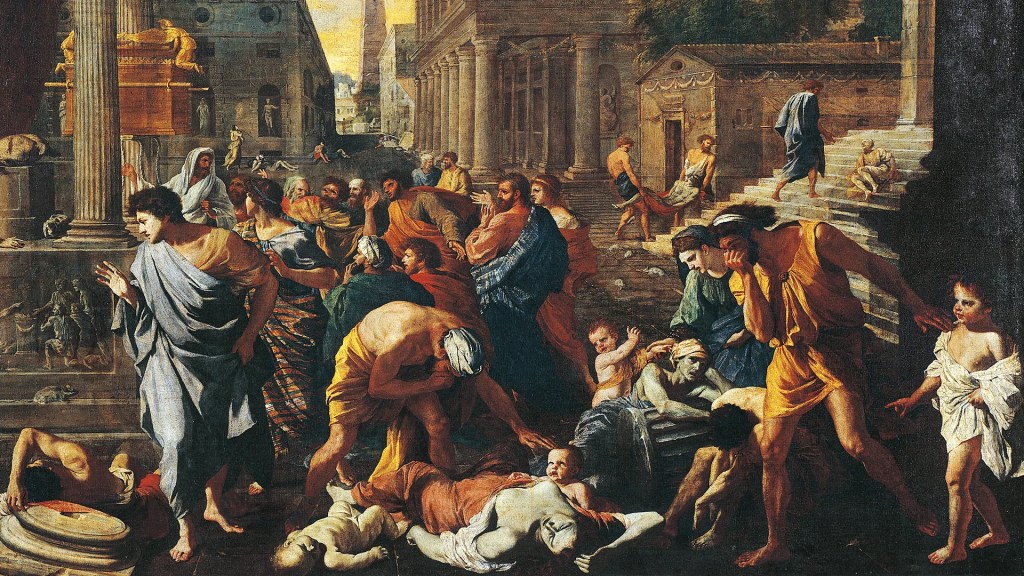
The Plague of Ashdod (1630) Nicholas Poussin

The artwork “The Plague of Ashdod” was created by the French painter Nicolas Poussin in 1630. It portrays the biblical narrative of a divine plague inflicted upon the people of Ashdod. 

This dramatic scene of divine punishment is described in the Old Testament. The Philistines are stricken with plague in their city of Ashdod because they have stolen the Ark of the Covenant from the Israelites and placed it in their pagan temple. You can see the decorated golden casket of the Ark between the pillars of the temple. People look around in horror at their dead and dying companions. One man leans over the corpses of his wife and child and covers his nose to avoid the stench. Rats scurry towards the bodies. The broken statue of their deity, Dagon, and the tumbled down stone column further convey the Philistines’ downfall.

In the artwork, Poussin vividly depicts the turmoil and suffering caused by the plague. The foreground is filled with the stricken inhabitants of Ashdod; their bodies are contorted in agony or limp in the stillness of death, illustrating the mercilessness of the affliction. The variety of postures and expressions captures the range of human suffering and chaos that accompanies such disaster. 

Amongst the afflicted, several figures stand out due to their dynamic gestures or central placement within the composition, drawing the viewer’s eye and emphasizing the emotional impact of the scene. In the background, classical architecture gives a sense of order and permanence that starkly contrasts with the disarray and despair of the figures. Poussin’s use of colour and light skilfully highlights the drama, with the dark and earthy tones of the suffering masses set against the lighter, more serene sky, which suggests divine presence or intervention.

Poussin’s use of color and light skillfully highlights the drama, with the dark and earthy tones of the suffering masses set against the lighter, more serene sky, which suggests divine presence or intervention. The overall effect is one of a carefully structured scene that conveys a narrative full of intensity and profound human drama, characteristic of the religious paintings of the period and the classical style Poussin is renowned for. Poussin began to paint The Plague of Ashdod while the bubonic plague was still raging throughout Italy though sparing Rome. He first called the painting The Miracle in the Temple of Dagon, but later it became known as The Plague of Ashdod.

The painting most importantly provides a view into how illness and diseases were feared at that time in the past and the fact that people had the knowledge that it was transmissible during that time period which was the 16th century.

𝓒𝓱𝓮𝓮𝓻𝓼 𝓽𝓸 𝓪 2𝓷𝓭 𝓪𝓷𝓷𝓲𝓿𝓮𝓻𝓼𝓪𝓻𝔂 𝓸𝓯 𝓽𝓱𝓮 𝓫𝓵𝓸𝓰! 🍾🥂
𝐀𝐧𝐧𝐨𝐮𝐧𝐜𝐞𝐦𝐞𝐧𝐭: 𝐂𝐞𝐥𝐞𝐛𝐫𝐚𝐭𝐢𝐧𝐠 𝟐𝟎𝟎 𝐩𝐨𝐬𝐭𝐬 𝐦𝐢𝐥𝐞𝐬𝐭𝐨𝐧𝐞 𝐫𝐞𝐚𝐜𝐡! 𝐈 𝐜𝐚𝐧’𝐭 𝐭𝐡𝐚𝐧𝐤 𝐞𝐚𝐜𝐡 𝐨𝐧𝐞 𝐨𝐟 𝐲𝐨𝐮 𝐞𝐧𝐨𝐮𝐠𝐡! 𝐖𝐞’𝐫𝐞 𝐚𝐭 𝐚 𝟓𝐤 𝐬𝐭𝐫𝐞𝐚𝐤 𝐚𝐬 𝐰𝐞𝐥𝐥! ♥️🍾🍷#scriveners
𝘗𝘭𝘦𝘢𝘴𝘦 𝘤𝘩𝘦𝘤𝘬 𝘰𝘶𝘵 𝘰𝘶𝘳 𝘯𝘦𝘸𝘭𝘺 𝘶𝘱𝘥𝘢𝘵𝘦𝘥 ‘𝘌𝘹𝘵𝘳𝘢𝘴 𝘗𝘢𝘨𝘦’!╰(°▽°)╯
𝕸𝖊𝖗𝖗𝖞 𝕮𝖍𝖗𝖎𝖘𝖙𝖒𝖆𝖘!🎄🎅𝕸𝖆𝖞 𝖆𝖑𝖑 𝖞𝖔𝖚𝖗 𝕮𝖍𝖗𝖎𝖘𝖙𝖒𝖆𝖘 𝖜𝖎𝖘𝖍𝖊𝖘 𝖈𝖔𝖒𝖊 𝖙𝖗𝖚𝖊!

🥳𝐉𝐮𝐬𝐭 𝐢𝐧𝐬𝐭𝐚𝐥𝐥𝐞𝐝 𝐚 𝐧𝐞𝐰 𝐩𝐥𝐚𝐧 𝐚𝐧𝐝 𝐜𝐡𝐚𝐧𝐠𝐞𝐝 𝐭𝐡𝐞 𝐬𝐢𝐭𝐞 𝐚𝐝𝐝𝐫𝐞𝐬𝐬! 𝐖𝐞’𝐯𝐞 𝐮𝐩𝐠𝐫𝐚𝐝𝐞𝐝 𝐛𝐚𝐛𝐲! 🎉 scrionl.blog ♡
🚨𝐃𝐮𝐞 𝐭𝐨 𝐬𝐨𝐦𝐞 𝐮𝐧𝐟𝐨𝐫𝐞𝐬𝐞𝐞𝐧 𝐜𝐢𝐫𝐜𝐮𝐦𝐬𝐭𝐚𝐧𝐜𝐞 𝐈 𝐰𝐢𝐥𝐥 𝐛𝐞 𝐭𝐚𝐤𝐢𝐧𝐠 𝐚 𝐡𝐢𝐚𝐭𝐮𝐬 𝐟𝐨𝐫 𝐚 𝐩𝐞𝐫𝐢𝐨𝐝 𝐨𝐟 𝐨𝐧𝐞 𝐦𝐨𝐧𝐭𝐡!🚨
𝐖𝐞 𝐧𝐨𝐰 𝐡𝐚𝐯𝐞 𝐚𝐧 𝐈𝐧𝐬𝐭𝐚𝐠𝐫𝐚𝐦 𝐚𝐜𝐜𝐨𝐮𝐧𝐭!📱
𝐀 𝐧𝐞𝐰 𝐬𝐞𝐜𝐭𝐢𝐨𝐧 ‘𝐂𝐨𝐧𝐭𝐚𝐜𝐭’ 𝐡𝐚𝐬 𝐛𝐞𝐞𝐧 𝐚𝐝𝐝𝐞𝐝! 📞

𝐓𝐡𝐞 ‘𝐋𝐢𝐧𝐤𝐬 & 𝐁𝐨𝐨𝐤𝐬 & 𝐘𝐨𝐮𝐓𝐮𝐛𝐞 & 𝐏𝐨𝐝𝐜𝐚𝐬𝐭𝐬’ 𝐬𝐞𝐜𝐭𝐢𝐨𝐧 𝐢𝐬 𝐧𝐨𝐰 𝐚𝐯𝐚𝐢𝐥𝐚𝐛𝐥𝐞!💙
𝐍𝐞𝐰 𝐰𝐚𝐥𝐥𝐩𝐚𝐩𝐞𝐫𝐬 𝐡𝐚𝐯𝐞 𝐛𝐞𝐞𝐧 𝐚𝐝𝐝𝐞𝐝 𝐭𝐨 𝐭𝐡𝐞 ‘𝐄𝐱𝐭𝐫𝐚𝐬’ 𝐬𝐞𝐜𝐭𝐢𝐨𝐧. 𝐃𝐨 𝐜𝐡𝐞𝐜𝐤 𝐢𝐭 𝐨𝐮𝐭!⚡️
𝐀𝐧𝐧𝐨𝐮𝐧𝐜𝐞𝐦𝐞𝐧𝐭: 𝐌𝐨𝐫𝐞 𝐭𝐡𝐚𝐧 𝐚 𝟏𝟎𝟎 𝐭𝐡𝐚𝐧𝐤𝐬! 𝐖𝐞’𝐯𝐞 𝐫𝐞𝐚𝐜𝐡𝐞𝐝 𝟏𝟎𝟎 𝐩𝐨𝐬𝐭𝐬! 🍾 🍷
𝓒𝓮𝓵𝓮𝓫𝓻𝓪𝓽𝓲𝓷𝓰 𝓽𝓱𝓲𝓼 𝓶𝓮𝓭𝓲𝓬𝓪𝓵 𝔀𝓻𝓲𝓽𝓲𝓷𝓰 𝓫𝓵𝓸𝓰’𝓼 1-𝔂𝓮𝓪𝓻 𝓪𝓷𝓷𝓲𝓿𝓮𝓻𝓼𝓪𝓻𝔂!🍾🍷

2nd Year Anniversary Galore!

I’m feeling overwhelmed with all the support and the love for this blog over the second year! I think brainstorming the relevant topics on medicine that don’t get scrutinisingly covered in medical school is what makes this blog such a hit! Its what I love about the blog too! I think of all those years…

Exploring the Meaning of Medical Anthropology, Conducting Research on Indigenous Shamans of Peru, and Notes on the Cholera Epidemic Part 3

Some treat their curing work as a divine calling; others seem more like pragmatic businessmen. Yet, there are striking similarities in the paths that led these exceptional individuals to the occupation of curandero, and there is an underlying curing philosophy that unites them. Our primary objective is ethnographic, to record in detail the symbolic system…

Exploring the Meaning of Medical Anthropology, Conducting Research on Indigenous Shamans of Peru, and Notes on the Cholera Epidemic Part 2

Evolutionary and Ecological Perspectives on a Cholera Epidemic Medical anthropology theory is a blend of social science, epidemiological, and biological perspectives on disease. The most effective way to show how these theoretical threads come together in medical anthropology is to introduce them separately. Theories operate at an abstract level. They reduce the complexity of a…

Exploring the Meaning of Medical Anthropology, Conducting Research on Indigenous Shamans of Peru, and Notes on the Cholera Epidemic Part 1

North coast of Peru, 1980: It’s three in the morning, the ocean breeze is wet and cold. It is not clear if my present nausea is attributable to the mescaline-bearing San Pedro (Trichocereus pachanoi) brew with which I began the evening or to the vile black-leaf tobacco sludge I have been asked to snort repeatedly.…

Improving Survival Rates Against ALS and FTD

Being a medical student and having ALS is a toxic concoction of health longevity. Yentli Soto Albrecht is a researcher on ALS at Penn Medicine alongside her battles with the neuro-degenerative disease. She was genetically tested for having the disease and lost her 66 year old father to the same disease in 2024. Her goal…

An Online 3D Atlas of Human Organs

The Human Organ Atlas is made possible by funding from: The European Synchrotron Radiation Facility (ESRF), The Chan Zuckerberg Initiative, The German Registry of COVID-19 Autopsies (DeRegCOVID), supported by the German Federal Ministry of Health, The UK Medical Research Council (MRC), The Royal Academy of Engineering, The Wellcome Trust. The Human Organ Atlas (HOA), an…

  • Could air pollution decrease IVF birth rates?

    by

    Nivea Vaz
    2–3 minutes

    “This important study highlights a significant link between air pollution and lower IVF success rates, with a notable reduction in live births associated with higher particulate matter exposure before oocyte retrieval. These findings emphasise the need for ongoing attention to environmental factors in reproductive health.”

                    -Prof Anis Feki, Chair of European Society of Human Reproduction and Embryology


    A study that was submitted and presented at the ESHRE’s 40th Annual meeting has implied that particulate matter exposure before the oocyte retrieval during IVF, corresponded to a reduction in live births by about 40%. The study was published in Human Reproduction. On comparing the highest quartile of exposure against the lowest quartile of exposure to the particulate matter, it was observed that the odds of a live birth decreased by 38%. This study was conducted for eight years in Perth, Australia. The researchers analysed 3,659 frozen embryo transfers from the cohort of 1,836 patients. The median age for females at the oocyte retrieval time was 34.5 years and at the time of frozen embryo transfer was 36.1 years. The air pollutant concentrations were examined over four exposure periods prior to the oocyte retrieval which was for 24 hours, 2 weeks, 4 weeks and three months. Models were also made to take into consideration the co-exposures. The ever so increasing PM2.5 exposure was associated with decreased odds of live birth in the three months prior to oocyte retrieval, in the second quartile; the levels fell from 0.90 to 0.66 in the forth quartile.


    The negative impact of the air pollution was fundamentally observable even though there was prevalence of an overall excellent air quality while the study took place. The PM10 and PM2.5 levels had drastically exceeded the WHO guidelines of 0.4% and 4.5%. Dr Sebastian Leathersich, who is the lead author of the study, explains, “This is the first study that has used frozen embryo transfer cycles to separately analyse the effects of pollutant exposure during the development of eggs and around the time of embryo transfer and early pregnancy. We could therefore evaluate whether pollution was having an effect on the eggs themselves, or on the early stages of pregnancy. Our results reveal a negative linear association between particulate matter exposure during the two weeks and three months prior to oocyte collection and subsequent live birth rates from those oocytes. This association is independent of the air quality at the time of frozen embryo transfer. These findings suggest that pollution negatively affects the quality of the eggs, not just the early stages of pregnancy, which is a distinction that has not been previously reported.”


    The epidemiological data points towards a strong link between air pollution and poor reproductive outcomes but the mechanisms remain unclear. He further adds, “Climate change and pollution remain the greatest threats to human health, and human reproduction is not immune to this. Even in a part of the world with exceptional air quality, where very few days exceed the internationally accepted upper limits for air pollution, there is a strong negative co-relation between the amount of air pollution and the live birth rate in frozen embryo transfer cycles. Minimising pollutant exposure must be a public health priority.”

    IVF Procedure Carried Out in a Lab.

    Rating: 5 out of 5.

    5,147 hits

    Leave a comment

    𝙷𝚘𝚠 𝚖𝚎𝚍𝚒𝚌𝚒𝚗𝚎 𝚊𝚗𝚍 𝚑𝚎𝚊𝚕𝚝𝚑𝚌𝚊𝚛𝚎 𝚊𝚏𝚏𝚎𝚌𝚝 𝚞𝚜 𝚒𝚗 𝚝𝚑𝚎 𝚜𝚖𝚊𝚕𝚕𝚎𝚜𝚝 𝚘𝚏 𝚠𝚊𝚢𝚜 𝚕𝚎𝚊𝚍𝚒𝚗𝚐 𝚝𝚘 𝚋𝚒𝚐𝚐𝚎𝚛 𝚒𝚖𝚙𝚊𝚌𝚝𝚜 𝚊𝚗𝚍 𝚕𝚒𝚏𝚎-𝚌𝚑𝚊𝚗𝚐𝚒𝚗𝚐 𝚌𝚘𝚗𝚜𝚎𝚚𝚞𝚎𝚗𝚌𝚎𝚜! 𝚄𝚕𝚝𝚒𝚖𝚊𝚝𝚎𝚕𝚢, 𝚌𝚑𝚊𝚗𝚐𝚒𝚗𝚐 𝚠𝚑𝚊𝚝 𝚠𝚎 𝚌𝚊𝚕𝚕 ‘𝚑𝚎𝚊𝚕𝚝𝚑𝚌𝚊𝚛𝚎.’

    “Copyright [2024], [2025], [2026], [Scriveners], [Scriveners Online], All Rights Reserved. Any unauthorised duplication or use of this material is strictly prohibited.”

    ‘𝙰 𝚙𝚛𝚘𝚞𝚍 𝚖𝚎𝚍𝚒𝚌𝚊𝚕 𝚜𝚝𝚞𝚍𝚎𝚗𝚝’𝚜 𝚒𝚗𝚒𝚝𝚒𝚊𝚝𝚒𝚟𝚎 𝚊𝚗𝚍 𝚘𝚠𝚗𝚎𝚛𝚜𝚑𝚒𝚙!’‘