
❝Never do anything by halves if you want to get away with it. Be outrageous. Go the whole hog. Make sure everything you do is so completely crazy it’s unbelievable.❞
-Roald Dahl, Matilda (1988)

A ‘med comms’ site for everyone!

✒︎ Informative

Presenting the latest news, discoveries and innovations in medicine in a blog-style format!

⚕ Global

Reaches the national and the international readers!

♛ Unique & Dynamic

There’s an article for everyone in all areas of medicine!

#scriveners

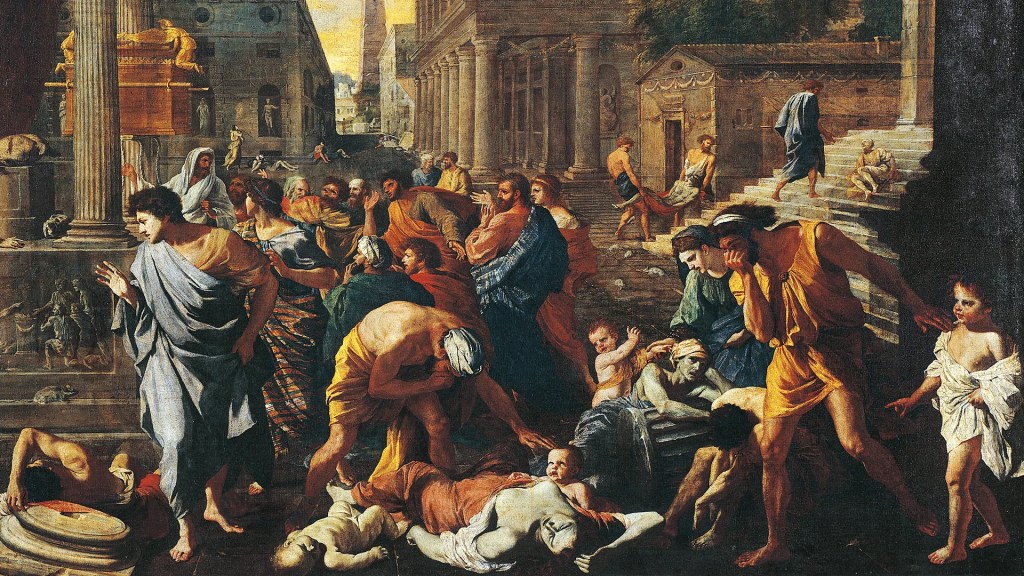
The Plague of Ashdod (1630) Nicholas Poussin

The artwork “The Plague of Ashdod” was created by the French painter Nicolas Poussin in 1630. It portrays the biblical narrative of a divine plague inflicted upon the people of Ashdod. 

This dramatic scene of divine punishment is described in the Old Testament. The Philistines are stricken with plague in their city of Ashdod because they have stolen the Ark of the Covenant from the Israelites and placed it in their pagan temple. You can see the decorated golden casket of the Ark between the pillars of the temple. People look around in horror at their dead and dying companions. One man leans over the corpses of his wife and child and covers his nose to avoid the stench. Rats scurry towards the bodies. The broken statue of their deity, Dagon, and the tumbled down stone column further convey the Philistines’ downfall.

In the artwork, Poussin vividly depicts the turmoil and suffering caused by the plague. The foreground is filled with the stricken inhabitants of Ashdod; their bodies are contorted in agony or limp in the stillness of death, illustrating the mercilessness of the affliction. The variety of postures and expressions captures the range of human suffering and chaos that accompanies such disaster. 

Amongst the afflicted, several figures stand out due to their dynamic gestures or central placement within the composition, drawing the viewer’s eye and emphasizing the emotional impact of the scene. In the background, classical architecture gives a sense of order and permanence that starkly contrasts with the disarray and despair of the figures. Poussin’s use of colour and light skilfully highlights the drama, with the dark and earthy tones of the suffering masses set against the lighter, more serene sky, which suggests divine presence or intervention.

Poussin’s use of color and light skillfully highlights the drama, with the dark and earthy tones of the suffering masses set against the lighter, more serene sky, which suggests divine presence or intervention. The overall effect is one of a carefully structured scene that conveys a narrative full of intensity and profound human drama, characteristic of the religious paintings of the period and the classical style Poussin is renowned for. Poussin began to paint The Plague of Ashdod while the bubonic plague was still raging throughout Italy though sparing Rome. He first called the painting The Miracle in the Temple of Dagon, but later it became known as The Plague of Ashdod.

The painting most importantly provides a view into how illness and diseases were feared at that time in the past and the fact that people had the knowledge that it was transmissible during that time period which was the 16th century.

🥳𝐉𝐮𝐬𝐭 𝐢𝐧𝐬𝐭𝐚𝐥𝐥𝐞𝐝 𝐚 𝐧𝐞𝐰 𝐩𝐥𝐚𝐧 𝐚𝐧𝐝 𝐜𝐡𝐚𝐧𝐠𝐞𝐝 𝐭𝐡𝐞 𝐬𝐢𝐭𝐞 𝐚𝐝𝐝𝐫𝐞𝐬𝐬! 𝐖𝐞’𝐯𝐞 𝐮𝐩𝐠𝐫𝐚𝐝𝐞𝐝 𝐛𝐚𝐛𝐲! 🎉 scrionl.blog ♡
🚨𝐃𝐮𝐞 𝐭𝐨 𝐬𝐨𝐦𝐞 𝐮𝐧𝐟𝐨𝐫𝐞𝐬𝐞𝐞𝐧 𝐜𝐢𝐫𝐜𝐮𝐦𝐬𝐭𝐚𝐧𝐜𝐞 𝐈 𝐰𝐢𝐥𝐥 𝐛𝐞 𝐭𝐚𝐤𝐢𝐧𝐠 𝐚 𝐡𝐢𝐚𝐭𝐮𝐬 𝐟𝐨𝐫 𝐚 𝐩𝐞𝐫𝐢𝐨𝐝 𝐨𝐟 𝐨𝐧𝐞 𝐦𝐨𝐧𝐭𝐡!🚨
𝐖𝐞 𝐧𝐨𝐰 𝐡𝐚𝐯𝐞 𝐚𝐧 𝐈𝐧𝐬𝐭𝐚𝐠𝐫𝐚𝐦 𝐚𝐜𝐜𝐨𝐮𝐧𝐭!📱
𝐀 𝐧𝐞𝐰 𝐬𝐞𝐜𝐭𝐢𝐨𝐧 ‘𝐂𝐨𝐧𝐭𝐚𝐜𝐭’ 𝐡𝐚𝐬 𝐛𝐞𝐞𝐧 𝐚𝐝𝐝𝐞𝐝! 📞

𝐓𝐡𝐞 ‘𝐋𝐢𝐧𝐤𝐬 & 𝐁𝐨𝐨𝐤𝐬 & 𝐘𝐨𝐮𝐓𝐮𝐛𝐞 & 𝐏𝐨𝐝𝐜𝐚𝐬𝐭𝐬’ 𝐬𝐞𝐜𝐭𝐢𝐨𝐧 𝐢𝐬 𝐧𝐨𝐰 𝐚𝐯𝐚𝐢𝐥𝐚𝐛𝐥𝐞!💙
𝐍𝐞𝐰 𝐰𝐚𝐥𝐥𝐩𝐚𝐩𝐞𝐫𝐬 𝐡𝐚𝐯𝐞 𝐛𝐞𝐞𝐧 𝐚𝐝𝐝𝐞𝐝 𝐭𝐨 𝐭𝐡𝐞 ‘𝐄𝐱𝐭𝐫𝐚𝐬’ 𝐬𝐞𝐜𝐭𝐢𝐨𝐧. 𝐃𝐨 𝐜𝐡𝐞𝐜𝐤 𝐢𝐭 𝐨𝐮𝐭!⚡️
𝐀𝐧𝐧𝐨𝐮𝐧𝐜𝐞𝐦𝐞𝐧𝐭: 𝐌𝐨𝐫𝐞 𝐭𝐡𝐚𝐧 𝐚 𝟏𝟎𝟎 𝐭𝐡𝐚𝐧𝐤𝐬! 𝐖𝐞’𝐯𝐞 𝐫𝐞𝐚𝐜𝐡𝐞𝐝 𝟏𝟎𝟎 𝐩𝐨𝐬𝐭𝐬! 🍾 🍷
𝓒𝓮𝓵𝓮𝓫𝓻𝓪𝓽𝓲𝓷𝓰 𝓽𝓱𝓲𝓼 𝓶𝓮𝓭𝓲𝓬𝓪𝓵 𝔀𝓻𝓲𝓽𝓲𝓷𝓰 𝓫𝓵𝓸𝓰’𝓼 1-𝔂𝓮𝓪𝓻 𝓪𝓷𝓷𝓲𝓿𝓮𝓻𝓼𝓪𝓻𝔂!🍾🍷

An Unrestricted Death Toll Rise

Healthcare at a U-turn shift globally.   ✩ Children dying are on the rise in this century according to the Gates Foundation report.    ✩ Progression of foreign aid, vaccines, medicine, nutrition and healthcare have resulted in the decline of child death rates since the 1990s.   ✩ The anti vax movement has gained a…

Preventing Asthma Development in Newborns

“Childhood asthma is a complex disease with many contributing factors,” explains Prof Bart Lambrecht (VIB-UGent Center for Inflammation Research), senior author of the study. “We found that early-life RSV infection and genetic allergy risk interact in a very specific way that pushes the immune system toward asthma. The encouraging news is that this process can…

Cannabis Causes CHS

CHS cannabinoid hyperemesis syndrome has risen in the US emergency departments between 2016 and 2022 and have continued to remain up as discovered by researchers at the Jane Addams College of Social Work at the University Illinois Chicago. Statistics show that as of June 2025 close to half of the US residents residing in the…

How Criticality Made ICUs Spicier…

Preface “That cold Irish evening, through the dark mist of my final Guinness, I started writing this book. It is not a book filled with joy – indeed, there will be sadness – but there is always hope. I will take you on a journey to the light and the dark places that critical ill…

Solving the Clinical Mysteries One More Time!

‘A Case of an Angry-looking Rash’ A woman of fifty-six years visited Dr Walter Larsen in the examination room in Portland Oregon on a Tuesday two days earlier. He was now convinced on inspecting the patient in person that the rash was no longer a case of poison oak. Back then, the patient was concerned;…

The UK’s Public Inquiry on Core Government Involvement in the COVID-19 Responses and Alertness Handling Across the UK

A perfect example of how scientific data and outcomes caused by pure ignorance, dirty politics and unsatisfied vaccine results failed humanity The Rt Hon the Baroness Hallett DBE, addressed the challenge of the COVID-19 Inquiry, by dividing the situationship of each constituent countries in chronological order of events that have unfolded in the chaos and…

  • The Nightmare Disease: Melioidosis

    by

    Nivea Vaz ,
    4–6 minutes

    “Bukholderia pseudomallei is the causative agent of melioidosis. It found in the soil and water of tropical and subtropical regions globally. That being stated, there’s not much textual reference and representation of this disease in textbooks.”

    Introduction

    B. pseudomallei is a Gram-negative bacterium. Infection occurs following environmental exposure via percutaneous inoculation, inhalation or ingestion. Majority of cases are sporadic in nature with the minority being linked to contaminated products, water supplies and environments.

    Most reported melioidosis cases occur in Southeast Asia and Northern Australia, the endemic area of coverage tends to expand, now covering Pacific, South Asia, Africa and the Americas.  It is predicted that the incidence of melioidosis will increase proportionally as climate change increases. It’s endemic vastness has been indicated in southern USA, southeast Queensland part of Australia, and in close proximity with the La Niña phase of the El Niño-Southern Oscillation.


    Melioidosis tends to be under-diagnosed in some endemic regions, due to limited access to laboratory diagnostics and lack of clinical knowledge. Low socioeconomic status is associated with the comorbidities that increase the risk for getting infected from the disease. This also increases the risk of dying from this disease!


    The World Health Organisation affirms to make sure that melioidosis is not a neglected tropical disease. They have targeted at improving the melioidosis surveillance, awareness, diagnosis and management. This disease cannot be differentiated from community acquired infection by just clinical and radiology features, it requires much more.


    Epidemiology

    It arises from exposure of the host to bacteria, water or soil. Infection is through percutaneous exposure, inhalation, aspiration or ingestion. Diabetes is the most common risk factor for melioidosis. Other risk factors that are not limited to this disease are; hazardous alcohol consumption, chronic kidney disease, chronic lung disease, immunosuppressive therapy and thalassaemia  with iron overload. Patients suffering from cystic fibrosis are advised to not travel or risk exposure to melioidosis endemic-prone areas.

    Global Burden and Distribution

    Melioidosis is highly endemic in Southeast Asia and Northern Australia, B.pseudomallei is common occurrence. Identification is done by using a simple laboratory algorithm with disc diffusion susceptibility testing to amoxicillin—clavulanate (susceptible), gentamicin (resistant), and colistin (resistant) was proven successful in Vietnam.


    Global Distribution of Burkholderia pseudomallei.
    The map represents the global distribution of B. pseudomallei based on a consensus evidence gathered from January 1910 to September 2022. Green colour represents complete consensus on the absence of B. pseudomallei and red represents complete consensus of B. pseudomallei.


    Environmental niches, seasonality and climate

    This microbe thrives in wet, acidic, low salinity, nutrient-deplete soil with low carbon levels. It can survive in desert and temperate environments for many years, and can grow in clayish soils composed of multiple layers of high porosity, showcasing its versatile adaptability.


    It uses livestock and native animals in general as a vector of transport by means of rhizosphere that is found around the roots of grasses and around rice crops as well. It is no stranger to lurking around construction sites as well. Water has also been their means of transportation, with chlorination and ultraviolet being the only few ways of killing this microbe from water bodies. It’s movement in air has been detected during extreme weather conditions.

    Pathophysiology

    This bacterium has three types of type III secretion systems. The six types of type IV secretion systems confers the intracellular and survival ability in the microbe. It’s virulence factors include type III secretion systems, type IV secretion systems, two-partner secreting system, capsular polysaccharides, flagella, pili and adhesins.


    Virulence factors of B. pseudomallei and host immune response

    Signs & Symptoms

    It is often mistaken for tuberculosis or pneumonia. According to the CDC, melioidosis has a wide range of signs and symptoms, it depends on the location of infection and which pathway precedes it:


    ~Localised infection-localised pain/swelling, fever, ulceration, abscess.

    ~Pulmonary infection-cough, chest pain, high fever, headache, and anorexia.

    ~Bloodstream infection-fever, headache, respiratory distress, abdominal discomfort, joint paint, disorientation.

    ~Disseminated infection-fever, weight loss, stomach/chest pain, muscle/joint pain, headache, central nervous system/brain infection, seizures.

    Diagnosis, treatment and prevention

    Isolation and culture of B. pseudomallei is the gold standard method of diagnostics. Clinical specimens are blood cultures, sputum, urine and depending on site sterility can include swabs, pus and fluids. Throat and rectal swabs can replace sputum sample if there’s a difficulty in obtaining it, provided it is done is selective liquid media. B. pseudomallei are small, creamy and have a metallic sheen, subsequently becoming dry and wrinkled; on Ashdown medium, a purple colour is obtained. It is a Gram-negative rod bacterium, with bipolar staining, giving it a safety pin appearance, and is oxidase-positive and indole-negative. Latex agglutination with monoclonal antibodies against B. pseudomallei exopolysaccharide is a useful bench test to aid identification.


    Research on the antimicrobial effectiveness based on clinical minimum inhibitory concentration (MIC) and zone diameter breakup points against this microbe is successful. Higher doses of ceftazidime, trimethoprim, sulfomethoxazole, doxycycline, amoxicillin, clavulanate are required for bactericide effects.


    Treatment

    Therapy begins with an intensive phase of a minimum of 10-days of intravenous ceftazidime or carbapenem, with or without trimethoprim-sulfamethoxazole. This is followed by an eradication phase of oral trimethoprim-sulphamethoxazole for 3-6 months. In very specific cases, such as those involving a single skin lesion without bacteraemia or sepsis, an oral only regimen of trimethoprim-sulfamethoxazole has been used. Surgical drainage of large abscesses is indicated but usually is not required for multiple small liver and splenic abscesses. Prostate abscesses usually require drainage, done by trans-rectal ultrasound guidance.


    Prevention

    In Thailand, evidence based guidelines for the prevention of melioidosis, recommends that the residents, rice farmers and visitors should wear protective gear, like boots and gloves, when coming in contact with water, or soil, as exposure should be avoided. This includes outdoor exposure to heavy rains and dust clouds. The guidelines also encourage cessation of smoking and discourage the application of herbal remedies. And drinking bottled water or boiled water is a must.

    Vaccines are currently underway for this mortifying bacterium!

    The International Melioidosis Network is a forum dedicated to finding information, sharing experiences and detailing new findings in research!


    Nivea Vaz

    Manipal College of Medical Sciences, Pokhara


    Rating: 5 out of 5.

    4,541 hits

    Leave a comment

    𝙷𝚘𝚠 𝚖𝚎𝚍𝚒𝚌𝚒𝚗𝚎 𝚊𝚗𝚍 𝚑𝚎𝚊𝚕𝚝𝚑𝚌𝚊𝚛𝚎 𝚊𝚏𝚏𝚎𝚌𝚝 𝚞𝚜 𝚒𝚗 𝚝𝚑𝚎 𝚜𝚖𝚊𝚕𝚕𝚎𝚜𝚝 𝚘𝚏 𝚠𝚊𝚢𝚜 𝚕𝚎𝚊𝚍𝚒𝚗𝚐 𝚝𝚘 𝚋𝚒𝚐𝚐𝚎𝚛 𝚒𝚖𝚙𝚊𝚌𝚝𝚜 𝚊𝚗𝚍 𝚕𝚒𝚏𝚎-𝚌𝚑𝚊𝚗𝚐𝚒𝚗𝚐 𝚌𝚘𝚗𝚜𝚎𝚚𝚞𝚎𝚗𝚌𝚎𝚜! 𝚄𝚕𝚝𝚒𝚖𝚊𝚝𝚎𝚕𝚢, 𝚌𝚑𝚊𝚗𝚐𝚒𝚗𝚐 𝚠𝚑𝚊𝚝 𝚠𝚎 𝚌𝚊𝚕𝚕 ‘𝚑𝚎𝚊𝚕𝚝𝚑𝚌𝚊𝚛𝚎.’

    “Copyright [2024], [2025], [Scriveners], [Scriveners Online], All Rights Reserved. Any unauthorised duplication or use of this material is strictly prohibited.”

    ‘𝙰 𝚙𝚛𝚘𝚞𝚍 𝚖𝚎𝚍𝚒𝚌𝚊𝚕 𝚜𝚝𝚞𝚍𝚎𝚗𝚝’𝚜 𝚒𝚗𝚒𝚝𝚒𝚊𝚝𝚒𝚟𝚎 𝚊𝚗𝚍 𝚘𝚠𝚗𝚎𝚛𝚜𝚑𝚒𝚙!’‘