






Introducing the Pillbot™ and its company Endiatix, a pioneer of the latest robotic technology. It is a wireless motor-run capsule that can be installed in the stomach by the doctor. Monitoring and visualising of the insides of the stomach is done. It is clinically advertised as a painless and a non-invasive method of ingestion. It is also inexpensive and can be excreted out. This can be taken on a gulp of water unlike the traditional route of the endoscopy that involves a doctor using a camera to examine the stomach.
It’s dimensions takes on that of a corkscrew and is the smallest medical robot in the world. At the command of a console-like controller, it is capable of rotating, swirling and diving deeper. According to the Co-Founder and CEO of Endiatix, Mr Torrey Smith, there is a lot of waste generated in the environment, when we make use of the old method. It mirrors a traditional endoscopy in the sense that one can examine the stomach. Data can be recorded and monitored. As the device progresses deeper into the GIT, the body will slowly dissolve and digest the material that is present. A doctor can have a lot of mobility with this device and the examination can be done at home too!
The procedure is as follows; the patient will skip breakfast and drink two glasses of water. Then they shall swallow the pillbot that’s a little larger than a multi-vitamin. The pillbot functions as a drone and for 10 minutes will scour around in the stomach. The predicted results will be received at an instant compared to the long-gruelling hours of endoscopy. The company Endiatix believes in simplifying endoscopy for the better good of humanity.
At the moment, the technology is undergoing clinical trials in the US and is yet to have a FDA clearance.
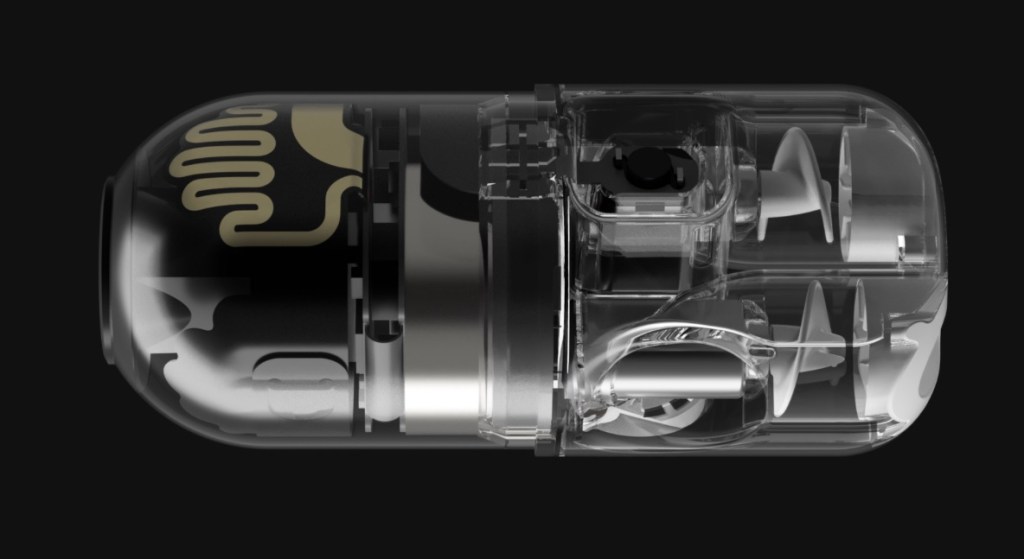
Credit: Adam Savage’s Tested, https://endiatx.com/
 Scriveners Online©
Leave a comment