❝Never do anything by halves if you want to get away with it. Be outrageous. Go the whole hog. Make sure everything you do is so completely crazy it’s unbelievable.❞
-Roald Dahl, Matilda (1988)

A ‘med comms’ site for everyone!

✒︎ Informative

Presenting the latest news, discoveries and innovations in medicine in a blog-style format!

⚕ Global

Reaches the national and the international readers!

♛ Unique & Dynamic

There’s an article for everyone in all areas of medicine!

#scriveners

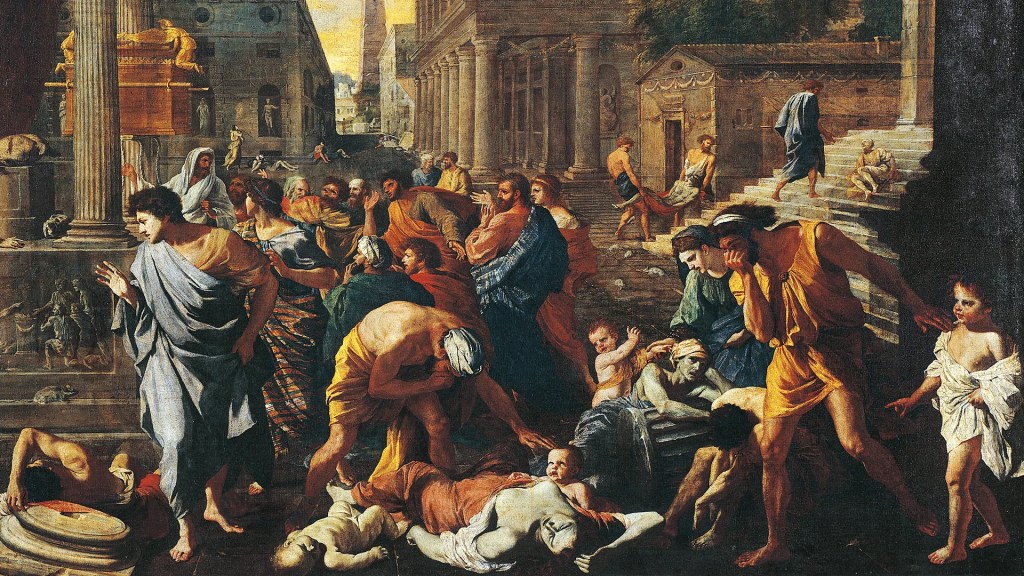
The Plague of Ashdod (1630) Nicholas Poussin

The artwork “The Plague of Ashdod” was created by the French painter Nicolas Poussin in 1630. It portrays the biblical narrative of a divine plague inflicted upon the people of Ashdod. 

This dramatic scene of divine punishment is described in the Old Testament. The Philistines are stricken with plague in their city of Ashdod because they have stolen the Ark of the Covenant from the Israelites and placed it in their pagan temple. You can see the decorated golden casket of the Ark between the pillars of the temple. People look around in horror at their dead and dying companions. One man leans over the corpses of his wife and child and covers his nose to avoid the stench. Rats scurry towards the bodies. The broken statue of their deity, Dagon, and the tumbled down stone column further convey the Philistines’ downfall.

In the artwork, Poussin vividly depicts the turmoil and suffering caused by the plague. The foreground is filled with the stricken inhabitants of Ashdod; their bodies are contorted in agony or limp in the stillness of death, illustrating the mercilessness of the affliction. The variety of postures and expressions captures the range of human suffering and chaos that accompanies such disaster. 

Amongst the afflicted, several figures stand out due to their dynamic gestures or central placement within the composition, drawing the viewer’s eye and emphasizing the emotional impact of the scene. In the background, classical architecture gives a sense of order and permanence that starkly contrasts with the disarray and despair of the figures. Poussin’s use of colour and light skilfully highlights the drama, with the dark and earthy tones of the suffering masses set against the lighter, more serene sky, which suggests divine presence or intervention.

Poussin’s use of color and light skillfully highlights the drama, with the dark and earthy tones of the suffering masses set against the lighter, more serene sky, which suggests divine presence or intervention. The overall effect is one of a carefully structured scene that conveys a narrative full of intensity and profound human drama, characteristic of the religious paintings of the period and the classical style Poussin is renowned for. Poussin began to paint The Plague of Ashdod while the bubonic plague was still raging throughout Italy though sparing Rome. He first called the painting The Miracle in the Temple of Dagon, but later it became known as The Plague of Ashdod.

The painting most importantly provides a view into how illness and diseases were feared at that time in the past and the fact that people had the knowledge that it was transmissible during that time period which was the 16th century.

𝕸𝖊𝖗𝖗𝖞 𝕮𝖍𝖗𝖎𝖘𝖙𝖒𝖆𝖘!🎄🎅𝕸𝖆𝖞 𝖆𝖑𝖑 𝖞𝖔𝖚𝖗 𝕮𝖍𝖗𝖎𝖘𝖙𝖒𝖆𝖘 𝖜𝖎𝖘𝖍𝖊𝖘 𝖈𝖔𝖒𝖊 𝖙𝖗𝖚𝖊!

🥳𝐉𝐮𝐬𝐭 𝐢𝐧𝐬𝐭𝐚𝐥𝐥𝐞𝐝 𝐚 𝐧𝐞𝐰 𝐩𝐥𝐚𝐧 𝐚𝐧𝐝 𝐜𝐡𝐚𝐧𝐠𝐞𝐝 𝐭𝐡𝐞 𝐬𝐢𝐭𝐞 𝐚𝐝𝐝𝐫𝐞𝐬𝐬! 𝐖𝐞’𝐯𝐞 𝐮𝐩𝐠𝐫𝐚𝐝𝐞𝐝 𝐛𝐚𝐛𝐲! 🎉 scrionl.blog ♡
🚨𝐃𝐮𝐞 𝐭𝐨 𝐬𝐨𝐦𝐞 𝐮𝐧𝐟𝐨𝐫𝐞𝐬𝐞𝐞𝐧 𝐜𝐢𝐫𝐜𝐮𝐦𝐬𝐭𝐚𝐧𝐜𝐞 𝐈 𝐰𝐢𝐥𝐥 𝐛𝐞 𝐭𝐚𝐤𝐢𝐧𝐠 𝐚 𝐡𝐢𝐚𝐭𝐮𝐬 𝐟𝐨𝐫 𝐚 𝐩𝐞𝐫𝐢𝐨𝐝 𝐨𝐟 𝐨𝐧𝐞 𝐦𝐨𝐧𝐭𝐡!🚨
𝐖𝐞 𝐧𝐨𝐰 𝐡𝐚𝐯𝐞 𝐚𝐧 𝐈𝐧𝐬𝐭𝐚𝐠𝐫𝐚𝐦 𝐚𝐜𝐜𝐨𝐮𝐧𝐭!📱
𝐀 𝐧𝐞𝐰 𝐬𝐞𝐜𝐭𝐢𝐨𝐧 ‘𝐂𝐨𝐧𝐭𝐚𝐜𝐭’ 𝐡𝐚𝐬 𝐛𝐞𝐞𝐧 𝐚𝐝𝐝𝐞𝐝! 📞

𝐓𝐡𝐞 ‘𝐋𝐢𝐧𝐤𝐬 & 𝐁𝐨𝐨𝐤𝐬 & 𝐘𝐨𝐮𝐓𝐮𝐛𝐞 & 𝐏𝐨𝐝𝐜𝐚𝐬𝐭𝐬’ 𝐬𝐞𝐜𝐭𝐢𝐨𝐧 𝐢𝐬 𝐧𝐨𝐰 𝐚𝐯𝐚𝐢𝐥𝐚𝐛𝐥𝐞!💙
𝐍𝐞𝐰 𝐰𝐚𝐥𝐥𝐩𝐚𝐩𝐞𝐫𝐬 𝐡𝐚𝐯𝐞 𝐛𝐞𝐞𝐧 𝐚𝐝𝐝𝐞𝐝 𝐭𝐨 𝐭𝐡𝐞 ‘𝐄𝐱𝐭𝐫𝐚𝐬’ 𝐬𝐞𝐜𝐭𝐢𝐨𝐧. 𝐃𝐨 𝐜𝐡𝐞𝐜𝐤 𝐢𝐭 𝐨𝐮𝐭!⚡️
𝐀𝐧𝐧𝐨𝐮𝐧𝐜𝐞𝐦𝐞𝐧𝐭: 𝐌𝐨𝐫𝐞 𝐭𝐡𝐚𝐧 𝐚 𝟏𝟎𝟎 𝐭𝐡𝐚𝐧𝐤𝐬! 𝐖𝐞’𝐯𝐞 𝐫𝐞𝐚𝐜𝐡𝐞𝐝 𝟏𝟎𝟎 𝐩𝐨𝐬𝐭𝐬! 🍾 🍷
𝓒𝓮𝓵𝓮𝓫𝓻𝓪𝓽𝓲𝓷𝓰 𝓽𝓱𝓲𝓼 𝓶𝓮𝓭𝓲𝓬𝓪𝓵 𝔀𝓻𝓲𝓽𝓲𝓷𝓰 𝓫𝓵𝓸𝓰’𝓼 1-𝔂𝓮𝓪𝓻 𝓪𝓷𝓷𝓲𝓿𝓮𝓻𝓼𝓪𝓻𝔂!🍾🍷

What you need to know about the Nipah virus as a medical professional…

The Nipah virus was first identified in April 1999 on a pig farm in peninsular Malaysia when it caused an outbreak of neurological and respiratory disease. The outbreak resulted in 257 human cases, 105 human deaths, and the culling of 1 million pigs. Geographical Distribution & Emergence The emergence of NiV as a significant public…

An Unbeknownst Parenting and Summoning an Anxious Generation of Pre-teens

Imagine a billionaire that’s a tech giant having a vision to fulfil, it may bring chaos, violence, and intense human emotions but it also brings a huge lump sum of cash! Your child is one of the few chosen ones to go on a far-away realm in the palms of their hands, it’s Mars! It’s…

PAs Seek Legal Action

The BMA and the RCGP have stated that the role of PA should be phased out. The Leng review, published in July last year, found that there were ‘no convincing reasons to abolish the roles’ completely, but also ‘no case for continuing with the roles unchanged.   The review recommended that they should not triage…

A Life-Changing Eye Injecting Gel

Restoring impairing blindness and repurposing the old techniques…   “It’s incredible, it’s life-changing, it’s given me everything back. It was challenging. I couldn’t see to get around my house, I found it incredibly tough to get outside, How am I gonna see my child when he runs off?” Nicki Guy     Hypotony is a…

An Eye For an Eye Towards Liver Cancer Treatment

Alex Villalta as he was working in his office for his tile business, got a doctor visit who told him that he had “lost a lot of weight.” He was diagnosed with a rare form of cancer called leiomyosarcoma that had spread to his liver and it weighed more than 4 kg. Dr Sinziana Dumitra,…

Vaccine-Hate Brings More Trouble

Vaccines are the single greatest invention known to man. They are the most primitive for the most of the ‘Health for All’ practice. For God’s sake, the great plagues and outbreaks of the past centuries would’ve been rid off, if they have what we have now!   Politics are dirty and it’s dirty for a…

  • Begone the Age of the Vampyre!!

    by

    Nivea Vaz , , ,
    22–33 minutes

    “In the early eighteenth century, the traditional bloodsuckers of Eastern European folklore came face to face with empirical science and became vampires. They appeared between the hours of noon and midnight to suck the blood of humans and animals; once sated, blood would flow from their orifices and pores, and their coffins were often found to be swimming in gore. They were known to feast on grave clothes; continuing this fascination with grisly nutrition, a prophylactic bread could be made from their blood that afforded protection against contracting vampirism. Vampires thus became recognised as an apparently extreme natural phenomenon, and a body of evidence that could be scrutinised and analysed in new ways. They were identified less as supernatural bloodsuckers and more as nocturnal asphyxiators and/or as vectors for contagious diseases, and they were a notably physical phenomenon: corporeal, tangible, of flesh and blood, and exhibiting particular dietary requirements. Detailed forensic examinations were accordingly made and records kept, including catalogues of signs and symptoms, and much learned (and pseudo-learned) work was published in professional journals, covering an increasingly broad range of possible sources and causes of the condition.”


    Excerpt From The Vampire,

    Nick Groom


    The earliest such cases of vampirism, and the extraordinary impact they had across Europe


    The detection of the first vampires and cases of vampirism occurred at the beginning of the eighteenth century and were investigated by medical scientists working in the field: military surgeons, physicians and apothecaries.


    One celebrated early case was reported in Croatian Istria, in 1672. A dead man, one Giure (or Jure) Grando, rose from his grave as a restless corpse (Leichnam) and visited his neighbours; he was dealt with by a priest performing an exorcism, an attempt to stake him with hawthorn, and finally decapitation.5 There was a further incident in Ljubljana in 1689. The French Mercure Galant (later Mercure de France) described undead activity in Poland and Russia in 1693 and 1694, and there were notices in journals such as the Mercure Historique et Politique and Glaneur Historique (or Glaneur de Hollande); there were also reports from Prussia in 1710 and 1721.6 In 1718, at Lubló on the old Hungarian–Polish border, a merchant named Kaszparek rose from the dead, and further cases were reported in Késmárk (then northern Hungary, now Slovakia) and Brassó and Déva (Transylvania) in the 1720s.


    “Evidence of the post-mortem behaviour of the undead when confined in their coffins had already been surveyed by Phillip Rohr in his Dissertatio De Masticatione Mortuorum (1679), an empirical study of ‘grave-eating’ or manducation (posthumous chewing). Rohr gives grisly details of graves being opened to reveal that the undead had been consuming their own shrouds and winding cloths, and in some cases had even devoured their own limbs and bowels. But what is most striking about these occurrences is perhaps the sounds that accompanied infernal mastication. While the dead were in any case ‘known to have grunted, gibbered, and squeaked’ under the ground, the Devil makes ‘curious noises’ in manducation: ‘he may lap like some thirsty animal, he may chaw, grunt and groan’ – suggestive of the bestial slavering and mastication that accompanied later vampire feasts.”


    Vorarephilia or sexual cannibalism is, at its simplest level, a psychosexual disorder characterised by the erotic desire to be consumed by, or to personally consume, another human being’s flesh. Pathological cannibalism is an extremely rare occurrence and has been described in association with severe psychotic mental illness and extreme forms of significant paraphilia. Sexual cannibalism appears as a rarity in humans and although the majority with this paraphilia do not partake in actual human consumption, remaining a fantasy-based desire, cases of cannibalism have been reported and tried. Wendigo (also known as windigo, whitiko, wihtigo, wihtiko, witigo, witiko, or wittingo) psychosis is a fascinating and enigmatic culture-bound syndrome rooted in the mythologies of Algonquian-speaking tribes, particularly those in the northern regions of North America. This phenomenon is marked by an overwhelming belief and delusion that individuals are transforming into Wendigos, malevolent spirits driven by an insatiable desire for human flesh.


    Cannibalism is deeply ingrained in the cultural and mythological heritage of Algonquian-speaking tribes; it is closely associated with the symbolic figure of the Wendigo. The Wendigo serves as a warning about the potential loss of one’s humanity in dire circumstances like starvation. Wendigo psychosis, characterised by psychiatric manifestations such as paranoia, anxiety, hallucinations, and cannibalistic urges, often emerges as a result of a fusion of cultural narratives and psychological vulnerabilities. This may provide an outlet for individuals experiencing internal distress. Historical records show that instances of Wendigo psychosis and cannibalism were more prevalent during periods of extreme scarcity and famine among Algonquian tribes, but they can also manifest in non-famine contexts. 


    Although cannibalism is often associated with psychiatric disorders, it is not exclusively rooted in mental illness. Factors like substance abuse, antisocial traits, and environmental upbringing can also contribute to cannibalistic acts. In some cases, cannibalism may be linked to survival instincts stemming from trauma and abuse. Therefore, it is vital to distinguish between various forms of cannibalism and understand their underlying motivations. Analysing cannibalistic fantasies from a psychoanalytic perspective involves exploring mechanisms such as melancholia and oral fixation, shedding light on the psychological underpinnings of these thoughts and urges. Moreover, the influence of media portrayals of cannibalism on public perceptions cannot be underestimated. Sensationalism and romanticisation in popular culture can distort our understanding of the motivations and mental states of individuals involved in cannibalistic acts.


    Yes, vampire sucking is just glorified cannibalism.


    The act of consuming human flesh has been documented throughout history and across various cultures, raising profound questions about the underlying psychopathology and motivations of those who commit such acts. It is important to note that the practice of cannibalism is not a homogenous behavior; rather, it encompasses a range of practices, each with its own psychological basis. One of the major and fundamental questions in the psychology of cannibalism is the motivation behind such an act. If we view the act of cannibalism in regard to motivation, there are three major categories that may be elucidated: nutritional, ritual, and pathological. Nutritional cannibalism is linked to the use of human flesh strictly for its caloric content and has been seen more readily in times of acute starvation, such as in times of extreme situations such as famine or when stranded in life-threatening conditions, in which survival is paramount. Ritual cannibalism is linked to cultural practices that require or contain cannibalism as part of the practice, such as part of religious or funerary rites. In the case of ritual cannibalism, the act of consuming human flesh is intertwined with cultural beliefs and norms, challenging the idea of what is considered culturally acceptable by certain cultures. Pathological cannibalism is rooted in some form of psychopathology that is at the core of the person’s motivation, such as someone who is acutely psychotic or committing the act of cannibalism to act out paraphilia.


    The Wendigo holds a significant place in Algonquian mythologies, symbolising a malevolent spirit characterised by insatiable hunger and cannibalistic tendencies. This being manifests as a towering, emaciated figure emanating the odour of decaying flesh and an aura of terror. Additionally, the Wendigo has been described as having fiery eyes, a heart made of ice, and the ability to transform other humans into Wendigos. The Wendigo encapsulates and represents the dread of limited resources during harsh winters and the dangers of yielding to personal greed. Its gaunt form and ice heart reflect the famines and hardships endured by the Algonquian community in severe winters [4]. The Wendigo’s insatiable appetite mirrors the desperation that emerges amidst scarcity, while its transformation from human to monstrous entity signifies the risk of losing one’s humanity in dire situations. Functioning as a cautionary story, the Wendigo serves as a reminder of the pitfalls of forsaking communal values in favor of self-centered desires.


    “A Hungarian doctor, Sámuel Köleséri, gives a similar account of activities undertaken in attempting to contain a plague epidemic in Transylvania in 1709. The Transylvanians ascribed the outbreak to the Devil, who was contaminating the populace through itinerant revenants. In four villages affected, those suspected of rising from the dead and spreading the infection – including a former Orthodox priest – were exhumed and staked, sometimes face-down.”


    It became an obsessional paradox on observing the vampires and their bizarre behaviour for the medical professionals at that time. With explanations often having a stereotypical and suspicious description and story-telling theme by the locals.


    “In 1725, one Frombald, a medical officer in the Imperial Army, reported to his commanding officers in Vienna that Serbian hajduks had exhumed and staked a corpse before cremating it. They claimed that the corpse had risen from the grave to strangle victims and infect them with a condition that caused death within 24 hours…Nonetheless, it is worth remembering that medical practitioners (at least) were held in great suspicion in this period, due to their meddling in the mechanics of the body, and their dissection and dealings with death and cadavers. Doctors embraced both the new science and the basic facts of life – whether a being was alive or dead – but in doing so threatened to rework the very nature of what it was to be human.”


    More germane to later vampirism, Richard Gough’s Sepulchral Monuments in Great Britain (1786–96) offers a range of historical corporeal marvels discovered in Britain. The corpse of the Anglo-Saxon archbishop Elphege (d. 1012) was found entire and undecayed, as were those of Etheldritha, founder of Ely monastery, and her sister; at  the other end of the social scale, Alice Hackney, a fishmonger’s wife (d. 1321), was accidentally disinterred in 1497, and she too was comparatively fresh. 


    Brace yourselves 😂


    “Bloodsucking was itself also a feature of contemporary natural history on the continent. In The Female Physician (1730), John Maubray claims that monstrous conceptions were the result of ‘impure and unseasonable Copulation’, causing a ‘Menstruous Contagion’ of the blood that could lead to venereal disease, elephantiasis and leprosy, as well as monstrous births (most often, it transpired, in Holland):


    THAT these BIRTHS in those Parts, are often attended and accompany’d with a Monstrous little Animal, the likest of any thing in Shape and Size to a MOODIWARP [mole]; having a hooked Snout, fiery sparkling Eyes, a long round Neck, and an acuminated short Tail, of an extraordinary Agility of FEET. At first sight of the World’s Light, it commonly Yells and Shrieks fearfully; and seeking for a lurking Hole, runs up and down like a little Dæmon, which indeed I took it for, the first time I saw it, and that for none of the better Sort.”


    One thing about blood sucking to be noted is that it is often a connotational phrase used to express how the powerful individuals carried out their power abuse. An expression if you will… this would also mean that they necessarily didn’t consume blood-infused meals or ate people literally.


    Lazarus Syndrome could possibly explain why the dead ‘woke up’ from their graves.


    Lazarus syndrome, a term often used colloquially to describe the phenomenon which is a strange and astonishing occurrence entails the unexpected return of spontaneous circulation (ROSC) in a patient, typically after a seemingly futile attempt at resuscitation following cardiac arrest. It stands as a medical enigma that has intrigued both the medical community and the general public alike.By definition, Lazarus phenomenon is described as a ROSC after cessation of cardiopulmonary resuscitation (CPR).


    The term “Lazarus syndrome” draws its name from the biblical tale of Lazarus, whom Jesus miraculously raised from the dead. This captivating medical phenomenon echoes resurrection of Lazarus, challenging boundaries between life and death within modern medicine.


    The term Lazarus was used by Bray in 1993. Although the Lazarus syndrome was only formally documented in the medical literature in recent decades, there have been instances throughout history of individuals seemingly coming back to life after being declared dead. These instances often carried mystical or supernatural connotations and were deeply ingrained in cultural and religious beliefs.


    UNDERLYING MECHANISMS

    The exact pathophysiology of auto-resuscitation is not clear, but several theories have been proposed to explain this phenomenon:


    Delayed effects of medications

    One theory suggests that medications administered during resuscitation efforts may have delayed effects on the cardiovascular and respiratory systems. For example, certain drugs like epinephrine and other vasoactive medications may remain in the bloodstream and exert their effects even after CPR has been terminated. These medications can potentially stimulate the heart and restore spontaneous circulation after a delay.


    Hyperkalemia

    There are few reports of delayed ROSC in the presence of hyperkalemia. It is a well-known fact that intracellular hyperkalemia could persist longer, rendering the myocardium retractile for long periods. There is a report on a 68-year-old lady with cardiac arrest due to hyperkalemia who did not respond to CPR and conventional treatment for up to 100 minutes, but later responded to dialysis and made a complete recovery. So even though prolonged cardiac arrest refractory to conventional treatment could respond to dialysis, it is unlikely that hyperkalemia on its own could explain delayed ROSC after cessation of CPR.


    Reperfusion injury

    During CPR, especially when chest compressions are performed, there can be significant ischemia to vital organs, including the heart and brain. When CPR is stopped, and blood flow is restored, this sudden reperfusion can lead to an inflammatory response and injury to the tissues. The reperfusion injury may trigger a response that leads to autoresuscitation.


    Myocardial stunning

    Myocardial stunning refers to a reversible dysfunction of the heart muscle following an episode of ischemia. During CPR, the heart may experience periods of ischemia and reperfusion, which can result in myocardial stunning. In some cases, the heart may recover from this stunning state after resuscitation efforts have ceased, leading to autoresuscitation.


    Brainstem reflexes

    Some researchers have suggested that autoresuscitation may be related to brainstem reflexes that spontaneously initiate breathing and circulation. The brainstem is responsible for controlling many automatic functions of the body, including breathing and heart rate. Certain conditions or triggers may cause the brainstem to initiate these reflexes even after CPR has been discontinued. It’s important to note that autoresuscitation is an extremely limited occurrence, and the exact mechanisms behind it remain poorly understood.


    NOTABLE CASES

    Lazarus syndrome remains exceptionally uncommon, a few notable cases have been documented, from the period of 2015 to 2022 showcasing the mysterious and often bewildering nature of this syndrome. Seventeen cases of the Lazarus phenomenon have been documented in table which highlights the youngest person with 11 months and the oldest patient with the 97 years old.


    Spontaneous return of circulation in children is extremely rare and youngest case was 9 months old infant. Resuscitation activities were initiated by her father. During transport to hospital, resuscitation was continued. After 10 min, focused assessment with sonography for trauma ultrasound was performed to assess potential myocardial contractions that were not observed. Activities stopped, but after 30s, presence of a pulse was noticed. So far 17 reported cases of Lazarus phenomenon in last 10 years are summarized in Table. Cases described include both in-hospital and out-of-hospital arrests.


    CONTROVERSIES AND ETHICAL CONSIDER-

    ATIONS

    Lazarus syndrome can give rise to several controversies and ethical considerations:


    Verification of death

    One of the primary ethical concerns is ensuring that the patient is indeed dead before resuscitation attempts are terminated. There may be disputes about when and how death is determined, especially when patients exhibit unusual signs or when there’s pressure to declare death quickly.


    Informed consent

    Resuscitation procedures often come with risks and potential harm. The ethical dilemma arises when patients or their families have not given explicit consent for the resuscitation or have requested a do-not-resuscitate (DNR) order. Decisions regarding resuscitation in the absence of clear directives can be contentious.


    Quality of life

    When if a patient is successfully resuscitated, questions about their subsequent quality of life may arise. Ethical considerations include weighing the potential benefits of a revival against the likelihood of neurological deficits or severe disabilities.


    Resource allocation

    The cost of extended life support and post-resuscitation care can be substantial. Allocating resources to potentially futile cases of Lazarus syndrome may be debated in healthcare systems with limited resources.


    Emotional and psychological impact

    The emotional toll on healthcare providers and the psychological impact on witnesses, especially when they believe a person has died, can be significant. It raises questions about the emotional well-being of those involved in resuscitation efforts.


    Autonomy and end-of-life decisions

    Lazarus syndrome cases depreciate the importance of respecting patients’ autonomy in end-of-life decisions and advance care planning. Discussions about DNR orders and end-of-life wishes are crucial in ethical medical practice.


    Cultural and religious belief

    Cultural and religious beliefs can influence how death is perceived and what interventions are deemed acceptable. Respecting cultural and religious diversity is an ethical consideration.


    Legal implications

    In some cases, legal issues may arise, such as allegations of medical malpractice or disputes over the decisions made during resuscitation efforts.


    Public awareness and education

    Ethical considerations include public awareness and education about Lazarus syndrome, so people are better prepared for the potential outcomes of resuscitation efforts.


    Healthcare professionals need to follow established ethical guidelines, engage in open communication with patients and their families, and respect the principles of beneficence, autonomy, non-maleficence, and justice when dealing with Lazarus syndrome cases.


    “In 1819, 80 years before the publication of Stoker’s Dracula, John Polidori, an Anglo-Italian physician, published a novel called The Vampire. However, Stoker’s novel has been the benchmark for our descriptions of vampires. But how and where did this concept develop? It appears that the folklore surrounding the vampire phenomenon originated in that Balkan area where Stoker located his tale of Count Dracula.”


    A blood disorder called porphyria, which has been with us for millennia, became prevalent among the nobility and royalty of Eastern Europe. A genetic disorder, it becomes more common with inbreeding. Porphyria is a malfunction in the process of haemoglobin production. Haemoglobin is the protein molecule in red blood cells that carries oxygen from the lungs to the body tissues. It seems likely that this disorder is the origin of the vampire myth. In fact, it is sometimes referred to as the “Vampyre Disease.” 

    Consider the symptoms of patients with porphyria: 


    ➊ Sensitivity to sunlight. Extreme sensitivity to sunlight, leading to facial disfigurement, blackened skin, and hair growth. 


    ➋ Fangs. In addition to facial disfigurement, repeated attacks of the disease results in gums receding, exposing the teeth — which look like fangs. 


    ➌ Blood drinking. Because the urine of persons with porphyria is dark red, folklore surmised that they were drinking blood. In fact, some physicians had recommended that “these patients drink blood to compensate for the defect in their red blood cells — but this recommendation was for animal blood. It is likely that these patients, who only went out after dark, were judged to be looking for blood, and had fang-like teeth, led to folk tales about vampires. 


    ➍ Aversion to garlic. The sulphur content of garlic could lead to an attack of porphyria, leading to very acute pain. Thus, the aversion to garlic. 


    ➎ Reflections not seen in mirrors. In the mythology, a vampire is not able to look in a mirror, or cannot see their own reflection. The facial disfigurement caused by porphyria becomes worse with time. Poor oxygenation leads to destruction of facial tissues, and collapse of the facial structure. Patients understandably avoided mirrors. 


    ➏ Fear of the crucifix. At the time of the Inquisition, it is reported that 600 “vampires” were burned at the stake. Some of these accused vampires were innocent sufferers of porphyria. Porphyria patients had good reason to fear the Christian faith and Christian symbols.


    Through his gothic novel, Bram Stoker surely wins the prize for the best example of myth entangled with medicine! 


    NOTE: Stoker’s younger brother, Dr George Stoker, emigrated to Montreal, where the family established roots in Canada, mainly in Quebec but later in Kingston, Ontario. George’s great-grandson Dacre Stoker would one day write Dracula the Un-Dead, a sequel to Bram Stoker’s novel.


    The Casket Girls- A Hidden Case of Iron Deficiency Anaemia???


    “Loose interpretation over the years has led to various versions of the legend, which begins in 1727 with a very select group of girls who sailed from France to New Orleans under the care of the Ursuline nuns. The girls were intended to be married off to men who had migrated south, spawning Louisiana’s colonisation. It’s said the girls traveled with curious, coffin-shaped trousseaus, which earned them the nickname “Casket Girls.” The hope was that these girls would help tame the city and populate it with a better class of people, as New Orleans had become a cluster of criminals and degenerates. However, on the ship many people became very ill, and several even died. According to the legend, the girls unknowingly smuggled vampires onto the ship in their trousseaus. The dark quarters of the ship kept whatever evil aboard comfortable throughout the journey. One by one, the maidens were being turned into creatures of the night for companionship. The vampires then feasted on the other passengers for survival. Over the course of the bloody dark, long and gruesome journey to New Orleans, the Ursulines are said to have won the battle against the vampires with the holy power of God. However, they were bound in their responsibilities to protect the girls. Upon their arrival to New Orleans, they are said to have secured the maidens, eternally under their care, in the Ursuline convent attic to ensure mortal safety, as the girls were now fully turned vampire. Every window on the third floor was then sealed shut with a series of blessed screws to further ensure their captivity. Now and then stories are told of a shutter popping open on a gloomy night, possibly from the power of a vampire, longing for a glimpse of reality. However, it’s said the monsignor, who has sole access to the third-floor chambers, immediately secures the shutters once again with more blessed screws, sealing the vampires safely from the world they would surely terrorise and destroy.”


    A great deal of confusion and mystery surrounds this legend.


    “The vast confusion stems from the fact that many past historians, in their documentations, writings and notes, were themselves at fault for making several mistakes, assumptions and careless recollections on the topic of the Casket Girls. Later, their documents were referred to and used as facts for future writings until the resulting story could be considered a product of “Chinese whispers” or “the telephone game.”


    It all began at the time when explorers were still traveling the world, discovering new territories to claim for their leaders. In these exciting and mysterious times, adventurers used any available means to accomplish their goals, some innovative, some unethical and even ruthless. Originally from what is now Montreal, Quebec, Canada, French explorer Pierre Lemoyne d’Iberville was destined for priesthood. However, at the age of just twelve, “his destiny took a dramatic turn when he secured a job as a cabin boy on his uncle’s ship. This action steered him into a life of an adventurer, which lead to critical contributions to American history, including the founding of Louisiana. It is with his story that the making of our legend begins.

    From the time that d’Iberville founded the colony of Le Nouvel Orleans in 1699, on numerous occasions he pleaded with the French government to send marriageable young women, preferably somewhat attractive, to tame and satisfy the tastes of the strong Canadian men who were to help colonise New Orleans. The girls were to be married off to them immediately upon their arrival. Iberville believed, quite wisely, and in the fashion of King Louis XV of France who used similar tactics several years prior, that it was crucial to the successful colonisation of the new territory to bring families and women for men to marry, so to help root the men and start real cities in the territory.


    To appease their needs, forty women were sent on the ship Pelican in 1704. However, the handful of women was little more than a temporary solution to the situation. The competition for the few women sent created a constant pressure for more women. The women were frankly needed not just to populate the colony but to keep the men interested in agriculture and other jobs that required their continual presence in New Orleans, when their nature had them seeking adventures and wandering. Blumenthal’s intent for his book was to draw attention to a primarily overlooked group of individuals who also hold the status of America’s ancestors. While much attention in American history had been given to Mayflower descendants as the foundation for the country, there was a much more diabolical colonisation taking place a little farther south.


    Several ships were sent to the promised land with a flood of women. While French, they were of a much less desirable nature than those on the Pelican. Some traveled willingly, misled by promises of abundant crops, meat and friendly Indians, expecting a modest but comfortable life. An advertisement was even circulated depicting Louisiana as a paradise of sorts, with lush territory, mountains and opportunity. (See insert.) Others were kidnapped and forced against their will, and some were bound in chains, already planned for deportation from France for their crimes, including murder, prostitution and thievery. Many were also exhibiting the early stages of gonorrhoea, among other various diseases. This clan of hoodlum women were anything but desirable, and many died en route or shortly after their arrival. The legend of the Casket Girls cites a high death toll aboard the ship as evidence that “the girls were feasting on their fellow passengers, but that rumuor likely stems from all the horrid conditions and ill spirits the women who were shipped to New Orleans endured. There is nothing, however, to substantiate that one ship suffered more deaths than any other sent to Louisiana.”


    This would probably equate for an explanation of their survival on board the vessel Pelican departing from faraway lands which at that time was not crazy costly alone but also unheard of! The suggestion that they could be vampires is outwardly ridiculous! They most likely suffered from malnutrition and had iron deficiency anaemia as the dietary restrictions was the most hardest to cope with travelling by sea.Women needed more iron content in their systems to manage their periods, mind you, this is an ancient time compared to today where pads are much more affordable even for the poorest of poor! Oh! The irony!

    The story continues…


    However, shortly thereafter, one more attempt was made with twelve very unattractive girls who had little supervision on the ship during their travels. Their freedom on the ship, coupled with abundant idle time, had them engaged in less desirable behaviour for young maidens who were to be wed. Deflowered, along with looks that apparently had the Canadian men running back into the woods, these girls proved once again the need for sending French women of a higher status—French women who could keep a man engaged and working in a fashion that would support the lifestyle of a French lady. These unfortunate women were thrown into a hard, loveless life in the swampy territory scavenging for survival, and most, if not all, soon succumbed to their fates.


    It was at this time that the last group of marriageable girls, who became known as the Casket Girls, were shipped to New Orleans on the cargo ship La Baleine on January 8, 1721. The Casket Girls, or cassette girls, were said to have been carefully handpicked from the group of orphans housed at La Salpêtrière, a home for the poor of Paris at the time. They were called the filles du cassette, meaning “girls of cassettes,” cassettes being small dowries filled with items that would increase their desirability for quick marriage. These dowries were small suitcases. However, because the French name for these suitcases is cassette, this become a juicy part of the legend. Americans heard the suitcases the girls traveled with referred to as cassettes and even caskets, so they fantasised that the girls traveled with caskets, or coffin-shaped suitcases. This, of course, was not true.”


    These young women have also been confused with filles du roi, “girls of the king,” who were a select group of girls, also orphans, brought by King XIV to Quebec from 1663 to 1673. The King of France acted as their guardian, taking them under his wing as they were sent on to Quebec to be married and help colonise New France. These girls were of fine virtue and treated as such. They were given dowries and granted fifty livres, a handsome sum at the time.


    “Much like many Americans have proudly linked their lineage to passengers of the Mayflower, some in the South have boasted of being descendants of the Casket Girls. These girls were thought of as handpicked maidens of virtue, closely cosseted by the Ursuline nuns until married to start the colonisation of Louisiana. Unfortunately, this romantic story has a treacherous truth. Some of that confusion most likely originated with the misunderstanding of the filles du roi and filles du cassette as one in the same, thus giving people a false sense of their ancestors’ status. While the filles du roi were the predecessors of the cassette girls, they were afforded many luxuries the cassette girls were not. The king was not involved in sending the cassette girls to Louisiana. Rather it was organised by a private organisation, the Company of the Indies. Although organisers followed the general system of the king’s, the plan for the cassette girls was poorly executed.”


    “Accounts conflict as to how many Casket Girls journeyed on La Baleine to America, with numbers varying anywhere from ninety to five hundred. The most accurate account is a list found in the National Genealogical Society Quarterly (which was taken from the Archives Nationales in Paris, France), listing eighty-eight girls, all of whom came from the Hôpital-General de la Salpêtrière, a house of detention with a chilling reputation. The hospital of sorts hosted orphan girls along with hopeless and homeless young women, prisoners, prostitutes, epileptics and the insane. The cassette girls were among these and around two dozen in number, orphans between fourteen and seventeen years old who sailed accompanied by a chaperone, Sister Gertrude, and two other sisters, Louise and Berge’re. The other sixty or so women were of less virtue, prostitutes and criminals who had also previously been housed at la Salpêtrière. They did not travel with trousseaus or chaperones; that luxury was reserved for the young handpicked maidens under the sisters’ supervision. The other women were nothing more than prisoners being deported from France.”


    The Casket Girls traveling to New Orleans. Courtesy Office of Archives and Records, Archdiocese of New Orleans.


    Think about the symptoms of iron deficiency anaemia, the signs and symptoms are your best guide, they starved, it took a toll on their health, keep in mind they are in the ship’s base where there’s lack of sunlight access. They would’ve been deprived of all essential nutrients!  Their pale skin, their fatigue, they didn’t have green leafy vegetables to eat, had an alarming weight loss for their stature, they might have had an unusual appetite for sure which probably fuelled the narrations of them being vampires! They also had PICA which would mean their altered mental states might have made them crave for irrational items! This is in addition to their messsed up social hierarchal background!


    Sources:

    • The Vampire a New History-Nick Groom

    • New Orleans Vampires-Marita Woywod Crandle

    • Of Plagues and Vampires-Dr Michael Hefferon

    https://pmc.ncbi.nlm.nih.gov/articles/PMC10479804/

    https://pmc.ncbi.nlm.nih.gov/articles/PMC10685673/

    https://www.google.com/url?q=https://www.ijcmph.com/index.php/ijcmph/article/download/12489/7574/59249%23:~:text%3DLazarus%2520syndrome%252C%2520a%2520term%2520often,for%2520healthcare%2520providers%2520and%2520families.&sa=U&ved=2ahUKEwjUx5XS_8OPAxXhhf0HHdpcD4UQzsoNegQIDBAV&zccpm=epi&usg=AOvVaw31FgSWMZ3B7r2D_6qNPKGq


    Rating: 5 out of 5.

    4,833 hits

    Leave a comment

    𝙷𝚘𝚠 𝚖𝚎𝚍𝚒𝚌𝚒𝚗𝚎 𝚊𝚗𝚍 𝚑𝚎𝚊𝚕𝚝𝚑𝚌𝚊𝚛𝚎 𝚊𝚏𝚏𝚎𝚌𝚝 𝚞𝚜 𝚒𝚗 𝚝𝚑𝚎 𝚜𝚖𝚊𝚕𝚕𝚎𝚜𝚝 𝚘𝚏 𝚠𝚊𝚢𝚜 𝚕𝚎𝚊𝚍𝚒𝚗𝚐 𝚝𝚘 𝚋𝚒𝚐𝚐𝚎𝚛 𝚒𝚖𝚙𝚊𝚌𝚝𝚜 𝚊𝚗𝚍 𝚕𝚒𝚏𝚎-𝚌𝚑𝚊𝚗𝚐𝚒𝚗𝚐 𝚌𝚘𝚗𝚜𝚎𝚚𝚞𝚎𝚗𝚌𝚎𝚜! 𝚄𝚕𝚝𝚒𝚖𝚊𝚝𝚎𝚕𝚢, 𝚌𝚑𝚊𝚗𝚐𝚒𝚗𝚐 𝚠𝚑𝚊𝚝 𝚠𝚎 𝚌𝚊𝚕𝚕 ‘𝚑𝚎𝚊𝚕𝚝𝚑𝚌𝚊𝚛𝚎.’

    “Copyright [2024], [2025], [2026], [Scriveners], [Scriveners Online], All Rights Reserved. Any unauthorised duplication or use of this material is strictly prohibited.”

    ‘𝙰 𝚙𝚛𝚘𝚞𝚍 𝚖𝚎𝚍𝚒𝚌𝚊𝚕 𝚜𝚝𝚞𝚍𝚎𝚗𝚝’𝚜 𝚒𝚗𝚒𝚝𝚒𝚊𝚝𝚒𝚟𝚎 𝚊𝚗𝚍 𝚘𝚠𝚗𝚎𝚛𝚜𝚑𝚒𝚙!’‘