




What place is there for an anthropologist? When Max Gluckman posed the question of “closed systems and open minds” (1964), he applied it to the writings of anthropologists using ideas from economics, psychology, and psychoanalysis. What place is there for a medical anthropologist to judge the efficacy of treatment? Biomedicine is specialized and rather suspicious of outsiders. The blunt question raised is this: How can an anthropologist make observations that would be adequate and pertinent to scientific medical thinking if he or she attributes the efficacy of alternative treatments to their putative physiological or psychological effects, or to the pharmacological effects of herbs? Medical people are almost bound to ask them for relevant evidence.
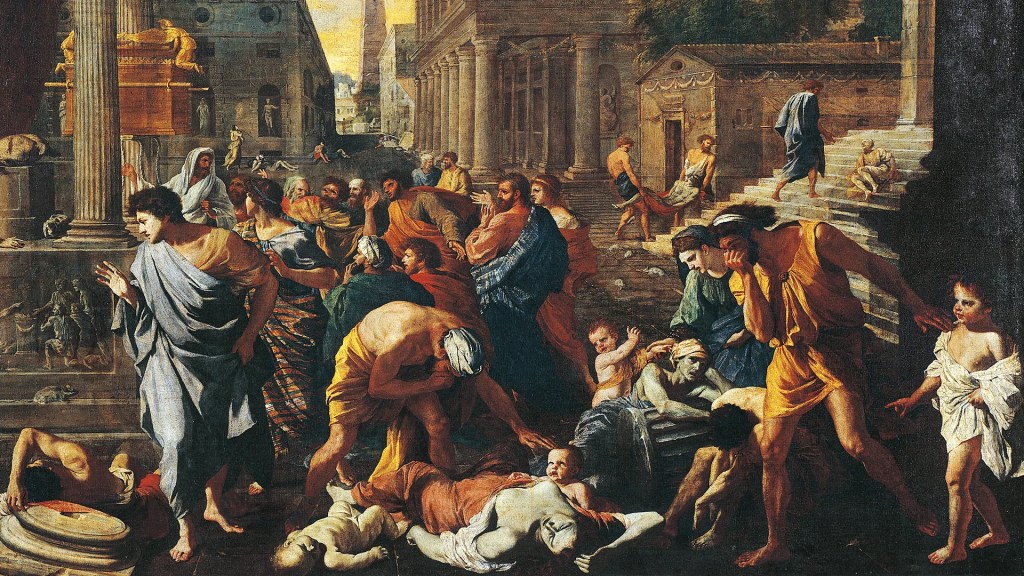
Hesiod’s poem “Works and days” tells the story of Pandora’s box, the great grave jar from which misfortune was let loose upon the world. Ills came silently while hope remained shut up inside it. Prometheus stole fire from Zeus, who in anger planned for grief to come to humans:
Till now in peace all the days of the earth had run;
The tribes of men had been saved from the toil that drives,
And disease that flings the swarming Fates on our lives.
But Pandora lifted the jar’s great lid, and then
Its plagues were scattered abroad, with mischief for men.
Only hope remained, entrapped for evermore. (Hesiod, in Higham and Bowra 1938: 132) It was the loss of a Golden Age when people had been free from toil, suffering, and disease. Similarly, in the story of Adam and Eve’s fall, a paradise was likewise lost.
Since then, have people changed or is it diseases that have changed?

This was the question to which Sir Thomas Browne gave an answer in his “Letter to a friend,” written around 1656:
Some think there were few Consumptions in the Old World, when Men lived much upon Milk; and that the ancient Inhabitants of this Island were less troubled with Coughs when they went naked, and slept in Caves and Woods, than Men now in Chambers and Feather-beds. Plato will tell us that there was no such Disease as Catarrh in Homer’s time, and that it was but new in Greece in his age…. Some will allow no Diseases to be new, others think that many old ones are ceased; and that such which are esteemed new, will have but their time. However the Mercy of God hath scattered the great heap of Diseases, and not loaded any one Country with all: some may be new in one Country which have been old in another. New Discoveries of the Earth discover new Diseases: for besides the common swarm, there are endemial and local Infirmities proper unto certain Regions, which in the whole Earth make no small number: and if Asia, Africa, and America should bring in their List, Pandora’s Box would swell, and there must be a strange Pathology. (Browne 1977: 399)
This could almost be the justification for a medical anthropology.
People can find food in very different environments, obviously an advantage for survival. “We eat all sorts of things,” a New Guinean man said to me with a cheerful laugh. “You White people choose only the good things to eat, you haven’t got strong teeth to eat the things we do, you can’t chew up the bones.” But though physiological versatility and flexible development are vital to adaptation, the evolutionary mechanism is genetic. Genes are the basis of characteristics that will potentially be shown by the organism in any environment in which it is able to develop. The genome remains the same whatever the conditions in which the individual organism grows to maturity. Acquired characteristics do not alter the genome. Indeed, it is fortunate that this is so, since most acquired characteristics in nature are the consequence of injury, starvation, disease, or senescence; only a minority are adaptive. The inheritance of naturally “acquired characters” would more likely lead to a deterioration of a species rather than to adaptive advantages (Maynard Smith 1966). The paradox of social evolution, Lamarckian though it is, is that we tend to assume the opposite and suppose that the changes we choose to make are improvements—progress rather than deterioration—because people have exercised choice, as though what people choose and like must naturally be good for them.
The exchange of diseases between the Old and the New World was not equal. The Old World had adapted to certain illnesses through gradual exposure over the millennia attendant upon contacts between Asia and Europe, the impact of the Mongol Empire, the Black Death, the effects of expanding communication, and trade by sea and by land. By contrast, the New World and Oceania were confronted with the sudden transoceanic introduction of diseases from the Old World, with catastrophic consequences. Few if any truly isolated societies now remain. After an epidemic wreaked its toll, a gradual equilibrium tended to emerge, with the populations becoming less vulnerable to disastrous epidemic diseases. They entered a new era of disease proliferation when the balance changed from epidemic to endemic patterns. By the sixteenth and seventeenth centuries, populations in Europe began to grow.
In the complex of factors sustaining Europe’s expansion, McNeill argues that the altered pattern of infectious disease was of key significance.
In The Modern Rise of Population, Thomas McKeown (1976) summed up his research on the role of medicine. His identification of various causes for the decline of mortality in England and Wales was influential, creating something of “a conceptual revolution in the disciplines of history and medicine, overturning a long-standing general orthodoxy regarding the importance of medical science and the medical profession in bringing about the decline in mortality which accompanied industrialization in Britain” (Szreter 1988: 2). From his examination of the records, McK-eown concluded that the rise represented a decreasing death rate rather than an increasing birth rate. He found that the decline of mortality was due chiefly to the reduction in deaths from infectious diseases. Between the period of 1848–54 and 1971, 26 percent of the drop in mortality was due to a reduction in non infectious mortality, but the largest proportion—74 percent—was due to fewer deaths from infectious diseases. To interpret this finding, McKeown looked for when, to what extent, and which specific infections declined. Not all infectious diseases declined uniformly, since different kinds of such illnesses existed, each with its own characteristics and particular history.
The drop in mortality was not much influenced by immunizations or medical treatments before 1935, when sulfonamide antibiotics became available. Certain medical measures were effective before 1935 in the management of smallpox, syphilis, tetanus, diphtheria, diarrhoeal diseases, and some surgical conditions, but these had made only a small contribution to the total decline in the death rate since 1838. By the method of exclusion, he was left with one other explanation for the re-duction of mortality—namely, improvements in the human environment. Water purification, efficient sewage disposal, and improved food hygiene were introduced in the second half of the nineteenth century and reduced death from intestinal infections, but the decline in infectious diseases had actually begun before then. His main finding was therefore the negative conclusion that, contrary to common assumptions, medical science and hygiene had not contributed much to this era’s decline in mortality. His positive finding was that improvements in nutrition explained the population increase.
The most likely explanation, in McKeown’s view, for the decline in mortality and the growth in population was the improvement in the population’s nutrition due to greater food supplies.
I have stepped quite far outside the limits of my competence. Why? As someone trained in medicine, I was struck by McKeown’s argument that little evidence existed to support the notion that medical advances before 1935 had made much difference in the decline in mortality in England and Wales. He challenged the conventional wisdom that progress in medicine and treatments must be the chief reasons for a growing freedom from disease in modern times. In my training as an anthropologist, however, I wondered whether medical treatments in other societies or earlier historical periods may have been more effective in reducing rates of death from infectious dis-eases. Is our own readiness to value what we do for the ill matched by other people’s convictions in other places and in the past?
The Right Diagnosis
When we make definitions or argue about them, we are primarily asking about the use of words, not about the nature of things. The question here is about the criteria of medicine to use in cross-cultural comparison. Comparison is inevitable. We name a subject “medical anthropology,” so what comes into it? Medicine in other cultures. What is that? Their art of healing, says one. Their knowledge of illness, says another. Healing what or whom? Illness, the sick. But what is illness? Who are the sick? We reach the edge of a tangled argument.
If we knew diagnostic facts about diseases, we could look into the variety of social responses to them, confident of comparing like with like and of distinguishing the medical facts from the social responses that a particular kind of disease happened to evoke in a particular place or situation.
In infinitely varied ways, the ideas and practices of a society can affect the occurrence and outcomes of diseases.
First, some background: I came into medical anthropology from initial medical training and a few years’ experience of hospital practice in Britain’s National Health Service. Social anthropology had long attracted me. What was it like to be ill in a society with no access to the sort of medicine I had been trained in? This part describes illness and the range of local responses to it in a small New Guinean village I observed during my first period of fieldwork in 1968–69. At that time, the village was difficult to reach and had relatively little exposure to introduced Western biomedicine. The villagers had to meet a diverse range of medical problems largely reliant on their own resources.
With any classification of illness, we can inquire into the principles on which it is based, the assumptions it makes, and the information it conveys. The Gnau do not assume that examining bodily signs and symptoms will reveal the cause of illness; they are simply not concerned with classifying illnesses by clinical features. What matters to them in serious illness is finding out the cause so they will know what to do to treat it.
Therefore, they distinguish between kinds of illness in terms of their causes—this, to them, is diagnosis, as it often is for us, too, although in different terms and on the basis of different kinds of evidence. A diagnosis in Gnau terms will convey almost no information about the bod-ily condition of the person who is ill. While I lived among them, I had to find out what features they paid attention to in order to discern the cause. Understanding these features helped answer the question of what information was conveyed in their diagnoses.
Yet the Gnau, like all other people, start to speak of illness only after recognizing some change in a person. There is nothing to explain, no reason to classify by cause or sign, or to treat illness except when something has been recognized as requiring a response, whether explanation or treatment.
My purpose in this chapter is to give a sense of how residents of the village of Rauit, Papua New Guinea, experienced and faced illnesses in 1968–1969. Even though these cases come from just a single village, they show a range of the problems and the variety of responses—enough, I hope, for some wider issues to be grasped. Although my periods of fieldwork were short (1968–1969, 1975, and 1985), they spanned Papua New Guinea’s change from colonial status to independence. In the interim, a village aid post was set up for the villagers of Rauit and Mandubil, supervised by the mission health service. Chapter 4 will describe how the village aid post affected village care and the work of the local health committee. The move from village morality and expectations to the aims of the National Health Plan was a huge change, requiring major shifts of assumption about care and responsibilities in treatment.
Illness is a relatively public matter in a village. Houses are set close together, and people know each other and about each other in detail, since they spend most of every day outside and visible to others. They see illness and must cope with it at close quarters. However, to take an extreme example, the illness and death of a week-old baby passed unremarked by most villagers, unknown to some, while at another time, an-other illness—that of a man in his forties—disturbed the usual pattern of the whole village’s life for about three months. Reactions may be very public or very private; they vary because of the sort of illness, its acute-ness and severity, aspects of the person involved (who is affected, what age and status, belonging to what group), the timing of the illness and its mode of onset, and the circumstances. An accident or sudden illness can provoke concern that a gradual descent into illness usually does not.
Ordinary cases
One of the troubles with describing social responses to illness is that readers are often more curious to hear about dramatic or complicated cases than about common illnesses that people have to cope with or respond to without much fuss. As a result, anthropologists may neglect to write about care for common minor illnesses and give undue attention to complicated cases and ritual treatment. Partly this is inevitable because one hears more about them during fieldwork. In Gnau villages, the hamlet rather than the entire village is the effective unit of daily life, of chatting, of trivial news. Unless one lives in the hamlet, many small illnesses and accidents pass unnoticed by outsiders. Home care is quiet and relatively private. The bite of a death adder understandably causes more of a commotion than an infected sore. Villagers would see the sore as something ordinary, an accident too trivial to make much fuss over, and assume it will get better soon. But a person knows if someone is ill in the same hamlet and should come without waiting to ask if there is something he or she can do to help. Whether much is done depends on how long the illness lasts.
Matupin has just another fever. August 13, 1968, Watalu.
Matupin had gone to Namelim (the bush where he has gardens), and while working in the afternoon, he felt sick and hot and then vomited. He stayed there and slept in his garden house that night. He came back the next day feeling better. The following day, I saw him go off in the morning; however, as I was doing something in Watalu in the afternoon, his first wife called out to me to go and see him, since he was ill again. He had come back early and vomited. He was lying beside a small fire in his second wife’s fenced-off cooking porch, apparently asleep. I didn’t wake him up and went to see someone else. Twenty minutes later, noisy retching came from where he was. Everyone could hear it, exaggerated looks were exchanged, someone said he’s very sick and told me to go and give him an injection. I went to look. He had retched up a little water; nothing else had come up, he said, just water. He felt hot and had a headache. I offered to come back with some medicine, but he said he wanted to sleep. However, that evening, I forgot to bring him the antimalarial tablets I said I would. No one came to remind me.
The next morning, I found him on the ground in front of his first wife’s house, lying in the dust. He had a headache and felt hot, but he did not feel nauseated. I gave him the tablets. He did not want to talk, just to sleep. In the afternoon, he felt better, chatted vaguely, and said he would like to smoke now. He had not smoked for two days because he had been ill. He thought the illness must be because he had cut the leaves of a big fern nimbe’ut that people associate with spirits and illness. He had not asked for treatment by anyone nor had he tried to treat himself, although he knows what to do for this kind of illness. He was going to wait for it to pass. He planned to sit around and wait. He was better the next day. No one did anything special about this illness.
Hopes and Disappointment
Pain, uncertainty, and anxiety make people seek relief in illness. The sufferer looks for help. There is pressure to do something rather than nothing, to try something in the hope that it will work. Many physicians know how difficult it is to practice “masterly inactivity.” Talcott Parsons (1951) remarked on this demand for positive action in his original analysis of the medical system and medical practice in society.

A new medical domain
At first, village people lacked the information and experience necessary to distinguish what were the different jobs, skills, and spheres of responsibility of the White people they encountered. Both missionaries and government patrol officers (kiaps) in the early days of contact gave medical advice or treatment. It was no cause for surprise to local people if a priest on patrol pulled a syringe and a half-filled vial of penicillin out of his rucksack and offered to inject a sick baby. Prayer was mixed up with treatment. It was difficult to work out what was different about the patrol officer’s orders for someone to allow a wound to be treated or for him to order someone else to pay a fine. It was equally hard for them distinguish the missionary’s attempt to stop the practice of spitting betel juice on sores from his attempt to put an end to their masked rituals. In the period of Australian administration, patrol officers might carry out health inspections, order treatment for yaws or sores, take absconding lepers into custody, or require a mother to take her child for supplementary feeding. Missions established clinics and health centers. Patrol officers ordered people to dig latrines, bury their dead, use new sources of water, and change the position and style of houses—villages viewed these orders as part of what kiaps did. Missionaries sometimes preached against their customs, masks, dances, ritual bleeding, polygamy, sorcery, and sometimes about cleanliness, diet, clothes, water, and latrines.
How was someone who had no contact with European society to recognize the different aims and motives behind all these various exhortations and reproofs?
At first, the villagers mixed them up or conflated them; they supposed they might be rewarded for compliance and punished for disobedience—and sometimes they were. They could not understand why all these changes were ordered. Some were intelligible in terms of their own ideas: flies carry “poison,” germs are invisible spirits, washing cleanses female pollution. The particular setting for a practice played a part in allowing people to make sense of them. Some of the practices, particularly the equipment—bandages, lint, syringes and needles, penicillin, liniment, and pills—were clearly new and associated with the White people who brought them. The separate medical sphere to which they belonged became progressively more distinct as health care was increasingly confined to specific times, places, and people—that is, clinic sched-ules, the aid post, and the people whose main job seemed to be giving medical care. The activities of patrol officers and missionaries came to be differentiated. The experience of those who went to towns or centers with hospitals and surgeons, the establishment of a local health center with a missionary doctor, and the encounter with Papua New Guineans who were trained to provide medical care and use the equipment led to changes in Gnau views about how medical ideas and practices were different from other new practices and ideas that White people brought.
Although the novelties of health care were tied up at first with the people who introduced them, the equipment and treatments were gradually put in New Guinean hands—indeed, into those of trained local people—making it clear that medical practices and knowledge were detachable from White people. The local health center gave them some exposure to the complex equipment used in Western medicine. The “real” medicine of the White people came to be seen as what went on in hospitals.

Problems of the new medical aid post
The medical aid post was built in Rauit in 1969. It was organized by the mission health center and was primarily intended to serve the needs of the village and the neighbouring one of Mandubil. When health posts were set up, the mission hospital would train Indigenous men to be aid post orderlies (APO), who were expected to provide treatment for villagers’ common ailments: cuts, sores, simple wounds, injuries, and common complaints such as chest infections, malaria, diarrhoea, ear infections, headaches, and the like. Ideally, an APO was supposed to meet nearly all the villagers’ first-aid needs for medical attention, guidance, and health education. An APO was expected to live in the village with the people he served and to be familiar with them, their language, and their way of life. He received a salary from the Public Health Department using funds allocated to the province. The village people were expected to supply him with food and to give him convenient land on which to make a garden. None of the local men of Rauit or Mandubil had been trained as an APO and none had reached the necessary school standard. Men from other villages in the district who spoke a different language had been among the first to complete their training. The first APO sent to attend to the Rauit aid post in 1970 was one of these. He came from a nearby village. On the score of familiarity with the village and the closeness to his home, the arrangement should have been satisfactory. His wife stayed at home in their own village most of the time. But it was easy for him to return there—too easy.
The villagers were caught in a dilemma: they lacked knowledge of the skills required for the newly-introduced medicines, so they had to depend on someone who was trained. They preferred to trust those who were closest to them—those who were kin, not outsiders, especially those from neighbouring places with whom they fought in the past. There may have been controls over training, examinations, and supervision, but the villagers did not know about these nor were they in any position to assess them.
Problems also arose with recognizing and meeting the reciprocity and obligations expected between the community and the health worker.
I described the committee meetings in my field notebooks.
The local health committee
The local health committee meets every three months at the health center that the mission started. The local APOs all come, as well as the White nurses (women) who now run the health center. Any village councilors may come who wish to attend or bring matters up for discussion, but there are rarely more than one or two of them at any given meeting. The bunch of APOs are old friends; they meet every few months. They are all men, the oldest is probably in his late 50s, the others of various ages. There are cheerful greetings when they meet, some banter. There will be about fifteen people present at a meeting, although attendance has varied between nine and twenty-four. Minutes are kept, the meetings are chaired—of late, by the New Guinean Health Extension Officer in charge of the district hospital at Lumi (a man) but, before him, by the White Australian or New Zealand nursing sister in charge at the health center. After opening the meeting with a prayer, the nursing sister asks for items to go on the agenda: routine matters, any new instructions, suggestions, or questions raised by those present. They sit at desk benches in a class-room. At the front of the room is an anatomical chart and a plaster cast of a head and body dissected to show the arrangement of some of the internal organs. The agenda is written on the blackboard. The business is conducted in Tokpisin. Many items are about conditions of service, plans, and pay.
A meeting is held, 1985
A meeting has been called to order. After the minutes of the last meeting are read, the chairman reports that he has not had a reply to his letter about some money they should have received. He announces how much was available from the public health department grant and the Rural Improvement Programme for building aid posts. As there was enough for two, they discuss priorities. The APOs suggest where they think the new ones should go. They recall they had agreed to rebuild the dilapidated post at Rauit. The chairman then reminds them that they need to get their priorities right, that they must have the necessary staff first before they build new medical aid posts. There are places like Yilui with an aid post standing empty; they are short of men, not money…
Community values and the bureaucratic system
This account has not covered the whole meeting, but it conveys in immediate terms some of the clashes between individuals, community values, and those of an introduced system: the modern health care system. Problems of payment, the community, and the orderly’s obligations and priorities are prominent.
The right to health care: National Health Plans
The epigraph to the introduction of the Papua New Guinea National Health Plan 1974–78 reads as follows: “A National Health Plan is not just a set of recommendations about what should be; rather it is the record of choices and decisions made by those who are committed to the implementation of those decisions.” Among the decisions made by the government are those concerning the health of the country’s population. The introduction continued: “Health planning is not just an aid to economic progress. It is concerned with providing people with a service which is theirs as a basic human right” (Papua New Guinea National Health Plan 1974–78: 1). It recognized the maintenance of health as one of the government’s tasks and duties to society. People have a right to health, but it is difficult to make sure that everyone in Papua New Guinea has equal access to treatment when they need it. It is challenging to provide them with the same chance to enjoy good health, as social equity would demand, given that villages are so dispersed and located in such different terrains and that the nation holds such a wide variety of societies. Who should be responsible for providing the resources needed to secure the right to health? The individual? The community? The government (Abel-Smith 1976: chap. 1)? Do the poor, rural villagers, or the ignorant have less of a right to it or need it less than others? Rhetorical as those questions may sound, people and governments indeed have to face them.
From ideals to practice
The ideals and objectives of the Papua New Guinea health plans were channelled into specific proposals. But intentions are one thing, fulfillment is another. There are bound to be gaps between ideals and practice. Discussion at the local health committee illustrated how things may seem so different according to someone’s perspective and position in a system. The local communities perhaps did not show the active involvement that the government hoped to see. Villagers were weakly aware of their obligations and what the orderlies could or should be expected to do, and health education had far to go. The orderlies gathered at the meeting sounded much like workers or professionals anywhere, with much to say about their pay and conditions. They justified themselves, they answered criticism, they did their job.
Credits: PANDORA’S BOX Ethnography and the Comparison of Medical Beliefs-Gilbert Lewis
 Scriveners Online©
Leave a comment