
❝Never do anything by halves if you want to get away with it. Be outrageous. Go the whole hog. Make sure everything you do is so completely crazy it’s unbelievable.❞
-Roald Dahl, Matilda (1988)

A ‘med comms’ site for everyone!

✒︎ Informative

Presenting the latest news, discoveries and innovations in medicine in a blog-style format!

⚕ Global

Reaches the national and the international readers!

♛ Unique & Dynamic

There’s an article for everyone in all areas of medicine!

#scriveners

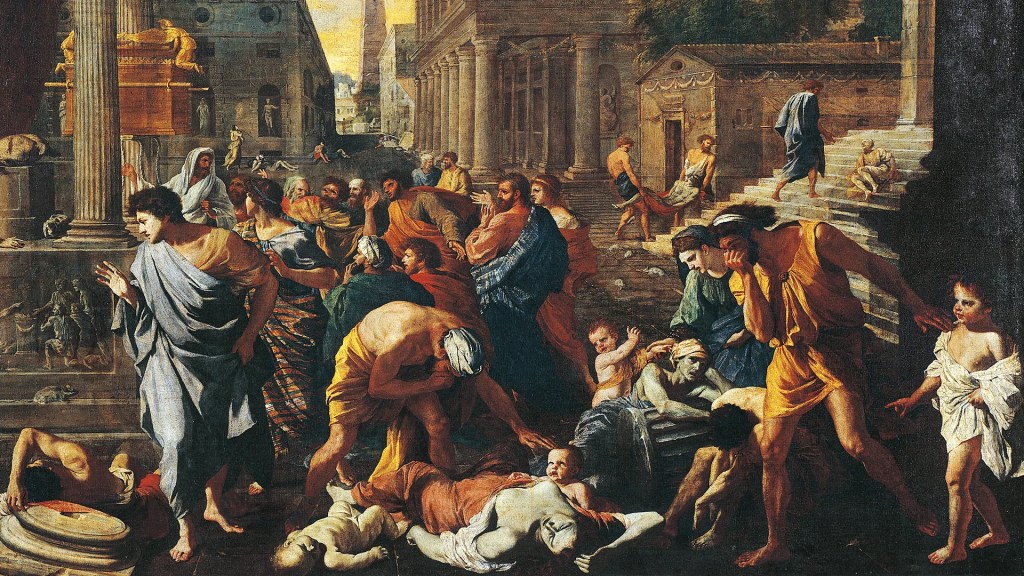
The Plague of Ashdod (1630) Nicholas Poussin

The artwork “The Plague of Ashdod” was created by the French painter Nicolas Poussin in 1630. It portrays the biblical narrative of a divine plague inflicted upon the people of Ashdod. 

This dramatic scene of divine punishment is described in the Old Testament. The Philistines are stricken with plague in their city of Ashdod because they have stolen the Ark of the Covenant from the Israelites and placed it in their pagan temple. You can see the decorated golden casket of the Ark between the pillars of the temple. People look around in horror at their dead and dying companions. One man leans over the corpses of his wife and child and covers his nose to avoid the stench. Rats scurry towards the bodies. The broken statue of their deity, Dagon, and the tumbled down stone column further convey the Philistines’ downfall.

In the artwork, Poussin vividly depicts the turmoil and suffering caused by the plague. The foreground is filled with the stricken inhabitants of Ashdod; their bodies are contorted in agony or limp in the stillness of death, illustrating the mercilessness of the affliction. The variety of postures and expressions captures the range of human suffering and chaos that accompanies such disaster. 

Amongst the afflicted, several figures stand out due to their dynamic gestures or central placement within the composition, drawing the viewer’s eye and emphasizing the emotional impact of the scene. In the background, classical architecture gives a sense of order and permanence that starkly contrasts with the disarray and despair of the figures. Poussin’s use of colour and light skilfully highlights the drama, with the dark and earthy tones of the suffering masses set against the lighter, more serene sky, which suggests divine presence or intervention.

Poussin’s use of color and light skillfully highlights the drama, with the dark and earthy tones of the suffering masses set against the lighter, more serene sky, which suggests divine presence or intervention. The overall effect is one of a carefully structured scene that conveys a narrative full of intensity and profound human drama, characteristic of the religious paintings of the period and the classical style Poussin is renowned for. Poussin began to paint The Plague of Ashdod while the bubonic plague was still raging throughout Italy though sparing Rome. He first called the painting The Miracle in the Temple of Dagon, but later it became known as The Plague of Ashdod.

The painting most importantly provides a view into how illness and diseases were feared at that time in the past and the fact that people had the knowledge that it was transmissible during that time period which was the 16th century.

𝕸𝖊𝖗𝖗𝖞 𝕮𝖍𝖗𝖎𝖘𝖙𝖒𝖆𝖘!🎄🎅𝕸𝖆𝖞 𝖆𝖑𝖑 𝖞𝖔𝖚𝖗 𝕮𝖍𝖗𝖎𝖘𝖙𝖒𝖆𝖘 𝖜𝖎𝖘𝖍𝖊𝖘 𝖈𝖔𝖒𝖊 𝖙𝖗𝖚𝖊!

🥳𝐉𝐮𝐬𝐭 𝐢𝐧𝐬𝐭𝐚𝐥𝐥𝐞𝐝 𝐚 𝐧𝐞𝐰 𝐩𝐥𝐚𝐧 𝐚𝐧𝐝 𝐜𝐡𝐚𝐧𝐠𝐞𝐝 𝐭𝐡𝐞 𝐬𝐢𝐭𝐞 𝐚𝐝𝐝𝐫𝐞𝐬𝐬! 𝐖𝐞’𝐯𝐞 𝐮𝐩𝐠𝐫𝐚𝐝𝐞𝐝 𝐛𝐚𝐛𝐲! 🎉 scrionl.blog ♡
🚨𝐃𝐮𝐞 𝐭𝐨 𝐬𝐨𝐦𝐞 𝐮𝐧𝐟𝐨𝐫𝐞𝐬𝐞𝐞𝐧 𝐜𝐢𝐫𝐜𝐮𝐦𝐬𝐭𝐚𝐧𝐜𝐞 𝐈 𝐰𝐢𝐥𝐥 𝐛𝐞 𝐭𝐚𝐤𝐢𝐧𝐠 𝐚 𝐡𝐢𝐚𝐭𝐮𝐬 𝐟𝐨𝐫 𝐚 𝐩𝐞𝐫𝐢𝐨𝐝 𝐨𝐟 𝐨𝐧𝐞 𝐦𝐨𝐧𝐭𝐡!🚨
𝐖𝐞 𝐧𝐨𝐰 𝐡𝐚𝐯𝐞 𝐚𝐧 𝐈𝐧𝐬𝐭𝐚𝐠𝐫𝐚𝐦 𝐚𝐜𝐜𝐨𝐮𝐧𝐭!📱
𝐀 𝐧𝐞𝐰 𝐬𝐞𝐜𝐭𝐢𝐨𝐧 ‘𝐂𝐨𝐧𝐭𝐚𝐜𝐭’ 𝐡𝐚𝐬 𝐛𝐞𝐞𝐧 𝐚𝐝𝐝𝐞𝐝! 📞

𝐓𝐡𝐞 ‘𝐋𝐢𝐧𝐤𝐬 & 𝐁𝐨𝐨𝐤𝐬 & 𝐘𝐨𝐮𝐓𝐮𝐛𝐞 & 𝐏𝐨𝐝𝐜𝐚𝐬𝐭𝐬’ 𝐬𝐞𝐜𝐭𝐢𝐨𝐧 𝐢𝐬 𝐧𝐨𝐰 𝐚𝐯𝐚𝐢𝐥𝐚𝐛𝐥𝐞!💙
𝐍𝐞𝐰 𝐰𝐚𝐥𝐥𝐩𝐚𝐩𝐞𝐫𝐬 𝐡𝐚𝐯𝐞 𝐛𝐞𝐞𝐧 𝐚𝐝𝐝𝐞𝐝 𝐭𝐨 𝐭𝐡𝐞 ‘𝐄𝐱𝐭𝐫𝐚𝐬’ 𝐬𝐞𝐜𝐭𝐢𝐨𝐧. 𝐃𝐨 𝐜𝐡𝐞𝐜𝐤 𝐢𝐭 𝐨𝐮𝐭!⚡️
𝐀𝐧𝐧𝐨𝐮𝐧𝐜𝐞𝐦𝐞𝐧𝐭: 𝐌𝐨𝐫𝐞 𝐭𝐡𝐚𝐧 𝐚 𝟏𝟎𝟎 𝐭𝐡𝐚𝐧𝐤𝐬! 𝐖𝐞’𝐯𝐞 𝐫𝐞𝐚𝐜𝐡𝐞𝐝 𝟏𝟎𝟎 𝐩𝐨𝐬𝐭𝐬! 🍾 🍷
𝓒𝓮𝓵𝓮𝓫𝓻𝓪𝓽𝓲𝓷𝓰 𝓽𝓱𝓲𝓼 𝓶𝓮𝓭𝓲𝓬𝓪𝓵 𝔀𝓻𝓲𝓽𝓲𝓷𝓰 𝓫𝓵𝓸𝓰’𝓼 1-𝔂𝓮𝓪𝓻 𝓪𝓷𝓷𝓲𝓿𝓮𝓻𝓼𝓪𝓻𝔂!🍾🍷

What you need to know about the Nipah virus as a medical professional…

The Nipah virus was first identified in April 1999 on a pig farm in peninsular Malaysia when it caused an outbreak of neurological and respiratory disease. The outbreak resulted in 257 human cases, 105 human deaths, and the culling of 1 million pigs. Geographical Distribution & Emergence The emergence of NiV as a significant public…

An Unbeknownst Parenting and Summoning an Anxious Generation of Pre-teens

Imagine a billionaire that’s a tech giant having a vision to fulfil, it may bring chaos, violence, and intense human emotions but it also brings a huge lump sum of cash! Your child is one of the few chosen ones to go on a far-away realm in the palms of their hands, it’s Mars! It’s…

PAs Seek Legal Action

The BMA and the RCGP have stated that the role of PA should be phased out. The Leng review, published in July last year, found that there were ‘no convincing reasons to abolish the roles’ completely, but also ‘no case for continuing with the roles unchanged.   The review recommended that they should not triage…

A Life-Changing Eye Injecting Gel

Restoring impairing blindness and repurposing the old techniques…   “It’s incredible, it’s life-changing, it’s given me everything back. It was challenging. I couldn’t see to get around my house, I found it incredibly tough to get outside, How am I gonna see my child when he runs off?” Nicki Guy     Hypotony is a…

An Eye For an Eye Towards Liver Cancer Treatment

Alex Villalta as he was working in his office for his tile business, got a doctor visit who told him that he had “lost a lot of weight.” He was diagnosed with a rare form of cancer called leiomyosarcoma that had spread to his liver and it weighed more than 4 kg. Dr Sinziana Dumitra,…

Vaccine-Hate Brings More Trouble

Vaccines are the single greatest invention known to man. They are the most primitive for the most of the ‘Health for All’ practice. For God’s sake, the great plagues and outbreaks of the past centuries would’ve been rid off, if they have what we have now!   Politics are dirty and it’s dirty for a…

  • Challenging the Odds with Humanitarian Medicine

    by

    Nivea Vaz ,
    6–9 minutes

    Humanitarian Medicine

    Humanitarian assistance is universal in that it seeks to assist those whose livelihoods and health are impacted by conflict, disaster or displacement. However, the backgrounds and expertise of those who provide it and the places which they work are diverse. Humanitarian medicine differs from the typical practices of medicine, whether locally or ‘globally,’ in that it deals with the complex humanitarian emergencies as ‘situations of disrupted livelihoods and threats to life produced by warfare, civil disturbance and large-scale movements of people, in which any emergency response has to be conducted in a difficult political and security environment.’

    Often working without extensive auxiliary or administrative staff, providers of effective humanitarian relief sometimes need to work beyond the traditional confines of their training, while also respecting the principles of medical ethics.

    The provision of healthcare in humanitarian crises is complex and can often be characterised by unstable or chaotic settings with high morbidity and mortality and insufficient time and resources. Treating patients in such environments may first require humanitarian workers to negotiate for humanitarian space, sometimes with armed combatants, and to design a clinical practice layout with reflects the security and contextual realities of the community that they are serving.

    See: What could humanitarian surgery be?

    The healthcare provider may be called on to run clinics or nutritional centres, combat epidemics, support surgery, carry out vaccination campaigns, or strengthen hospital management. Further, humanitarian workers must have a nuanced understanding of the specific contexts in which they work, especially in complex emergencies involving armed conflict, in which additional socioeconomic and political intricacies are often present.

    Working effectively in Borno, Nigeria, requires an understanding of malnutrition, cholera, malaria, and an emphasis on water and sanitation.

    Working in Yemen, by contrast, involves supporting surgical, maternal, and inpatient care for a population long exposed to conflict and reduced access to healthcare. Treating Syrian refugees in Jordan means a focus on chronic and non-communicable diseases.

    Principles of Humanitarian Medicine

    Humanitarian medicine has developed tremendously over the preceding decades, but in a way that still recognises its origins in the nineteenth century Red Cross Movement. The Red Cross’s Founder was Henri Dunant, a Swiss Businessman who encountered thousands of soldiers of multiple nationalities lying wounded near Solferino, Italy, during the 1859 War of Italian Unification. Dunant assisted the wounded and wrote a book about the experience, highlighting the need for a cadre of pre-trained volunteers ready to assist in emergencies and calling for the establishment of an international relief society. His idea was that aid workers should be allowed to enter the battlefield unarmed as long as they agreed to remain neutral in a conflict. The Red Cross Movement was born out of this idea, and Dunant went on to participate in the drafting of the Geneva Conventions that enshrine the concepts of rules in war, and of protection for humanitarian assistance. The Red Cross is now universally recognised as the guardian of international humanitarian law.

    Humanity, neutrality, impartiality, and independence are widely accepted humanitarian principles, forming the bedrock of humanitarian assistance. The United Nations (UN) Office for the Coordination of Humanitarian Affairs (OCHA) summarises these key principles as follows:

    Humanity: human suffering must be addressed wherever it is found. The purpose of humanitarian action is to protect life and health and ensure respect for human beings.

    Neutrality: humanitarian actors must not take sides in hostilities or engage in controversies of a political, racial, religious, or ideological nature.

    Impartiality: humanitarian action must be carried out on the basis of need alone, giving priority to the most urgent cases of distress and making no distinctions on the basis of nationality, race, gender, religious belief, class or political opinions.

    Independence: humanitarian action must be autonomous from the political, economic, military, or other objectives that any actor may hold with regard to areas where humanitarian action is being implemented.

    Response Phases  

    The acute, active phase of an emergency response is often considered a core activity period of humanitarian response, but in reality, preparations start well before a possible disaster, and extends well beyond the initial response. Humanitarian action can be seen as a relief-to-development continuum, although lines are often blurred. (See Fig 2.2)

    Size and Scope of Disaster and Recovery Efforts

    Preparedness Phase

    The objective is to reduce the risks associated with a humanitarian crisis by addressing the source of the vulnerability and likelihood of an event occurring and preparing for the possibility of an unfortunate event to happen.

    Short Term: relief phase

    The first relief is usually done by the population themselves during and immediately after an event. In the days and weeks that follow the onset of the emergency, a coordination mechanism for the aid is put in place by OCHA in agreement with the government.

    Intermediate: reconstruction, early recovery

    This is the period of time when the focus of the humanitarian actors shifts to starting reconstruction and rehabilitation of the community. During this phase, the government can re-establish, the pre-crisis government mechanism.

    Long term: transition to development

    This covers the period of gradual exit of the international humanitarian actors and handover of activities to the population and government.

    Emergency Operations

    Humanitarian crisis response requires three elements:

    ➊Staff trained for emergency operations

    ➋Emergency stock strategically located

    ➌Emergency procedures

    Emergency situations often require different approaches to allow an immediate response which emphasizes speed and flexibility. A fast response can start with incomplete information, and is equivalent to the idea of ‘launching a missile first and then guiding it.’

    Most organisations use a ‘push-pull’ strategy, including the use of prepositioned kits in their warehouses to start an operation.

    Push-pull strategy

    Push

    At the start of a crisis response, a rapid assessment can be done to allow an organisation to estimate what goods are needed.

    These goods are then ‘pushed’ towards the crisis from stock.

    During this initial response, a team typically conducts a more thorough needs assessment, while other members of the team are providing services and distributing necessary supplies.

    Pull

    As the initial response finishes (about 2-3 weeks), improved needs assessment allows the team to clearly determine needs.

    They then order, or ‘pull’ the goods towards them as needed.

    The ‘who’ and ‘what’ of aid

    With the increasing number of international humanitarian responses, it is useful to consider what goods and services are being provided-and who, in the absence of humanitarian crisis, should provide them. For this, it is useful to categorise goods:

    ➮Public goods: goods provided by the state and whose delivery is a crucial part of the social contract between the state and its citizens. Citizens pay tax and in return, public goods are provided which confer legitimacy on the state.

    ➮Private goods: goods normally provided by a private company in a competitive market.

    ➮Mixed goods: goods that are provided by both the private and the public sectors.

     Right to Health and Legal Advocacy

    The right to health and to healthcare is a fundamental human right in all situations of peace or conflict. However, it falls short of being applied concretely to many patients around the world due to individual states’ health policies and financial commitments to affordable medical care and an international context where the price of drugs is an obstacle for numerous LIC or MIC. Further, in situations of war, despite prohibitions by IHL, attacks on the wounded and sick, healthcare facilities, and personnel are occurring at an increasingly alarming rate. Whether or not they are dismissed as a mistake, ‘justified’ by the loss of protected status or committed with the intention to spread terror, they lead to practical deprivation of healthcare to the population. The healthcare workers in developing countries, may face retribution for speaking out on the injustices faced by their patients, so human rights organisations and INGOs therefore can play a key role in giving voice to healthcare workers’ and patients’ demands. If there is a medical intervention that is not accessible or suboptimal for a given population, simply raising awareness about the need for change may not be enough. medical advocacy uses testimonies and data to create strong argument for change.

    Medical Advocacy

    Medical advocacy can be a tool to address seemingly uncompromising medical challenges and has developed in many ways. Organisations, such as Physicians for Human Rights (PHR), use medicine and science to document and draw attention to mass atrocities and severe human rights violations, focusing on the protection of medical institutions and health professionals working on the frontline.

    Another approach has been Health Care in Danger Project, an initiative from the ICRC and Red Crescent Movement aimed at increasing awareness and addressing the issue of violence against patients and healthcare workers, facilities, and vehicles, and ensuring safe access to healthcare in armed conflict.

    Physicians for Human Rights: https://phr.org

    Health Care in Danger Project: HCiD – home

    Source: OXFORD HANDBOOK OF HUMANITARIAN MEDICINE

    Rating: 5 out of 5.

    4,833 hits

    Leave a comment

    𝙷𝚘𝚠 𝚖𝚎𝚍𝚒𝚌𝚒𝚗𝚎 𝚊𝚗𝚍 𝚑𝚎𝚊𝚕𝚝𝚑𝚌𝚊𝚛𝚎 𝚊𝚏𝚏𝚎𝚌𝚝 𝚞𝚜 𝚒𝚗 𝚝𝚑𝚎 𝚜𝚖𝚊𝚕𝚕𝚎𝚜𝚝 𝚘𝚏 𝚠𝚊𝚢𝚜 𝚕𝚎𝚊𝚍𝚒𝚗𝚐 𝚝𝚘 𝚋𝚒𝚐𝚐𝚎𝚛 𝚒𝚖𝚙𝚊𝚌𝚝𝚜 𝚊𝚗𝚍 𝚕𝚒𝚏𝚎-𝚌𝚑𝚊𝚗𝚐𝚒𝚗𝚐 𝚌𝚘𝚗𝚜𝚎𝚚𝚞𝚎𝚗𝚌𝚎𝚜! 𝚄𝚕𝚝𝚒𝚖𝚊𝚝𝚎𝚕𝚢, 𝚌𝚑𝚊𝚗𝚐𝚒𝚗𝚐 𝚠𝚑𝚊𝚝 𝚠𝚎 𝚌𝚊𝚕𝚕 ‘𝚑𝚎𝚊𝚕𝚝𝚑𝚌𝚊𝚛𝚎.’

    “Copyright [2024], [2025], [2026], [Scriveners], [Scriveners Online], All Rights Reserved. Any unauthorised duplication or use of this material is strictly prohibited.”

    ‘𝙰 𝚙𝚛𝚘𝚞𝚍 𝚖𝚎𝚍𝚒𝚌𝚊𝚕 𝚜𝚝𝚞𝚍𝚎𝚗𝚝’𝚜 𝚒𝚗𝚒𝚝𝚒𝚊𝚝𝚒𝚟𝚎 𝚊𝚗𝚍 𝚘𝚠𝚗𝚎𝚛𝚜𝚑𝚒𝚙!’‘