❝Never do anything by halves if you want to get away with it. Be outrageous. Go the whole hog. Make sure everything you do is so completely crazy it’s unbelievable.❞
-Roald Dahl, Matilda (1988)

A ‘med comms’ site for everyone!

✒︎ Informative

Presenting the latest news, discoveries and innovations in medicine in a blog-style format!

⚕ Global

Reaches the national and the international readers!

♛ Unique & Dynamic

There’s an article for everyone in all areas of medicine!

#scriveners

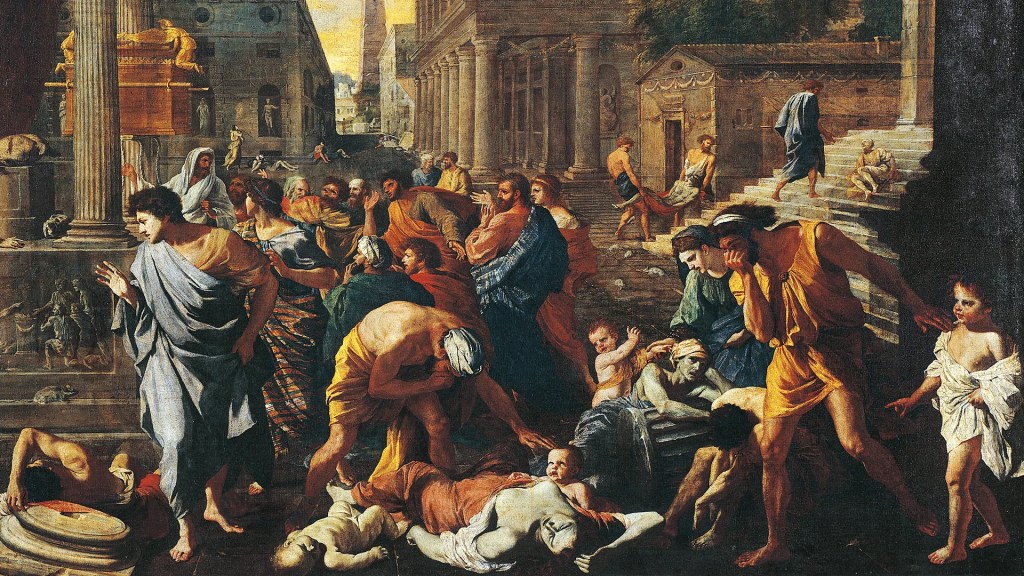
The Plague of Ashdod (1630) Nicholas Poussin

The artwork “The Plague of Ashdod” was created by the French painter Nicolas Poussin in 1630. It portrays the biblical narrative of a divine plague inflicted upon the people of Ashdod. 

This dramatic scene of divine punishment is described in the Old Testament. The Philistines are stricken with plague in their city of Ashdod because they have stolen the Ark of the Covenant from the Israelites and placed it in their pagan temple. You can see the decorated golden casket of the Ark between the pillars of the temple. People look around in horror at their dead and dying companions. One man leans over the corpses of his wife and child and covers his nose to avoid the stench. Rats scurry towards the bodies. The broken statue of their deity, Dagon, and the tumbled down stone column further convey the Philistines’ downfall.

In the artwork, Poussin vividly depicts the turmoil and suffering caused by the plague. The foreground is filled with the stricken inhabitants of Ashdod; their bodies are contorted in agony or limp in the stillness of death, illustrating the mercilessness of the affliction. The variety of postures and expressions captures the range of human suffering and chaos that accompanies such disaster. 

Amongst the afflicted, several figures stand out due to their dynamic gestures or central placement within the composition, drawing the viewer’s eye and emphasizing the emotional impact of the scene. In the background, classical architecture gives a sense of order and permanence that starkly contrasts with the disarray and despair of the figures. Poussin’s use of colour and light skilfully highlights the drama, with the dark and earthy tones of the suffering masses set against the lighter, more serene sky, which suggests divine presence or intervention.

Poussin’s use of color and light skillfully highlights the drama, with the dark and earthy tones of the suffering masses set against the lighter, more serene sky, which suggests divine presence or intervention. The overall effect is one of a carefully structured scene that conveys a narrative full of intensity and profound human drama, characteristic of the religious paintings of the period and the classical style Poussin is renowned for. Poussin began to paint The Plague of Ashdod while the bubonic plague was still raging throughout Italy though sparing Rome. He first called the painting The Miracle in the Temple of Dagon, but later it became known as The Plague of Ashdod.

The painting most importantly provides a view into how illness and diseases were feared at that time in the past and the fact that people had the knowledge that it was transmissible during that time period which was the 16th century.

𝕸𝖊𝖗𝖗𝖞 𝕮𝖍𝖗𝖎𝖘𝖙𝖒𝖆𝖘!🎄🎅𝕸𝖆𝖞 𝖆𝖑𝖑 𝖞𝖔𝖚𝖗 𝕮𝖍𝖗𝖎𝖘𝖙𝖒𝖆𝖘 𝖜𝖎𝖘𝖍𝖊𝖘 𝖈𝖔𝖒𝖊 𝖙𝖗𝖚𝖊!

🥳𝐉𝐮𝐬𝐭 𝐢𝐧𝐬𝐭𝐚𝐥𝐥𝐞𝐝 𝐚 𝐧𝐞𝐰 𝐩𝐥𝐚𝐧 𝐚𝐧𝐝 𝐜𝐡𝐚𝐧𝐠𝐞𝐝 𝐭𝐡𝐞 𝐬𝐢𝐭𝐞 𝐚𝐝𝐝𝐫𝐞𝐬𝐬! 𝐖𝐞’𝐯𝐞 𝐮𝐩𝐠𝐫𝐚𝐝𝐞𝐝 𝐛𝐚𝐛𝐲! 🎉 scrionl.blog ♡
🚨𝐃𝐮𝐞 𝐭𝐨 𝐬𝐨𝐦𝐞 𝐮𝐧𝐟𝐨𝐫𝐞𝐬𝐞𝐞𝐧 𝐜𝐢𝐫𝐜𝐮𝐦𝐬𝐭𝐚𝐧𝐜𝐞 𝐈 𝐰𝐢𝐥𝐥 𝐛𝐞 𝐭𝐚𝐤𝐢𝐧𝐠 𝐚 𝐡𝐢𝐚𝐭𝐮𝐬 𝐟𝐨𝐫 𝐚 𝐩𝐞𝐫𝐢𝐨𝐝 𝐨𝐟 𝐨𝐧𝐞 𝐦𝐨𝐧𝐭𝐡!🚨
𝐖𝐞 𝐧𝐨𝐰 𝐡𝐚𝐯𝐞 𝐚𝐧 𝐈𝐧𝐬𝐭𝐚𝐠𝐫𝐚𝐦 𝐚𝐜𝐜𝐨𝐮𝐧𝐭!📱
𝐀 𝐧𝐞𝐰 𝐬𝐞𝐜𝐭𝐢𝐨𝐧 ‘𝐂𝐨𝐧𝐭𝐚𝐜𝐭’ 𝐡𝐚𝐬 𝐛𝐞𝐞𝐧 𝐚𝐝𝐝𝐞𝐝! 📞

𝐓𝐡𝐞 ‘𝐋𝐢𝐧𝐤𝐬 & 𝐁𝐨𝐨𝐤𝐬 & 𝐘𝐨𝐮𝐓𝐮𝐛𝐞 & 𝐏𝐨𝐝𝐜𝐚𝐬𝐭𝐬’ 𝐬𝐞𝐜𝐭𝐢𝐨𝐧 𝐢𝐬 𝐧𝐨𝐰 𝐚𝐯𝐚𝐢𝐥𝐚𝐛𝐥𝐞!💙
𝐍𝐞𝐰 𝐰𝐚𝐥𝐥𝐩𝐚𝐩𝐞𝐫𝐬 𝐡𝐚𝐯𝐞 𝐛𝐞𝐞𝐧 𝐚𝐝𝐝𝐞𝐝 𝐭𝐨 𝐭𝐡𝐞 ‘𝐄𝐱𝐭𝐫𝐚𝐬’ 𝐬𝐞𝐜𝐭𝐢𝐨𝐧. 𝐃𝐨 𝐜𝐡𝐞𝐜𝐤 𝐢𝐭 𝐨𝐮𝐭!⚡️
𝐀𝐧𝐧𝐨𝐮𝐧𝐜𝐞𝐦𝐞𝐧𝐭: 𝐌𝐨𝐫𝐞 𝐭𝐡𝐚𝐧 𝐚 𝟏𝟎𝟎 𝐭𝐡𝐚𝐧𝐤𝐬! 𝐖𝐞’𝐯𝐞 𝐫𝐞𝐚𝐜𝐡𝐞𝐝 𝟏𝟎𝟎 𝐩𝐨𝐬𝐭𝐬! 🍾 🍷
𝓒𝓮𝓵𝓮𝓫𝓻𝓪𝓽𝓲𝓷𝓰 𝓽𝓱𝓲𝓼 𝓶𝓮𝓭𝓲𝓬𝓪𝓵 𝔀𝓻𝓲𝓽𝓲𝓷𝓰 𝓫𝓵𝓸𝓰’𝓼 1-𝔂𝓮𝓪𝓻 𝓪𝓷𝓷𝓲𝓿𝓮𝓻𝓼𝓪𝓻𝔂!🍾🍷

What you need to know about the Nipah virus as a medical professional…

The Nipah virus was first identified in April 1999 on a pig farm in peninsular Malaysia when it caused an outbreak of neurological and respiratory disease. The outbreak resulted in 257 human cases, 105 human deaths, and the culling of 1 million pigs. Geographical Distribution & Emergence The emergence of NiV as a significant public…

An Unbeknownst Parenting and Summoning an Anxious Generation of Pre-teens

Imagine a billionaire that’s a tech giant having a vision to fulfil, it may bring chaos, violence, and intense human emotions but it also brings a huge lump sum of cash! Your child is one of the few chosen ones to go on a far-away realm in the palms of their hands, it’s Mars! It’s…

PAs Seek Legal Action

The BMA and the RCGP have stated that the role of PA should be phased out. The Leng review, published in July last year, found that there were ‘no convincing reasons to abolish the roles’ completely, but also ‘no case for continuing with the roles unchanged.   The review recommended that they should not triage…

A Life-Changing Eye Injecting Gel

Restoring impairing blindness and repurposing the old techniques…   “It’s incredible, it’s life-changing, it’s given me everything back. It was challenging. I couldn’t see to get around my house, I found it incredibly tough to get outside, How am I gonna see my child when he runs off?” Nicki Guy     Hypotony is a…

An Eye For an Eye Towards Liver Cancer Treatment

Alex Villalta as he was working in his office for his tile business, got a doctor visit who told him that he had “lost a lot of weight.” He was diagnosed with a rare form of cancer called leiomyosarcoma that had spread to his liver and it weighed more than 4 kg. Dr Sinziana Dumitra,…

Vaccine-Hate Brings More Trouble

Vaccines are the single greatest invention known to man. They are the most primitive for the most of the ‘Health for All’ practice. For God’s sake, the great plagues and outbreaks of the past centuries would’ve been rid off, if they have what we have now!   Politics are dirty and it’s dirty for a…

  • More Clinical Mysteries Left to Solve…

    by

    Nivea Vaz ,
    9–13 minutes

    ‘An Unusual Loss of Consciousness’

    A panic sounding voice on the phone exclaimed, “I can’t wake my wife up!” The woman, his wife of 43 years began to snore. This was not something she’d done before. As her husband, he tried to wake her up. He just didn’t get it. He had a fit and healthy wife.

    The day started off quite normal, she was healthy and active, and got home from work as usual in the late afternoon, made dinner and went for her kickboxing class. After that, she had got home, put the children to sleep and had a drink: a mix of vodka and cranberry juice. The couple went to bed. Normally, the husband would be up and his wife would go to sleep comparatively early but today they went to sleep together. As they were talking the wife began to snore which was unexpected, so much so that he thought his wife was joking around with him. Her husband tried to wake her but it was of no use, he shouted her name, shook her shoulder. He was now terrified and dialled up 911.

    It was up to the medics to wake her up, they called her name, they administered her Narcan, a counteractive drug for narcotics even though her husband mentioned with the utmost surety that she doesn’t take any drugs. All the response that they had got from her was a moan, she was briskly loaded inside the ambulance that drove her to the ER of the University of Michigan Medical Centre. Dr Robert Silbergleit was the doctor on duty that night. The EMTs would report her as a “Comatose, forty-three-year-old woman found by her husband, she’s snoring and unresponsive except to pain.” He noted that the patient was perfectly fit and healthy albeit asleep. He rubbed her chest using the sternal rub manoeuvre. “Stop” she moaned but she didn’t open her eyes and she didn’t wake up.

    Dr Silbergleit listed down mentally the possible causes of her strange and unexpected somnolence. Drug overdose-he sent off the blood and urine samples to detect sedating drugs or alcohol, traumatic brain injury-had she been hit in the head during kickboxing class? If so, that would mean a possible brain injury so an inquiry for a CT scan was done, stroke-the sudden onset of symptoms sounded like a stroke but the sudden loss of consciousness didn’t, still, stroke had to be considered because it can be reduced or even prevented by medications. The drugs though had to be given within four and a half hours of the onset of symptoms because these drugs had the potential to cause life-threatening bleeding.

    Ischemic stroke usually results when an artery to the brain is blocked, often by a blood clot and/or a fatty deposit due to atherosclerosis. Symptoms occur suddenly and may include muscle weakness, paralysis, lost or abnormal sensation on one side of the body, difficulty speaking, confusion, problems with vision, dizziness, and loss of balance and coordination. Diagnosis is usually based on symptoms and results of a physical examination and brain imaging. Other imaging tests (computed tomography and magnetic resonance imaging) and blood tests are done to identify the cause of the stroke.

    Results; the drug tests were negative, the blood-alcohol level were consistent with the reported single dinner drink, and the CT scan didn’t show evidence of bleeding or a stroke. Silbergleit ordered a CT angiogram- outlining the brain with the arteries for any suggestive of a stroke. It appeared normal. The doctor spoke to Lesli Skolarus, a neurologist specialised in strokes. He explained to him that he was planning to get his hands on an EEG to see if the woman was having continuing seizures. The neurologist was at home and he had to hurry to the hospital, arriving at around 1:00 a.m.  By the time, Skolarus finished reviewing the results, her patient fell asleep and two hours had passed since.

    Artery of Percheron territory infarct is rare, on account of the relative rarity of the artery of Percheron, and presents with a variety of signs and symptoms collectively termed the paramedian thalamic syndrome. It is a type of posterior circulation infarction. On imaging, it is classically characterized by bilateral infarcts in areas involving the rostral midbrain and/or ventromedial thalamus. Artery of Percheron territory infarcts are thought to account for 4-18% of all thalamic ischemic strokes.

    Treatment may include medications to break up blood clots or to make blood less likely to clot and procedures to physically remove blood clots, followed by rehabilitation. About one third of people recover all or most of normal function after an ischemic stroke. Preventive measures include control of risk factors, medications to make blood less likely to clot, and sometimes surgery or angioplasty to open blocked arteries.

    She was struck as much as the ER doctor was with the sudden onset of symptoms. Was it even a stroke? If its was, it was an odd one. Any obstruction in this case will cut off blood and oxygen supply to the brain. The typical stroke she’s studied on would cause weakness or paralysis on one side of the body, keeping the patient wide awake. The part of the brain keeping us awake is the RAS (Reticular Activating System). One artery on each side of the brain feeds the RAS, in case one was blocked it would give protection.

    Causes of Ischaemic Stroke

    An ischemic stroke typically results from blockage of an artery that supplies blood to the brain, most commonly a branch of one of the internal carotid arteries. As a result, brain cells are deprived of blood. Most brain cells die if they are deprived of blood for 4.5 hours.

    Common causes

    Commonly, blockages are blood clots (thrombi) or pieces of fatty deposits (atheromas, or plaques) due to atherosclerosis. Such blockages often occur in the following ways:

    1. By forming in and blocking an artery
    2. By travelling from another artery to an artery in the brain
    3. By travelling from the heart to the brain

    Blood clots in a brain artery do not always cause a stroke. If the clot breaks up spontaneously within less than 15 to 30 minutes, brain cells do not die and people’s symptoms resolve. Such events are called transient ischemic attacks (TIAs).

    If an artery narrows very gradually, other arteries (called collateral arteries) sometimes enlarge to supply blood to the parts of the brain normally supplied by the clogged artery. Thus, if a clot occurs in an artery that has developed collateral arteries, people may not have symptoms.

    The most common causes of ischemic stroke can be classified as

    ~Cryptogenic stroke

    ~Embolic stroke

    ~Lacunar infarction

    ~Large-vessel atherosclerosis (the 4th most common cause)

    However, a small segment of the population has only one vessel delivering blood to the RAS and a well-positioned clot to this single vessel called the artery of Percheron could completely block flow to the RAS and in turn cause consciousness. Skolarus had seen this stroke during her training years in an elderly man who had lost consciousness, but by the time they discovered it, the damage had been permanent.

    Skolarus looked at the clock, it’s been three hours that had passed since the start of the woman’s symptoms. If she really had a clot in the artery of Percheron, there was still time to use a clot buster to re-open the vessel. But to perform this, they would require an MRI. A half an hour later, Skolarus watched as the midbrain imaging appeared in front of her. A bright red spot was visible indicating a clear damage to the artery of Percheron, she called the ER to get the drug busting clot ready.

    Many different symptoms can occur, depending on which artery is blocked and thus which part of the brain is deprived of blood and oxygen (see Brain Dysfunction by Location).

    When the arteries that branch from the internal carotid artery (which carry blood along the front of the neck to the brain) are affected, the following are most common:

    ~Blindness in one eye

    ~Loss of vision on either the left side or the right side of both eyes

    ~Abnormal sensations, weakness, or paralysis in one arm or leg or on one side of the body

    ~When the arteries that branch from the vertebral arteries (which carry blood along the back of the neck to the brain) are affected, the following are most common:

    ~Dizziness and vertigo

    ~Double vision or loss of vision in both eyes

    ~Generalized weakness on one or both sides of the body

    ~Many other symptoms, such as difficulty speaking (for example, slurred speech), impaired consciousness (such as confusion), loss of coordination, and urinary incontinence, can occur.

    ~Severe strokes may lead to stupor or coma. In addition, strokes, even milder ones, can cause depression or an inability to control emotions. For example, people may cry or laugh inappropriately.

    ~Some people have a seizure when the stroke begins. Seizures may also occur months to years later. Late seizures result from scarring or materials that are deposited from blood in the damaged brain tissue.

    ~Occasionally, fever develops. It may be caused by the stroke or another disorder.

    ~If symptoms, particularly impaired consciousness, worsen during the first 2 to 3 days, the cause is often swelling due to excess fluid (edema) in the brain. In large strokes, the swelling in the brain is typically at its worst about 3 days after the stroke begins. Symptoms usually lessen within a few days, as the fluid is absorbed. Nonetheless, the swelling is particularly dangerous because the skull does not expand. The resulting increase in pressure can cause the brain to shift, further impairing brain function, even if the area directly damaged by the stroke does not enlarge. If the pressure becomes very high, the brain may be forced sideways and downward in the skull, through the rigid structures that separate the brain into compartments. The resulting disorder is called herniation, which can be fatal.

    The medication started before the four and a half hours deadline. As the medicine was dripping in, she showed the patient’s husband the scans. Then, she told the bad news the fact that she might never wake up. Even she did there would be damage. Suddenly the husband heard his wife’s voice, he rushed with Skolarus to the bedside, she was scared but her eyes were open and she was talking.

    Complications of stroke

    Strokes can lead to other problems (complications):

    ~If swallowing is difficult, people may not eat enough and become malnourished and dehydrated.

    ~Food, saliva, or vomit may be inhaled (aspirated) into the lungs, resulting in aspiration pneumonia.

    ~Being in one position too long can result in pressure sores and lead to muscle loss, deconditioning, urinary tract infections, and permanent shortening of muscles (contractures).

    ~Not being able to move the legs can result in the formation of blood clots in deep veins of the legs and groin (deep vein thrombosis).

    ~Clots in the deep veins of the legs can break off, travel through the bloodstream, and block an artery to a lung (a disorder called pulmonary embolism).

    ~People may have difficulty sleeping.

    ~The losses and problems resulting from the stroke may make people depressed.

    She knew her name, his name, and the name of the current president, she was back.

    She stayed in the hospital for the next several days, the doctors wanted to know why all of this was happening to her. A sonogram of the heart gave them the answer to their question. There was an opening in the heart wall that separated the right side from left side. The clot most likely travelled from the lung through the heart to the brain. When the author of this book, spoke to her, she mentioned that she was back to her old self and was amazed and grateful.

    “There were so many ways I was lucky that night. If my husband had come to bed at his usual time, he might have not noticed anything. If the neurologist hadn’t come in, if the MRI hadn’t been available…” She stopped. “It’s all a little scary.”

    (ps: I had to do a re-post cause I had to re-upload my illustration!)

    Source;

    Diagnosis: Solving the Most Baffling Medical Mysteries-Lisa Sanders. (Cases go in no particular order!)

    https://www.msdmanuals.com/home/brain-spinal-cord-and-nerve-disorders/stroke/ischemic-stroke

    https://radiopaedia.org/articles/artery-of-percheron-territory-infarct

    Rating: 5 out of 5.

    4,833 hits

    Leave a comment

    𝙷𝚘𝚠 𝚖𝚎𝚍𝚒𝚌𝚒𝚗𝚎 𝚊𝚗𝚍 𝚑𝚎𝚊𝚕𝚝𝚑𝚌𝚊𝚛𝚎 𝚊𝚏𝚏𝚎𝚌𝚝 𝚞𝚜 𝚒𝚗 𝚝𝚑𝚎 𝚜𝚖𝚊𝚕𝚕𝚎𝚜𝚝 𝚘𝚏 𝚠𝚊𝚢𝚜 𝚕𝚎𝚊𝚍𝚒𝚗𝚐 𝚝𝚘 𝚋𝚒𝚐𝚐𝚎𝚛 𝚒𝚖𝚙𝚊𝚌𝚝𝚜 𝚊𝚗𝚍 𝚕𝚒𝚏𝚎-𝚌𝚑𝚊𝚗𝚐𝚒𝚗𝚐 𝚌𝚘𝚗𝚜𝚎𝚚𝚞𝚎𝚗𝚌𝚎𝚜! 𝚄𝚕𝚝𝚒𝚖𝚊𝚝𝚎𝚕𝚢, 𝚌𝚑𝚊𝚗𝚐𝚒𝚗𝚐 𝚠𝚑𝚊𝚝 𝚠𝚎 𝚌𝚊𝚕𝚕 ‘𝚑𝚎𝚊𝚕𝚝𝚑𝚌𝚊𝚛𝚎.’

    “Copyright [2024], [2025], [2026], [Scriveners], [Scriveners Online], All Rights Reserved. Any unauthorised duplication or use of this material is strictly prohibited.”

    ‘𝙰 𝚙𝚛𝚘𝚞𝚍 𝚖𝚎𝚍𝚒𝚌𝚊𝚕 𝚜𝚝𝚞𝚍𝚎𝚗𝚝’𝚜 𝚒𝚗𝚒𝚝𝚒𝚊𝚝𝚒𝚟𝚎 𝚊𝚗𝚍 𝚘𝚠𝚗𝚎𝚛𝚜𝚑𝚒𝚙!’‘