
❝Never do anything by halves if you want to get away with it. Be outrageous. Go the whole hog. Make sure everything you do is so completely crazy it’s unbelievable.❞
-Roald Dahl, Matilda (1988)

A ‘med comms’ site for everyone!

✒︎ Informative

Presenting the latest news, discoveries and innovations in medicine in a blog-style format!

⚕ Global

Reaches the national and the international readers!

♛ Unique & Dynamic

There’s an article for everyone in all areas of medicine!

#scriveners

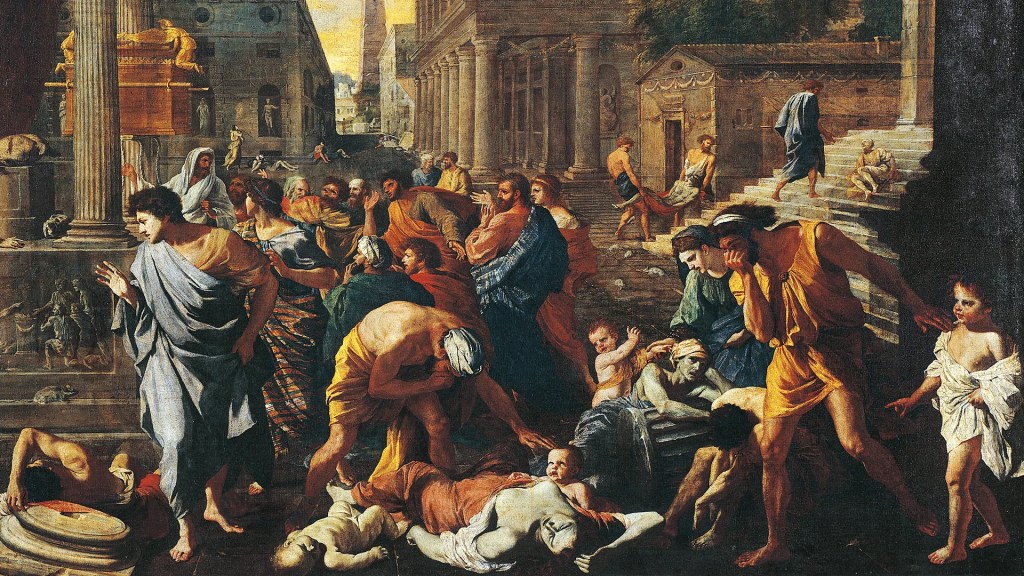
The Plague of Ashdod (1630) Nicholas Poussin

The artwork “The Plague of Ashdod” was created by the French painter Nicolas Poussin in 1630. It portrays the biblical narrative of a divine plague inflicted upon the people of Ashdod. 

This dramatic scene of divine punishment is described in the Old Testament. The Philistines are stricken with plague in their city of Ashdod because they have stolen the Ark of the Covenant from the Israelites and placed it in their pagan temple. You can see the decorated golden casket of the Ark between the pillars of the temple. People look around in horror at their dead and dying companions. One man leans over the corpses of his wife and child and covers his nose to avoid the stench. Rats scurry towards the bodies. The broken statue of their deity, Dagon, and the tumbled down stone column further convey the Philistines’ downfall.

In the artwork, Poussin vividly depicts the turmoil and suffering caused by the plague. The foreground is filled with the stricken inhabitants of Ashdod; their bodies are contorted in agony or limp in the stillness of death, illustrating the mercilessness of the affliction. The variety of postures and expressions captures the range of human suffering and chaos that accompanies such disaster. 

Amongst the afflicted, several figures stand out due to their dynamic gestures or central placement within the composition, drawing the viewer’s eye and emphasizing the emotional impact of the scene. In the background, classical architecture gives a sense of order and permanence that starkly contrasts with the disarray and despair of the figures. Poussin’s use of colour and light skilfully highlights the drama, with the dark and earthy tones of the suffering masses set against the lighter, more serene sky, which suggests divine presence or intervention.

Poussin’s use of color and light skillfully highlights the drama, with the dark and earthy tones of the suffering masses set against the lighter, more serene sky, which suggests divine presence or intervention. The overall effect is one of a carefully structured scene that conveys a narrative full of intensity and profound human drama, characteristic of the religious paintings of the period and the classical style Poussin is renowned for. Poussin began to paint The Plague of Ashdod while the bubonic plague was still raging throughout Italy though sparing Rome. He first called the painting The Miracle in the Temple of Dagon, but later it became known as The Plague of Ashdod.

The painting most importantly provides a view into how illness and diseases were feared at that time in the past and the fact that people had the knowledge that it was transmissible during that time period which was the 16th century.

𝕸𝖊𝖗𝖗𝖞 𝕮𝖍𝖗𝖎𝖘𝖙𝖒𝖆𝖘!🎄🎅𝕸𝖆𝖞 𝖆𝖑𝖑 𝖞𝖔𝖚𝖗 𝕮𝖍𝖗𝖎𝖘𝖙𝖒𝖆𝖘 𝖜𝖎𝖘𝖍𝖊𝖘 𝖈𝖔𝖒𝖊 𝖙𝖗𝖚𝖊!

🥳𝐉𝐮𝐬𝐭 𝐢𝐧𝐬𝐭𝐚𝐥𝐥𝐞𝐝 𝐚 𝐧𝐞𝐰 𝐩𝐥𝐚𝐧 𝐚𝐧𝐝 𝐜𝐡𝐚𝐧𝐠𝐞𝐝 𝐭𝐡𝐞 𝐬𝐢𝐭𝐞 𝐚𝐝𝐝𝐫𝐞𝐬𝐬! 𝐖𝐞’𝐯𝐞 𝐮𝐩𝐠𝐫𝐚𝐝𝐞𝐝 𝐛𝐚𝐛𝐲! 🎉 scrionl.blog ♡
🚨𝐃𝐮𝐞 𝐭𝐨 𝐬𝐨𝐦𝐞 𝐮𝐧𝐟𝐨𝐫𝐞𝐬𝐞𝐞𝐧 𝐜𝐢𝐫𝐜𝐮𝐦𝐬𝐭𝐚𝐧𝐜𝐞 𝐈 𝐰𝐢𝐥𝐥 𝐛𝐞 𝐭𝐚𝐤𝐢𝐧𝐠 𝐚 𝐡𝐢𝐚𝐭𝐮𝐬 𝐟𝐨𝐫 𝐚 𝐩𝐞𝐫𝐢𝐨𝐝 𝐨𝐟 𝐨𝐧𝐞 𝐦𝐨𝐧𝐭𝐡!🚨
𝐖𝐞 𝐧𝐨𝐰 𝐡𝐚𝐯𝐞 𝐚𝐧 𝐈𝐧𝐬𝐭𝐚𝐠𝐫𝐚𝐦 𝐚𝐜𝐜𝐨𝐮𝐧𝐭!📱
𝐀 𝐧𝐞𝐰 𝐬𝐞𝐜𝐭𝐢𝐨𝐧 ‘𝐂𝐨𝐧𝐭𝐚𝐜𝐭’ 𝐡𝐚𝐬 𝐛𝐞𝐞𝐧 𝐚𝐝𝐝𝐞𝐝! 📞

𝐓𝐡𝐞 ‘𝐋𝐢𝐧𝐤𝐬 & 𝐁𝐨𝐨𝐤𝐬 & 𝐘𝐨𝐮𝐓𝐮𝐛𝐞 & 𝐏𝐨𝐝𝐜𝐚𝐬𝐭𝐬’ 𝐬𝐞𝐜𝐭𝐢𝐨𝐧 𝐢𝐬 𝐧𝐨𝐰 𝐚𝐯𝐚𝐢𝐥𝐚𝐛𝐥𝐞!💙
𝐍𝐞𝐰 𝐰𝐚𝐥𝐥𝐩𝐚𝐩𝐞𝐫𝐬 𝐡𝐚𝐯𝐞 𝐛𝐞𝐞𝐧 𝐚𝐝𝐝𝐞𝐝 𝐭𝐨 𝐭𝐡𝐞 ‘𝐄𝐱𝐭𝐫𝐚𝐬’ 𝐬𝐞𝐜𝐭𝐢𝐨𝐧. 𝐃𝐨 𝐜𝐡𝐞𝐜𝐤 𝐢𝐭 𝐨𝐮𝐭!⚡️
𝐀𝐧𝐧𝐨𝐮𝐧𝐜𝐞𝐦𝐞𝐧𝐭: 𝐌𝐨𝐫𝐞 𝐭𝐡𝐚𝐧 𝐚 𝟏𝟎𝟎 𝐭𝐡𝐚𝐧𝐤𝐬! 𝐖𝐞’𝐯𝐞 𝐫𝐞𝐚𝐜𝐡𝐞𝐝 𝟏𝟎𝟎 𝐩𝐨𝐬𝐭𝐬! 🍾 🍷
𝓒𝓮𝓵𝓮𝓫𝓻𝓪𝓽𝓲𝓷𝓰 𝓽𝓱𝓲𝓼 𝓶𝓮𝓭𝓲𝓬𝓪𝓵 𝔀𝓻𝓲𝓽𝓲𝓷𝓰 𝓫𝓵𝓸𝓰’𝓼 1-𝔂𝓮𝓪𝓻 𝓪𝓷𝓷𝓲𝓿𝓮𝓻𝓼𝓪𝓻𝔂!🍾🍷

What you need to know about the Nipah virus as a medical professional…

The Nipah virus was first identified in April 1999 on a pig farm in peninsular Malaysia when it caused an outbreak of neurological and respiratory disease. The outbreak resulted in 257 human cases, 105 human deaths, and the culling of 1 million pigs. Geographical Distribution & Emergence The emergence of NiV as a significant public…

An Unbeknownst Parenting and Summoning an Anxious Generation of Pre-teens

Imagine a billionaire that’s a tech giant having a vision to fulfil, it may bring chaos, violence, and intense human emotions but it also brings a huge lump sum of cash! Your child is one of the few chosen ones to go on a far-away realm in the palms of their hands, it’s Mars! It’s…

PAs Seek Legal Action

The BMA and the RCGP have stated that the role of PA should be phased out. The Leng review, published in July last year, found that there were ‘no convincing reasons to abolish the roles’ completely, but also ‘no case for continuing with the roles unchanged.   The review recommended that they should not triage…

A Life-Changing Eye Injecting Gel

Restoring impairing blindness and repurposing the old techniques…   “It’s incredible, it’s life-changing, it’s given me everything back. It was challenging. I couldn’t see to get around my house, I found it incredibly tough to get outside, How am I gonna see my child when he runs off?” Nicki Guy     Hypotony is a…

An Eye For an Eye Towards Liver Cancer Treatment

Alex Villalta as he was working in his office for his tile business, got a doctor visit who told him that he had “lost a lot of weight.” He was diagnosed with a rare form of cancer called leiomyosarcoma that had spread to his liver and it weighed more than 4 kg. Dr Sinziana Dumitra,…

Vaccine-Hate Brings More Trouble

Vaccines are the single greatest invention known to man. They are the most primitive for the most of the ‘Health for All’ practice. For God’s sake, the great plagues and outbreaks of the past centuries would’ve been rid off, if they have what we have now!   Politics are dirty and it’s dirty for a…

  • The 7 Doctor Skills for Every Medical Student, Doctor and Surgeon

    by

    Nivea Vaz , ,
    8–12 minutes

    “In medicine and indeed other professions, we are hurtling through life, grappling with a complex, demanding and stressful existence. This is all about human beings reaching their full potential.”

    ~Dr Ratna Makker FRCA, MA (Med Ed) AOME


    Mrs Emma Sue trains healthcare professionals through various toolkits and workshops that are run across the UK. There are 7 soft skills that she shares in her book “7 Skills for the Future.” 


    Why these 7 skills matter to us physicians and surgeons?


    •equipped to deal effectively and gracefully with information overload

    •strategies to respond well to change

    •thrive despite uncertain work options and an uncertain future

    •know how to get work-balance right

    •get better at taking risks, making decisions, working collaboratively and having great ideas

    And any other healthcare professionals for that matter!

    1. Adaptability 


    •Advances in technology mean that we have got to keep learning and evolving.

    •Remote work teams and telecommunicating are fast becoming everyday.

    •Multiple generations in the workplace and home mean that we need to embrace different attitudes, ways of working and living.

    •We need to embrace innovation.

    •Most people are struggling with major changes to their lifestyle and work perhaps for economic reasons: being made redundant or not being able to find work easily.


    What sort of things make a person adaptable?


    These are the important four skills:


    1. Intellectual flexibility-this means keeping an open mind, being able to integrate new information smoothly and easily and switch easily from detail to the big picture.
    2. Being receptive-especially to change!
    3. Creativity-actively seeking out new things and not being afraid to experiment and improvise.
    4. Communication style-which can be adjusted to suit different contexts or situations.


    Mental Scripts

    It (our brain) creates what is known as ‘behavioural scripts’ which are mental models that automate our actions. An example is how our brains might build a behavioural script for riding a bike. Through practice, this behaviour becomes entrenched and automatic until we can do it without thinking. Mental scripts can also be linked to limiting beliefs. Limiting beliefs are the internal thoughts that inhibit what we are willing to commit to or do. Many of our limiting beliefs have been held for a long time, and once a limiting belief has been created, we often construct our lives to avoid breaching that belief. Sounds crazy but it’s what we do! If we believe we’re not confident, we’ll avoid activities that push us out of our comfort zone.


    7 steps to adaptability 

    1. Stick at things
    2. Be willing to learn
    3. Improvise
    4. Flex those muscles
    5. Adopt a ‘can do’ positive attitude to change
    6. Get creative at problem solving
    7. Have a survivor attitude 


     2. Critical Thinking


    The 4Cs

    1. Critical thinking and problem solving-the ability to make decisions, solve problems and take appropriate action.
    2. Communication-the ability to synthesise and transmit ideas, both verbally and in writing.
    3. Collaboration and team building-working effectively with others, including people with opposing points of view and with diverse groups.
    4. Creativity and innovation-being able to see what is missing and fix it.


    •Thinking critically means you ask more questions , look for relevant information, think open-mindedly and communicate well to find effective solutions.

    •Developing your capacity to think more critically will impact the quality of your decisions and judgements. They will be more informed and less biased or subjective.


    How to improve our creative thinking skills;


    1. Inhibitory control- This is the ability to resist the strong inclination to do one thing in order to do something else that is more appropriate, or would better help you to reach a goal.
    2. Working memory- This is a mental ‘jotting pad’ feature of your brain that shares important information that you can U.S. win the course of everyday life, helping you to stay focused on a task, block out distractions and keep you aware.
    3. Cognitive flexibility- is our human ability to switch behavioural responses according to the context of the situation.


    Six key principles to rethink our critical skills!


    1. How we make sense of things
    2. Novel and adaptive thinking is needed more than ever
    3. Computational thinking
    4. New media literacy 
    5. Managing our cognitive load 
    6. Becoming T-shaped-they being deep understanding of at least one field and often two or more, and they also have the capacity to converse in the language of a wider depth and breadth of fields.


    Ideologies that will stagger your critical thinking;


    Tendency No. 1: Confirmation bias

    Tendency No. 2: Attribution Bias

    Tendency No. 3: Trusting hearsay 

    Tendency No. 4: Memory lapses

    Tendency No. 5: Accepting authority without question 

    Tendency No. 6: Not admitting you don’t know all the facts


    Winner outlines the key elements of social thinking:

    1. Our thoughts and emotions are strongly connected.
    2. We think about others, even if we have no intention of interact with them.
    3. We ‘think with our eyes’ in order to figure out other people’s thoughts, intentions and emotions.


    7 steps to critical thinking

    1. Question your assumptions 
    2. Adopt different perspectives 
    3. Get creative 
    4. Build in reflection time
    5. Get past face value
    6. Build your skills


    3. Empathy


    Empathy according to Brene Brown is

    •being able to see the world as others see it

    •being non-judgemental 

    •understanding another person’s feelings

    •communicating your understanding of that person’s feelings


    There are three kinds of empathy;

    •Cognitive-this is being able to understand another’s perspective.

    •Emotional-the ability to feel what someone else feels is bound up with deep responses within our brain.

    •Empathetic concern-the ability to sense what another person needs from you.


    In a popular Harvard Business Review article, “What makes a leader,” Goldman isolates three reasons why empathy plays such an important role, particularly now:

    1. The increasing use of teams, both virtual and face-to-face
    2. The rapid pace of globalisation
    3. The growing need to retain talent 


    7 steps to empathy

    1. When were you last empathetic?
    2. Think about the last argument you had and what happened.
    3. Have a conversation where you actually listen.
    4. Slow down
    5. Get better at reading faces and body language
    6. Think about outcomes


    4. Integrity 


    Some common myths about integrity:

    1. Integrity just means being honest and straightforward 
    2. A balanced and compartmentalised life means a life of integrity
    3. Integrity is a natural quality. It’s effortless, just ‘part of who you are’ and you either have it or don’t. 


    When we talk about integrity, we sometimes miss out on the importance of consistency, honesty and truthfulness or accuracy of one’s actions. 


    Stephen Carter, in his book ‘Integrity,’ defines integrity as a virtue of character that requires three steps: 1) discerning what is right and what is wrong; 2) acting on what you have discovered, even at personal cost; and 3) saying openly that you are acting on your understanding of right from wrong.


    7 steps to integrity 

    1. Start with working out what your values are
    2. Be responsible 
    3. If you have let someone down, do it with integrity 
    4. Be personally accountable 
    5. Start with yourself 
    6. Be boring
    7. Manage expectations 


     5. Optimism 


    Tali Sharot, in ‘The Optimism Bias,’ says that we need to be able to imagine alternative realities and need to believe that we can achieve them. That is, in essence, where this bias or tendency comes from. Such faith helps motivate us and pursue our goals. Optimists generally work longer hours and tend to earn more.


    The Hallmarks of Healthy Optimism Include:

    1. Accurately assessing a situation, including asking questions, questioning assumptions, weighing up the facts, differentiating between facts and feelings and having a perspective.
    2. Seeing problems as temporary and not pervasive. Being able to acknowledge your own role within a situation, feelings and actions. Less blame laid on self or external factors. 
    3. Having faith in your own ability to implement solutions, adjust and move forward constructively. Knowing that there is something you can do. You may not be able to change an external situation, but you can be more in control of yourself within it. 

    The ABCDE model and explanatory styles

    Seligman’s ABCDE model is based on this. The model begins with the Ellis ABC model of Adversity, Belief and Consequence:


    •Adversity (the event): My husband comes home and snaps at me 

    •Belief (how I interpret that event): ‘What complete jerk. I can’t believe he’s being so disrespectful, aggressive and rude.”

    •Consequence (feelings and reactions that result from that interpretation): I shout back, throw dinner away and leave the house angry.


    Seligman  then adds ‘D’ and ‘E’ to the model. These are Disputation and Energisation:


    •Disputation: (provide counter-evidence to dispute either my interpretation of things or the cause of the event): I am over reacting. I don’t like this shouting but maybe he’s had bad news. It’s not like him to be aggressive. He must have had a terrible day. Something has really upset him. I’m sure I snap too when I’m upset or angry.”

     •Energisation is the successful dispute of negative beliefs and a happier outcome.

    Successful disputation, over time, leads to more positive feelings and a more realistic interpretation of events.


    7 steps to optimism

    1. Embrace negativity 
    2. Rethink happiness
    3. It’s as easy as ABC… DE
    4. Ditch the self-help books [Subjective experience in my humble opinion]
    5. Stop trying to think positively 
    6. Find ways to relieve anxiety and worry
    7. Make time for gratitude 


    6. Being proactive


    There are two aspects to being pro-active:

    •Long-term and strategic- This means being open for new opportunities, anticipating and preventing problems, persevering despite obstacles, achieving positive results and taking control of your own life.

    •Short term- this means small things you can do in the moment, how you use that space between stimulus and response and, more importantly, making sure that space gets bigger, whether that is reflecting before you respond to that email, focusing and listening attentively, making time for yourself or taking a deep breath before you respond to an aggressive colleague or both.


    Being proactive boils down to the four things:

    1. Self-awareness: being aware of negative reactions to change to positive actions.
    2. Willpower: having advice for its best effect future building up its strength.
    3. Responsibility
    4. Self-mastery


    Teaching or helping others to be more proactive is made up of two main components:

    1. Taking responsibility fora action instead of expecting someone else to think for me, and 
    2. Systemic view- an ability to understand how making a change or shift will impact something in the future.


    7 steps to being proactive 

    1. Watch your language
    2. Commit to being proactive 
    3. Take stock
    4. Learn something new 
    5. Start something in your community 
    6. Whatever it is, begin it
    7. Light up the room


    7. Resilience 


    How resilient you are come down to three main areas:

    1. Your personality and individual characteristics 
    2. Your environment 
    3. You and your environment 


    Someone who is resilient shares these;

    •They tend to have a clear and focus-specific goals they are working towards proactively.

    •They are self-aware and have a good sense of their strengths and weaknesses.

    •They tend to respond to negative events positively and flexibly.

    •They take risks and learn from their mistakes.

    •They have clear driving values and a distinct sense of purpose in their lives.

    •They are often reflective and value situations and events carefully.

    •They have a strong personal and professional support network around them.


    Adversity can develop resilience. To be resilient increased most during toughest times.


    Optimism works hand in hand alongside resilience.


    7 steps to resilience 

    1. Get some perspective 
    2. Know how to manage stress
    3. Know your strengths- trust and use them
    4. Build proactively into your life
    5. Look after yourself 
    6. Manage conflict 
    7. Take more risks


    Source: 7 Skills for the Future- Emma Sue Prince

    Rating: 5 out of 5.

    4,835 hits

    Leave a comment

    𝙷𝚘𝚠 𝚖𝚎𝚍𝚒𝚌𝚒𝚗𝚎 𝚊𝚗𝚍 𝚑𝚎𝚊𝚕𝚝𝚑𝚌𝚊𝚛𝚎 𝚊𝚏𝚏𝚎𝚌𝚝 𝚞𝚜 𝚒𝚗 𝚝𝚑𝚎 𝚜𝚖𝚊𝚕𝚕𝚎𝚜𝚝 𝚘𝚏 𝚠𝚊𝚢𝚜 𝚕𝚎𝚊𝚍𝚒𝚗𝚐 𝚝𝚘 𝚋𝚒𝚐𝚐𝚎𝚛 𝚒𝚖𝚙𝚊𝚌𝚝𝚜 𝚊𝚗𝚍 𝚕𝚒𝚏𝚎-𝚌𝚑𝚊𝚗𝚐𝚒𝚗𝚐 𝚌𝚘𝚗𝚜𝚎𝚚𝚞𝚎𝚗𝚌𝚎𝚜! 𝚄𝚕𝚝𝚒𝚖𝚊𝚝𝚎𝚕𝚢, 𝚌𝚑𝚊𝚗𝚐𝚒𝚗𝚐 𝚠𝚑𝚊𝚝 𝚠𝚎 𝚌𝚊𝚕𝚕 ‘𝚑𝚎𝚊𝚕𝚝𝚑𝚌𝚊𝚛𝚎.’

    “Copyright [2024], [2025], [2026], [Scriveners], [Scriveners Online], All Rights Reserved. Any unauthorised duplication or use of this material is strictly prohibited.”

    ‘𝙰 𝚙𝚛𝚘𝚞𝚍 𝚖𝚎𝚍𝚒𝚌𝚊𝚕 𝚜𝚝𝚞𝚍𝚎𝚗𝚝’𝚜 𝚒𝚗𝚒𝚝𝚒𝚊𝚝𝚒𝚟𝚎 𝚊𝚗𝚍 𝚘𝚠𝚗𝚎𝚛𝚜𝚑𝚒𝚙!’‘