
❝Never do anything by halves if you want to get away with it. Be outrageous. Go the whole hog. Make sure everything you do is so completely crazy it’s unbelievable.❞
-Roald Dahl, Matilda (1988)

A ‘med comms’ site for everyone!

✒︎ Informative

Presenting the latest news, discoveries and innovations in medicine in a blog-style format!

⚕ Global

Reaches the national and the international readers!

♛ Unique & Dynamic

There’s an article for everyone in all areas of medicine!

#scriveners

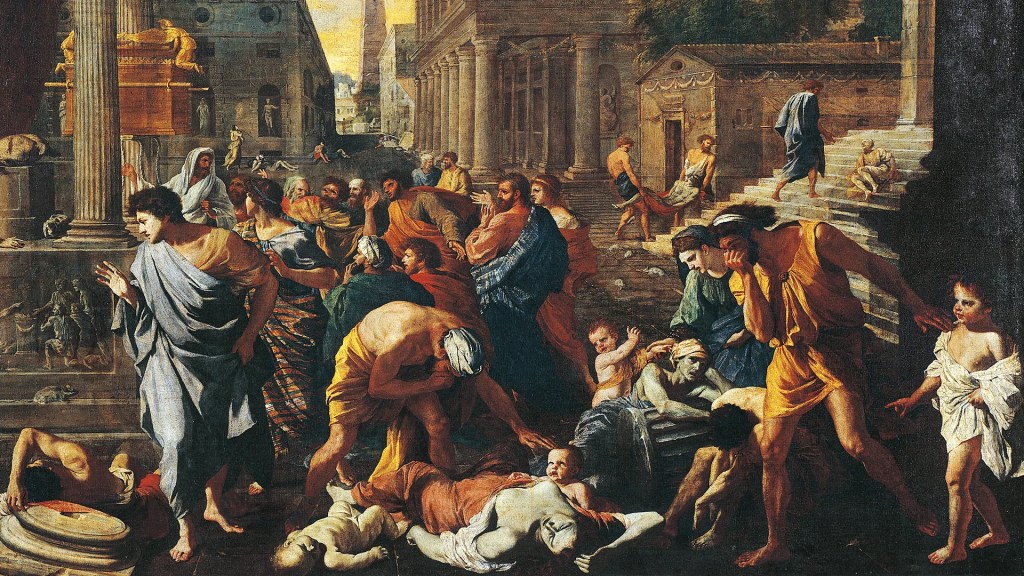
The Plague of Ashdod (1630) Nicholas Poussin

The artwork “The Plague of Ashdod” was created by the French painter Nicolas Poussin in 1630. It portrays the biblical narrative of a divine plague inflicted upon the people of Ashdod. 

This dramatic scene of divine punishment is described in the Old Testament. The Philistines are stricken with plague in their city of Ashdod because they have stolen the Ark of the Covenant from the Israelites and placed it in their pagan temple. You can see the decorated golden casket of the Ark between the pillars of the temple. People look around in horror at their dead and dying companions. One man leans over the corpses of his wife and child and covers his nose to avoid the stench. Rats scurry towards the bodies. The broken statue of their deity, Dagon, and the tumbled down stone column further convey the Philistines’ downfall.

In the artwork, Poussin vividly depicts the turmoil and suffering caused by the plague. The foreground is filled with the stricken inhabitants of Ashdod; their bodies are contorted in agony or limp in the stillness of death, illustrating the mercilessness of the affliction. The variety of postures and expressions captures the range of human suffering and chaos that accompanies such disaster. 

Amongst the afflicted, several figures stand out due to their dynamic gestures or central placement within the composition, drawing the viewer’s eye and emphasizing the emotional impact of the scene. In the background, classical architecture gives a sense of order and permanence that starkly contrasts with the disarray and despair of the figures. Poussin’s use of colour and light skilfully highlights the drama, with the dark and earthy tones of the suffering masses set against the lighter, more serene sky, which suggests divine presence or intervention.

Poussin’s use of color and light skillfully highlights the drama, with the dark and earthy tones of the suffering masses set against the lighter, more serene sky, which suggests divine presence or intervention. The overall effect is one of a carefully structured scene that conveys a narrative full of intensity and profound human drama, characteristic of the religious paintings of the period and the classical style Poussin is renowned for. Poussin began to paint The Plague of Ashdod while the bubonic plague was still raging throughout Italy though sparing Rome. He first called the painting The Miracle in the Temple of Dagon, but later it became known as The Plague of Ashdod.

The painting most importantly provides a view into how illness and diseases were feared at that time in the past and the fact that people had the knowledge that it was transmissible during that time period which was the 16th century.

𝕸𝖊𝖗𝖗𝖞 𝕮𝖍𝖗𝖎𝖘𝖙𝖒𝖆𝖘!🎄🎅𝕸𝖆𝖞 𝖆𝖑𝖑 𝖞𝖔𝖚𝖗 𝕮𝖍𝖗𝖎𝖘𝖙𝖒𝖆𝖘 𝖜𝖎𝖘𝖍𝖊𝖘 𝖈𝖔𝖒𝖊 𝖙𝖗𝖚𝖊!

🥳𝐉𝐮𝐬𝐭 𝐢𝐧𝐬𝐭𝐚𝐥𝐥𝐞𝐝 𝐚 𝐧𝐞𝐰 𝐩𝐥𝐚𝐧 𝐚𝐧𝐝 𝐜𝐡𝐚𝐧𝐠𝐞𝐝 𝐭𝐡𝐞 𝐬𝐢𝐭𝐞 𝐚𝐝𝐝𝐫𝐞𝐬𝐬! 𝐖𝐞’𝐯𝐞 𝐮𝐩𝐠𝐫𝐚𝐝𝐞𝐝 𝐛𝐚𝐛𝐲! 🎉 scrionl.blog ♡
🚨𝐃𝐮𝐞 𝐭𝐨 𝐬𝐨𝐦𝐞 𝐮𝐧𝐟𝐨𝐫𝐞𝐬𝐞𝐞𝐧 𝐜𝐢𝐫𝐜𝐮𝐦𝐬𝐭𝐚𝐧𝐜𝐞 𝐈 𝐰𝐢𝐥𝐥 𝐛𝐞 𝐭𝐚𝐤𝐢𝐧𝐠 𝐚 𝐡𝐢𝐚𝐭𝐮𝐬 𝐟𝐨𝐫 𝐚 𝐩𝐞𝐫𝐢𝐨𝐝 𝐨𝐟 𝐨𝐧𝐞 𝐦𝐨𝐧𝐭𝐡!🚨
𝐖𝐞 𝐧𝐨𝐰 𝐡𝐚𝐯𝐞 𝐚𝐧 𝐈𝐧𝐬𝐭𝐚𝐠𝐫𝐚𝐦 𝐚𝐜𝐜𝐨𝐮𝐧𝐭!📱
𝐀 𝐧𝐞𝐰 𝐬𝐞𝐜𝐭𝐢𝐨𝐧 ‘𝐂𝐨𝐧𝐭𝐚𝐜𝐭’ 𝐡𝐚𝐬 𝐛𝐞𝐞𝐧 𝐚𝐝𝐝𝐞𝐝! 📞

𝐓𝐡𝐞 ‘𝐋𝐢𝐧𝐤𝐬 & 𝐁𝐨𝐨𝐤𝐬 & 𝐘𝐨𝐮𝐓𝐮𝐛𝐞 & 𝐏𝐨𝐝𝐜𝐚𝐬𝐭𝐬’ 𝐬𝐞𝐜𝐭𝐢𝐨𝐧 𝐢𝐬 𝐧𝐨𝐰 𝐚𝐯𝐚𝐢𝐥𝐚𝐛𝐥𝐞!💙
𝐍𝐞𝐰 𝐰𝐚𝐥𝐥𝐩𝐚𝐩𝐞𝐫𝐬 𝐡𝐚𝐯𝐞 𝐛𝐞𝐞𝐧 𝐚𝐝𝐝𝐞𝐝 𝐭𝐨 𝐭𝐡𝐞 ‘𝐄𝐱𝐭𝐫𝐚𝐬’ 𝐬𝐞𝐜𝐭𝐢𝐨𝐧. 𝐃𝐨 𝐜𝐡𝐞𝐜𝐤 𝐢𝐭 𝐨𝐮𝐭!⚡️
𝐀𝐧𝐧𝐨𝐮𝐧𝐜𝐞𝐦𝐞𝐧𝐭: 𝐌𝐨𝐫𝐞 𝐭𝐡𝐚𝐧 𝐚 𝟏𝟎𝟎 𝐭𝐡𝐚𝐧𝐤𝐬! 𝐖𝐞’𝐯𝐞 𝐫𝐞𝐚𝐜𝐡𝐞𝐝 𝟏𝟎𝟎 𝐩𝐨𝐬𝐭𝐬! 🍾 🍷
𝓒𝓮𝓵𝓮𝓫𝓻𝓪𝓽𝓲𝓷𝓰 𝓽𝓱𝓲𝓼 𝓶𝓮𝓭𝓲𝓬𝓪𝓵 𝔀𝓻𝓲𝓽𝓲𝓷𝓰 𝓫𝓵𝓸𝓰’𝓼 1-𝔂𝓮𝓪𝓻 𝓪𝓷𝓷𝓲𝓿𝓮𝓻𝓼𝓪𝓻𝔂!🍾🍷

What you need to know about the Nipah virus as a medical professional…

The Nipah virus was first identified in April 1999 on a pig farm in peninsular Malaysia when it caused an outbreak of neurological and respiratory disease. The outbreak resulted in 257 human cases, 105 human deaths, and the culling of 1 million pigs. Geographical Distribution & Emergence The emergence of NiV as a significant public…

An Unbeknownst Parenting and Summoning an Anxious Generation of Pre-teens

Imagine a billionaire that’s a tech giant having a vision to fulfil, it may bring chaos, violence, and intense human emotions but it also brings a huge lump sum of cash! Your child is one of the few chosen ones to go on a far-away realm in the palms of their hands, it’s Mars! It’s…

PAs Seek Legal Action

The BMA and the RCGP have stated that the role of PA should be phased out. The Leng review, published in July last year, found that there were ‘no convincing reasons to abolish the roles’ completely, but also ‘no case for continuing with the roles unchanged.   The review recommended that they should not triage…

A Life-Changing Eye Injecting Gel

Restoring impairing blindness and repurposing the old techniques…   “It’s incredible, it’s life-changing, it’s given me everything back. It was challenging. I couldn’t see to get around my house, I found it incredibly tough to get outside, How am I gonna see my child when he runs off?” Nicki Guy     Hypotony is a…

An Eye For an Eye Towards Liver Cancer Treatment

Alex Villalta as he was working in his office for his tile business, got a doctor visit who told him that he had “lost a lot of weight.” He was diagnosed with a rare form of cancer called leiomyosarcoma that had spread to his liver and it weighed more than 4 kg. Dr Sinziana Dumitra,…

Vaccine-Hate Brings More Trouble

Vaccines are the single greatest invention known to man. They are the most primitive for the most of the ‘Health for All’ practice. For God’s sake, the great plagues and outbreaks of the past centuries would’ve been rid off, if they have what we have now!   Politics are dirty and it’s dirty for a…

  • Sugar Overload: It’s All in the Sugar

    by

    Nivea Vaz , , ,
    6–9 minutes

    “It’s laughable that sugar is still on the gras list.”

    ~Dr Walter Willett, Chairman, Department of Nutrition, Harvard TH Chan School of Public Health


    In the past 30 years, obesity rates have doubled to 600 million. 


    The New York Times have proposed that “sugar is toxic” on their issue ‘SWEET AND VICIOUS’ and this got people talking about the controversial topic. Dr Robert H Lustig is one a mission, he wants the world to know that sugar is toxic, more so than anything else not just from his professional work but also that it’s deadly as any other poison there is known to mankind. He’s written a book called “FAT CHANCE.” He’s been an advocate for decades at this point on how companies need to be more transparent about their ingredients, their listing and most importantly the quantity, the grams of sugar that they sell to you so easily! He talks with a national TV news reporter about the “metabolic problems, the hypertension, the diabetes, the heart disease and likely the cancer and the dementia.” He goes onto say in another video with another TV anchor, “And now one-third of America has non-alcoholic fatty liver disease. This is a disease that wasn’t even described until the 1980. It is the biggest epidemic in the history of the world.” 


    He argues that he wants to known as the “anti-processed guy” instead of the “anti sugar guy” and wishes that this epidemic never existed to begin with. In Okinawa, the younger generations consume the unhealthy western diet compared to their elderly counterparts. They are at a higher risk for cardiovascular disease, obesity, and diabetes and are linked to foods that have a higher sugar, salt and fat intake. Japan has the fifth largest number of diabetes patients worldwide. Simple bar graphs show that consumption of processed foods and sweets rose from 1982 to 11.6% to 22.9% in the year of 2012. 74% of the foods are spiked with added sugar he adds in the shopping aisle. Sugar has 56 names few of them are sugar, table sugar, high fructose corn syrup, cane sugar, beet sugar, agave, maple syrup and honey. One has to consider that it’s the same scenario when it comes to “calorie for calorie,” “gram for gram,” “ounce for ounce.”“They’re all the same and they do the exact same thing,” he recollects. 


    Defining the Limits

    What is moderation?

    Moderation is 6-9 teaspoons of added sugar according to the AHA. WHO says it’s upto 12 teaspoons of added sugar. Europe consumes 17 teaspoons of added sugar per day and America is at 19.5 teaspoons of added sugar per day. 


    Unique Case Study of Alexis Gomez


    She’s a former patient of Dr Lustig. She recounts her story, it started at her freshman year of high school, she was overweight at 10 years old, her ultrasound scan revealed that she had a fatty liver disease. He talks of his first patient who was a 13 year old, he was diagnosed with type 2 diabetes and fatty liver disease and that his ALT was in the “100s” range. Now all his patients have it! It’s a common thing in paediatrics. Teenagers consume on average 30 to 41 teaspoons of total sugars per day. 


    A Companies and a Major Financial Gain


     The Great Western Sugar Company


    Around that time, there were two sides of the debate as to how harmful sugar truly is! This was in the late 60s and early 70s. Ironically, not much has changed even after all the modern inventions that surround us there’s still a lot of controversy! It’s a fact that it’s still the same debates, the same questions, and the same research. It was repeated and discussed. The companies would go all out for a public relations campaign to shape the public opinion. The company would fund research and scientists to promote their side of the story, that sugar wasn’t harmful or to be feared on. It started with countries like the US, Canada, Cuba, Haiti, and later when the situation felt threatening it included more countries such as England, Australia, South Africa, France and Belgium. In the late 60s, the Sugar Research Foundation, Inc changed their name to the International Sugar Research Foundation, Inc. They were not to mention definitely on statements that sugar causes disease as policymakers could find out. Data shows that some calories cause more disease than others because different calories are metabolised differently. 


    The Sugar Association executives receiving the Silver Anvil Award for influencing the public at that time about the health effects of sugar consumption.


    When the liver converts excess sugars into fats it increases one’s risk for fatty liver disease, diabetes and heart disease. It’s the same context as that of foie gras when we take a look at it, it’s like forceful feeding of sugars. Except in our case it’s too pleasurable to call it ‘force-feeding.’ The company found out that sugar was undoubtedly harmful. And they were credited for this. It was in the 60s, people realised the sugar problem. 


    Dr John Yudkin is a British Physiologist and Nutritionist who wrote a book in 1972 called “Pure, White and Deadly” and he had a lot of information about how sugar was disease causing and it’s a requirement to reduce its consumption. Dr Ancel Keys was another doctor who said that fats was actually the dietary problem instead. There was constant argument between the two physicians over whose findings were actually right. The International Sugar Research Foundation was keen to contradict Dr Yudkin’s claims. Dr Keys was paid to keep up with the counterclaims to Dr Yudkin’s research. Keys would write “Yudkin provided no validation for his method. His generalisations are simply erroneous.”


    Unfortunately, a lot of researchers would pick the side of the ‘dietary fat hypothesis’ and small minority would take his side. This is when low-fat alternatives became desirable and it also meant added sugars were present. 


    Sugar Coated is a health documentary released in 2015.


    According to the FDA, 


    Let the Nutrition Facts Label Be Your Guide

    The Nutrition Facts label can help you compare and choose foods that are lower in added sugars.

    Check the label to see if foods are LOW or HIGH in added sugars.

    • 5% DV or less is a LOW source of added sugars
    • 20% DV or more is a HIGH source of added sugars


    Dr Yoni Freedhoff says that we still use too much sugar. “Both as its capacity as an ingredient that tastes good. But more as an ingredient that leads to greater sugar consumption.” There’s a program run by the heart and stroke foundation called as ‘Health Check’ and there’s a little tick in a box that’s on the labels of foodstuffs and beverages. People believe that the product is healthy, good for them and that it’s endorsed by the Heart and Stroke Foundation. “He adds that the stamps are also on fruit gummies and fruit leathers and they have more sugars than actual candies. But now they are advertising those candies on the front of package as servings of fruit with that health check endorsement.” The food industry has continued to provide grants for sugar research to scientists. Public policy initiatives have called on taxation of these added sugars in our food and beverages. On June 18, 2014 the Heart and Stroke Foundation dropped their Health Check Program. The Heart and Stroke Foundation also came out with the first Canadian Guidelines that severely limit sugar consumption. 


    The White House Strategy on Hunger, Nutrition, and Health notes that the intake of added sugars for most Americans is higher than what is recommended by the Dietary Guidelines for Americans and calls for FDA, in collaboration with other HHS divisions and USDA, to hold a public meeting regarding future steps that can be taken to reduce added sugars consumption in the United States. FDA will host, in collaboration with other federal partners, a virtual public meeting which was on November 6, 2023 followed by virtual public listening sessions which was on November 7-8, 2023 to discuss strategies for reducing added sugars consumption in the United States.


    Think the conversation on sugar research is over? THINK AGAIN!


    Additional reading content:

    https://youtu.be/odZlKkGkOVI?si=RL7YGDH7zARURpmZ

    https://www.ucs.org/sites/default/files/2019-09/added-sugar-subtracted-science.pdf


    Sources: Sugar Coated, Higher Road to You YouTube, https://www.fda.gov/food/nutrition-facts-label/added-sugars-nutrition-facts-label#:~:text=The%20Dietary%20Guidelines%20for%20Americans,of%20added%20sugars%20per%20day., https://www.fda.gov/food/hfp-constituent-updates/fda-hold-virtual-public-meeting-and-listening-sessions-strategies-reduce-added-sugars-consumption#:~:text=During%20the%20event%2C%20there%20will,available%20on%20the%20meeting%20page.,Inside the Studio-The Texas Heart Institute

     Extras: https://theconversation.com/many-gluten-free-foods-are-high-in-calories-and-sugar-low-on-fiber-and-protein-and-they-cost-more-new-research-247165, https://www.nature.com/articles/s41591-024-03345-4, https://health.clevelandclinic.org/erythritol, https://news.ku.edu/news/article/report-reveals-high-levels-of-added-sugar-in-us-infant-formula-despite-medical-recommendations, https://www.npr.org/2025/02/21/1232862552/sugar-desserts-brain-craving-science, https://www.businessinsider.com/coca-cola-misled-america-about-soda-science-sweet-deadly-book-2025-3, https://www.newyorker.com/magazine/2025/01/13/why-is-the-american-diet-so-deadly, https://www.nytimes.com/2025/01/06/health/sugary-soda-beverages-diabetes-heart-disease.html


    Rating: 5 out of 5.

    4,835 hits

    Leave a comment

    𝙷𝚘𝚠 𝚖𝚎𝚍𝚒𝚌𝚒𝚗𝚎 𝚊𝚗𝚍 𝚑𝚎𝚊𝚕𝚝𝚑𝚌𝚊𝚛𝚎 𝚊𝚏𝚏𝚎𝚌𝚝 𝚞𝚜 𝚒𝚗 𝚝𝚑𝚎 𝚜𝚖𝚊𝚕𝚕𝚎𝚜𝚝 𝚘𝚏 𝚠𝚊𝚢𝚜 𝚕𝚎𝚊𝚍𝚒𝚗𝚐 𝚝𝚘 𝚋𝚒𝚐𝚐𝚎𝚛 𝚒𝚖𝚙𝚊𝚌𝚝𝚜 𝚊𝚗𝚍 𝚕𝚒𝚏𝚎-𝚌𝚑𝚊𝚗𝚐𝚒𝚗𝚐 𝚌𝚘𝚗𝚜𝚎𝚚𝚞𝚎𝚗𝚌𝚎𝚜! 𝚄𝚕𝚝𝚒𝚖𝚊𝚝𝚎𝚕𝚢, 𝚌𝚑𝚊𝚗𝚐𝚒𝚗𝚐 𝚠𝚑𝚊𝚝 𝚠𝚎 𝚌𝚊𝚕𝚕 ‘𝚑𝚎𝚊𝚕𝚝𝚑𝚌𝚊𝚛𝚎.’

    “Copyright [2024], [2025], [2026], [Scriveners], [Scriveners Online], All Rights Reserved. Any unauthorised duplication or use of this material is strictly prohibited.”

    ‘𝙰 𝚙𝚛𝚘𝚞𝚍 𝚖𝚎𝚍𝚒𝚌𝚊𝚕 𝚜𝚝𝚞𝚍𝚎𝚗𝚝’𝚜 𝚒𝚗𝚒𝚝𝚒𝚊𝚝𝚒𝚟𝚎 𝚊𝚗𝚍 𝚘𝚠𝚗𝚎𝚛𝚜𝚑𝚒𝚙!’‘