






In 2015, The Lancet Commission on Global Surgery found that nine in ten people living in low- and middle-income countries (LMICs) are unable to access basic surgical care. At the opening meeting of the Lancet Commission on Global Surgery in January, 2014, Jim Kim, President of the World Bank, stated that: “surgery is an indivisible, indispensable part of health care” and “can help millions of people lead healthier, more productive lives”.
Remarkable gains have been made in global health in the past 25 years (as of the 2015 edition of ‘The Lancet Commissions Global Surgery 8th Aug Issue,’) but progress has not been uniform. Mortality and morbidity from common conditions needing surgery have grown in the world’s poorest regions, both in real terms and relative to other health gains. At the same time, development of safe, essential, life-saving surgical and anaesthesia care in low-income and middle-income countries (LMICs) has stagnated or regressed. In the absence of surgical care, case-fatality rates are high for common, easily treatable conditions including appendicitis, hernia, fractures, obstructed labour, congenital anomalies, and breast and cervical cancer.
In 2015, many LMICs are facing a multifaceted burden of infectious disease, maternal disease, neonatal disease, non-communicable diseases, and injuries. Surgical and anaesthesia care are essential for the treatment of many of these conditions and represent an integral component of a functional, responsive, and resilient health system. In view of the large projected increase in the incidence of cancer, road traffic injuries, and cardiovascular and metabolic diseases in LMICs, the need for surgical services in these regions will continue to rise substantially from now until 2030. Reduction of death and disability hinges on access to surgical and anaesthesia care, which should be available, affordable, timely, and safe to ensure good coverage, uptake, and outcomes.
Surgery has famously been described as the ‘neglected stepchild of global health’ and one of the ‘Cinderellas of the global health agenda’. Anaesthesia has fared even worse, described as the ‘invisible friend’ of the neglected stepchild. As far back as 1980, the then WHO Director-General, Dr Halfdan Mahler, highlighted that ‘the vast majority of the world’s population has no access whatsoever to skilled surgical care and little is being done to find a solution’. Surgical care is typically considered as too complex, too expensive or having too limited a role to play in treating the global burden of disease.
However, growing data now highlight the under appreciated volume of global surgical disease, profound variations in the delivery of surgery globally and cost effectiveness of surgical treatments. Taken together, these have resulted in increasing recognition of the need for affordable access to timely, safe and high quality surgery and anaesthesia services as essential components of a functional health system. New priorities within healthcare policy are now recognising this, challenging these assumptions regarding the relevance and affordability of surgery and anaesthesia in under-resourced health systems.
The health gains from scaling up surgical care in LMICs are great and the economic benefits substantial. They accrue across all disease-cause categories and at all stages of life, but especially benefit our youth and young adult populations. The provision of safe and affordable surgical and anaesthesia care when needed not only reduces premature death and disability, but also boosts welfare, economic productivity, capacity, and freedoms, contributing to long-term development. Our six core surgical indicators (table 1) should be tracked and reported by all countries and global health organisations, such as the World Bank through the World Development Indicators, WHO through the Global Reference List of 100 Core Health Indicators, and entities tracking the SDGs.
Core indicators for monitoring of universal access to safe, affordable surgical and anaesthesia care when needed
These indicators provide the most information when used and interpreted together; no single indicator provides an adequate representation of surgical and anaesthesia care when analysed independently.
Access to timely essential surgery
Definition
Proportion of the population that can access, within 2 h, a facility that can do caesarean delivery, laparotomy, and treatment of open fracture (the Bellwether Procedures)
Target
A minimum of 80% coverage of essential surgical and anaesthesia services per country by 2030
Specialist surgical workforce density
Definition
Number of specialist surgical, anaesthetic, and obstetric physicians who are working, per 100 000 population
Target
100% of countries with at least 20 surgical, anaesthetic, and obstetric physicians per 100 000 population by 2030
Surgical volume
Definition
Procedures done in an operating theatre, per 100 000 population per year
Target
80% of countries by 2020 and 100% of countries by 2030 tracking surgical volume; a minimum of 5000 procedures per 100 000 population by 2030
Preoperative mortality
Definition
All-cause death rate before discharge in patients who have undergone a procedure in an operating theatre, divided by the total number of procedures, presented as a percentage
Target
80% of countries by 2020 and 100% of countries by 2030 tracking preoperative mortality; in 2020, assess global data and set national targets for 2030
Protection against impoverishing expenditure
Definition
Proportion of households protected against impoverishment from direct out-of-pocket payments for surgical and anaesthesia care
Target
100% protection against impoverishment from out-of-pocket payments for surgical and anaesthesia care by 2030
Protection against catastrophic expenditure
Definition
Proportion of households protected against catastrophic expenditure from direct out-of-pocket payments for surgical and anaesthesia care
Target
100% protection against catastrophic expenditure from out-of-pocket payments for surgical and anaesthesia care by 2030

‘Global surgery’ is the term commonly adopted to describe this rapidly developing multidisciplinary field, concerning the improved and equitable surgical care across international health systems, often with an explicit focus on LMICs. However, this is an emerging terminology with variable definitions, unsurprising, given that the broader concept of ‘global health’ has been variously described as ‘a metaphor, a conceptual framing, a set of legal norms, and as a distinct field of practice’.
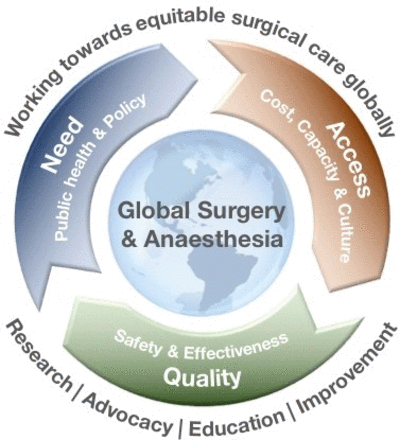
Need, access and quality
Need
Surgical management forms a component of the care of a broad range of treatable illnesses that represent around 30% of the global burden of disease. These span every disease subcategory yet remain out of reach for the majority of the world’s population. While there are an estimated 266 million operations performed globally every year, they are largely restricted to high-income countries (HICs), with the poorest third of the world’s population only receiving 3.5% of these.
The need for surgical provision has been shown to vary between regions, with areas such as western sub-Saharan Africa having around 5625 unmet surgical cases per 100 000, compared with Australasia or Western Europe having no such unmet need. Many surgical subspecialties have now begun to also demonstrate the substantial variation of unmet surgical need within their field in LMICs, including neurosurgery, paediatric surgery and anaesthesia.
From an obstetric perspective, the caesarean section is now the most commonly performed surgical procedure globally. Despite this, the greatest burden of maternal mortality falls on LMICs, where limited access to safe and timely surgery hinders treatment of major complications. Even where this is available, maternal deaths following caesarean sections in LMICs remain 100 times higher than those in HICs, and around one-third of babies born in these settings will also die. Timely access to caesarean section is required for safe childbirth when needed, with models suggesting a 60% reduction in maternal mortality rates when LMICs increase their caesarean section rates to the WHO-recommended levels.
Defining this as a ‘surgical need’ is clearly inadequate; instead, a functional trauma system is required, of which surgery forms a core component. It has been shown that increasing the surgical workforce only correlates with decreased road traffic deaths in countries that have formal emergency medical services. Hence, it is less helpful to characterise variations in surgical need, provision and access across different subspecialties, rather than deficiencies in the overall preoperative system.
Access
The financing, organising and delivery of healthcare in LMICs face significant challenges. Considering access to surgical care, previous reviews highlight the complex and multifactorial barriers within these settings. Broadly, individuals who fail to access surgical care are most often limited by cost or economic factors, geographical location, services lacking sufficient capacity or sociocultural factors prohibiting access.
Rational geospatial distribution of hospitals and emergency care is rare in many settings, with tertiary centres clustered in political or academic centres. This is particularly problematic in countries with large distributed populations, a high proportion of rural poor and fragmented transport networks. Access is severely limited in many such regions, with the average patient in Tanzania needing to travel 119 km to reach surgical care and 74 km for those in Ghana. To compound this, international efforts at improving surgical care are often concentrated in larger urban centres.
Capacity
Approximately 70% of deaths following emergency general surgery occur within LMICs, with such regions reporting fewer than one operating theatre per 100 000 inhabitants (compared with >14 per 100 000 in some HICs). Basic infrastructure for surgery is frequently in short supply, limiting the consistency with which healthcare facilities can provide basic surgical care; as an example, running water was only available in 50% of Gambian health facilities, and oxygen supplies with masks and tubing were available in only 26% of Rwandan health facilities. High rates of delayed or cancelled procedures in LMICs have been shown to arise through both poor infrastructure and equipment shortages.
Workforce
The healthcare workforce gap remains substantial; a recent estimate put the number of surgeons, obstetricians and anaesthetists in the world at just over 2 million,with an estimated 1.27 million more required by 2030 to achieve the minimal surgical workforce densities. LMICs represent 48% of the global population but house only 19% of surgeons and 15% of anaesthesiologists worldwide, alongside substantial variation in their national distributions. With such sparsity in national-level data on healthcare providers, more work is required to identify areas with the greatest need to focus improvement efforts.
Given the shortage of trained surgeons and anaesthetists, surgical tasks are frequently performed by non-specialist physicians and non-physician clinicians in low-resource settings, and training ‘midlevel practitioners’ is being increasingly supported. These healthcare workers have a variable level of training and often facilitate ‘task shifting’ to compensate for a lack of trained doctors. Task shifting can be controversial and is not as widely accepted in surgery compared with other healthcare areas, although this may change.
Cost and economics
Surgical care is often thought of as complex and expensive, potentially limiting its application within global health efforts, and the risk of financial hardship for the individual patient following surgery remains high worldwide. However, a number of economic evaluations of surgical treatment have shown surgery to be cost-effective, including those performed at a regional hospital level. Surgical treatments have cost effectiveness comparable to other standard public health interventions, such as oral rehydration treatments or antiretroviral therapy. Work from the Global Burden of Disease 2010 Study showed that over a fifth of the LMIC injury burden could be avoided through basic surgical care and that these interventions save lives, rather than just ameliorating potential disability.
This economic quantification makes a powerful argument for improving provision of surgery and supporting services as part of global health improvement programmes. Decision-makers do not necessarily allocate funds proportional to avertable mortality and morbidity but demand effective interventions with credible metrics to measure success. Consequently, improvements in defining the burden of surgical disease, the cost effectiveness of interventions and key performance indicators can all help bolster the political prioritisation of global surgery. Given the favourable economic research on cost effectiveness and the wider impact on alleviating impoverishment and promoting development, national health financing will likely become supplemented by combinations of external sources (eg, grants from international funding agencies), the private sector (eg, private insurance) and the public sector (eg, revenues from taxation or social security contributions).
Quality
An estimated 4.2 million people die worldwide each year within 30 days of surgery, more than from HIV, tuberculosis and malaria combined, with half of these deaths occurring in LMICs. Yet little is known about the quality of surgery globally at a national level, as robust postoperative mortality rates are limited. Populations that need surgical care will clearly only benefit from it if they have appropriate access, with the capacity to meet their needs, and if the care delivered is of a sufficient quality. Inadequate access to high-quality healthcare not only results in significant mortality but also imposes significant economic burden, impacting those in LMICs the most.
Recent work suggests that the quality of, rather than access to, care is the dominant driver in overall outcomes.The ASOS and GlobalSurg Collaborative cohort studies have confirmed that preoperative mortality and morbidity are up to seven times higher in resource-poor settings than in high-income ones.As such, preoperative mortality rates have been recommended as an indicator of access to safe surgery and anaesthesia, alongside newer tools that measure the quality of surgical care provided in LMICs.
Anaesthesia is fundamental to modern surgical practice; however, the specialty is often poorly developed in many LMICs. Anaesthesia machines and the capacity for performing general anaesthesia are only available in 43% and 56% of LMICs, respectively,despite a high need for surgery. Reported preoperative mortality rates far exceed those in HICs, and a lack of safe anaesthesia constitutes a major barrier to safe surgery in many low-resource settings.
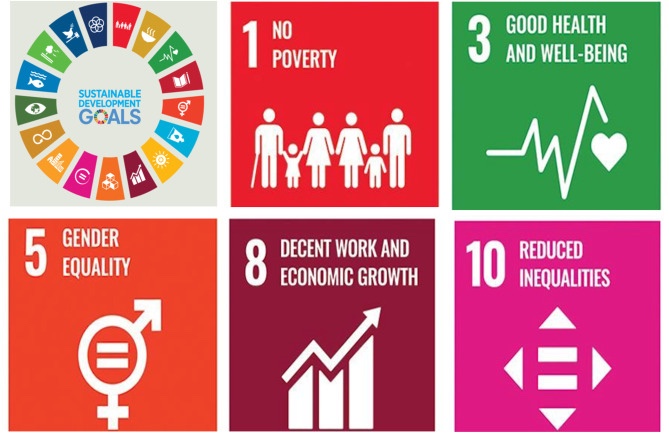
Global surgery is an essential component of global health. Global surgery can be defined as the study and practice of improving access to timely, quality, and affordable surgical care for all.8 It encompasses all fields related to surgical care including surgical sub-specialties, obstetrics and gynaecology, anaesthesia, perioperative care, emergency medicine, rehabilitation, palliative care, nursing and the allied health fields, among others. A third of the global burden of disease can be cured through surgical care. Deaths due to surgically treatable conditions outweigh those from HIV, tuberculosis (TB), and malaria combined. The field of global surgery emphasises horizontal health systems strengthening by addressing a range of surgical conditions through a health equity lens, particularly in low- and middle-income countries (LMICs). As such, global surgery has a crucial role in the achievement of SDGs and UHC.
Global surgery specifically contributes to the elimination of poverty (SDG 1), ensuring good health and well-being (SDG 3), promoting decent work and economic growth (SDG 8), and reducing inequalities (SDGs 5 and 10) (Fig. 1). Improving the quality of and access to surgical care positively impacts the health and well-being of populations by returning people to good health with as little morbidity and mortality as possible. In addition, timely access to high-quality surgical care enables economic productivity through lengthening the quality of life and reducing illness and disability. These improvements reduce health inequities especially in low-resource settings and amongst vulnerable populations where barriers to care are the most pronounced.
Despite the clear benefits of access to safe and timely surgical care, the poorest third of the world’s population only receives 3.5% of approximately 234 million major surgical operations performed globally. These low operative volumes, compounded by the shortage of healthcare workers and surgical workforce in LMICs, are associated with high case-fatality rates from common treatable surgical conditions. The Lancet Commission on Global Surgery (LCoGS) states a minimum of 5000 surgical procedures per 100 000 persons, and a specialist surgical workforce density of 20 per 100 000 persons are needed to improve access to surgical care in each country. Most LMICs fall short of these two indicators. In addition, the quality of surgical care can only improve if there is an adequate surgical workforce which in turn affects the surgical volume to address the burden of surgical disease. Thus, the delivery of and access to quality surgical care are highly dependent on interconnected domains or networks within the surgical health system. Healthcare service users also experience barriers to accessing surgical care that are linked to socio-economic challenges, particularly those experienced by marginalised groups. Therefore, to improve surgical care services in LMICs, it is necessary to go beyond siloed research to understand the totality of these barriers and their interconnectivity.
First-level hospital
First-referral-level hospital or the district hospital provides a level of care that cannot be obtained at home; acts as a gatekeeper for referral to higher levels of care at a secondary or tertiary hospital.
The basic package of surgical care that should be accessible to all people is defined as emergency and essential surgical care (EESC). EESC address substantial health burdens, are feasible to implement, and are cost-effective. In 2015, the World Health Assembly adopted a resolution (68.15) to improve EESC and decentralise (first-level) surgical services. The third edition of the Disease Control Priorities outlined 28 EESC operations for first-level hospitals to perform. Surgical capacity for EESC in first-level hospitals in most LMICs is not well-studied and further research into barriers to scaling up and strengthening are needed.
Decentralised surgical services at first-level hospitals are considered an essential component of UHC. To strengthen EESC, surgical care capacity at first-level hospitals must be improved. Several key efforts are needed. Firstly, a context-specific surgical package for first-level hospitals should be defined, and infrastructure and workforce availability considered. For example, most first-level hospitals do not have critical care units or a large complement of surgical nurses. Thus, complex procedures requiring a high level of post-operative monitoring would not be appropriate for first-level surgical care. In some LMICs, such as South Africa, surgeons and anaesthesiologists do not typically work at first-level hospitals. Instead, family physicians, medical officers, or other generalist medical cadres provide surgical care. Provision of surgical care by these non-specialist providers requires ongoing training and mentorship. A hub and spoke system that would link a second or third level hospital with a set of first-level hospitals would promote mentoring and expedite referrals. In summary, strengthening surgical capacity at first-level hospitals would increase access to timely surgical care for a larger proportion of the population.
Global surgery as a global health priority
Global surgery is one of many global health networks that compete for attention and resources. Compared to other global health networks, such as maternal mortality or tobacco control, global surgery is considered a relatively weak global health priority. Despite its high burden of disease, global surgery has not generated substantial attention and resources. Shawar et al. evaluated global political prioritisation of surgery, and identified potential factors which influence its lack of relative success as a global health issue. A framework developed by Shiffman and Smith was utilised to identify the global political priority of networks and considers four factors: actor power, ideas, political contexts, and issue characteristics.
Health-care delivery and management
The surgical system
A common yet erroneous perception is that the surgical system consists of a surgeon and an anaesthetist in a sterile environment. However, a more accurate perspective acknowledges an interdependent network of individuals and institutions all essential to the delivery of safe, timely, and affordable surgical and anaesthesia care (figure 5). Many of these components are not standalone requirements for a surgical system, but rather for a shared delivery infrastructure that is the basis of a functional health system. A blood bank, for example, is equally important for a woman with postpartum haemorrhage as it is for a child with severe malaria. The goals of achieving a functional health system and surgical system are not separate.

Surgical care begins in the community. Community health workers connect patients in remote areas to providers. They refer surgical patients to the first-level hospital, and provide post-discharge follow-up. First-level hospitals provide the hub for surgical and anaesthesia care, and should be capable of providing most emergent and planned procedures. Tertiary centres can provide specialised care, and serve as hubs for training, research, and system-wide quality improvement.
In most areas, delivery of surgical services consists of a mix between public and private providers. Private providers consist of all actors outside the government and can take on many forms, including for-profit providers, not-for-profit providers (eg, non-governmental organisations [NGOs] and faith-based organisations), and informal providers (eg, traditional healers). In some countries, the private sector is responsible for most hospital-based service delivery. All hospitals should connect to the community and to each other through a reliable referral system. Strong clinical leadership, professional management, and government policies should support all levels of care.
The present situation
The Three Delays framework
The ability to receive surgical care when needed depends both on the accessibility of surgical facilities and the availability of surgical and anaesthetic providers to deliver that care.
The First Delay—the delay in seeking care—occurs when patients often wait to seek health care because of financial and geographic restrictions, cultural beliefs, poor education, a history of being disconnected from formal health systems, and low awareness of available services or low confidence in those services.
The Second Delay—the delay in reaching care—occurs when hospitals with surgical capacity are scarce, meaning the nearest facility can be hours to days away, depending on mode of transportation.
The Third Delay—the delay in receiving care—occurs when attendance at a hospital does not guarantee treatment, since few first-level hospitals can provide comprehensive emergent operative care. Structural deficits trouble hospitals in low-resource settings. The WHO SAT database surveyed almost 800 facilities in low-income countries to discover what proportion of them did not have reliable electricity (31%), running water (22%), oxygen (24%), a dedicated area for emergency care (31%), and provisions for postoperative care (47%; appendix p 30).
The way forward
Reduce the First and Second Delays
A strong prehospital network, which includes primary care centres and rapid-response ambulances, could partly overcome delays that patients can incur while seeking and reaching care. However, a comprehensive and more immediate approach needs context-specific interventions that engage the community and existing providers.
A comparative model is the integration of traditional birth attendants into the maternal health system to refer critical cases to first-level hospitals. Community health workers have already been effectively used in many large-scale programmes, from Haiti to Ethiopia, with documented improvements in health outcomes. BRAC, a Bangladeshi NGO, has devised a low-cost referral system for obstetric care that uses community health workers and traditional birth attendants with mobile technology to systematically reduce First and Second Delays (appendix p 21). This partnership enables BRAC community health workers to identify complicated deliveries, and coordinate reliable, timely transportation to a hospital.
Reduce the Third Delay
On reaching the first-level hospital, the patient should have a reasonable guarantee of treatment. The first-level hospital is closest to its catchment population and should serve as the core delivery site for surgical care. In fact, sufficiently equipped and staffed, it should be able to provide about 80–90% of surgical procedures, including treatments for acute abdomen, obstetric complications, and open fractures (appendix p 77). We believe that a provision of laparotomy, caesarean delivery, and treatment of open fracture are bellwethers of a system functioning at a level of complexity advanced enough to do most other surgical procedures. Hence, we refer to them as the Bellwether Procedures.
The Third Delay will shorten when first-level hospitals can efficiently deliver a broad range of surgical and anaesthesia services.
Broadening the Access and Expertise
Traditionally, clinical academics have been slow to engage with and support the global surgery cause, although the importance of this field is now being recognised. In the UK, the National Institute for Health Research funds a number of research groups with an explicit focus on global surgery. As part of this, a recent international Delphi process has engaged LMIC clinicians, patients and expert methodologists to prioritise future research into areas of unmet clinical need for surgical patients in LMICs; this has led to the identification of three priority topics: access to surgery, outcomes of cancer surgery and perioperative care. The recent publication of a dedicated global surgery issue by the British Journal of Surgeryreflects the growing academic recognition of this field, allowing for a revolutionary dynamic between HIC and LMIC researchers.
Table 2. Best practices to improve universal access to surgical care.
Recommendations
1.
International lobbying
Need a stronger unifying body and global leadership for global surgery. Expand international funding for global surgery research and advocacy.
2.
National and local buy-in
Increased funding and prioritization of global surgery is required at the country level.
3.
National surgical, obstetric and anaesthesia planning
Development and implementation of national plans to address the health burden of surgical conditions. Incorporate surgical plans into national health system strengthening agendas.
4.
Decentralisation of surgical services
Increase surgical capacity and services at first-level hospitals to improve access to care.
5.
Increase specialist and non-specialist surgical workforce
Provide opportunities for upskilling, training, mentorship and task-sharing as well as surgical workforce retention.
6.
Standardise surgical data collection
Implement data collection systems to monitor and evaluate surgical care outcomes, progress and needs.
7.
Implement quality improvement mechanisms for surgical systems
Utilising data provided from consistent monitoring and evaluation to implement mechanisms to improve the quality of surgical norms and standards.
8.
Community engagement and involvement
Community participation to understand priorities and barriers to accessing surgical care.
Source:
https://bmchealthservres.biomedcentral.com/articles/10.1186/s12913-023-09973-9
https://gh.bmj.com/content/4/5/e001808
https://www.sciencedirect.com/science/article/pii/S1479666X21001864
https://www.thelancet.com/journals/lancet/article/PIIS0140-6736(15)60160-X/fulltext
Further Reads:
https://publishing.rcseng.ac.uk/doi/10.1308/rcsbull.TB2020.8
https://ijms.info/IJMS/article/view/2059/2238
https://www.icrc.org/en/document/surgical-learning-hub-and-global-network
 Scriveners Online©
Leave a comment