
❝Never do anything by halves if you want to get away with it. Be outrageous. Go the whole hog. Make sure everything you do is so completely crazy it’s unbelievable.❞
-Roald Dahl, Matilda (1988)

A ‘med comms’ site for everyone!

✒︎ Informative

Presenting the latest news, discoveries and innovations in medicine in a blog-style format!

⚕ Global

Reaches the national and the international readers!

♛ Unique & Dynamic

There’s an article for everyone in all areas of medicine!

#scriveners

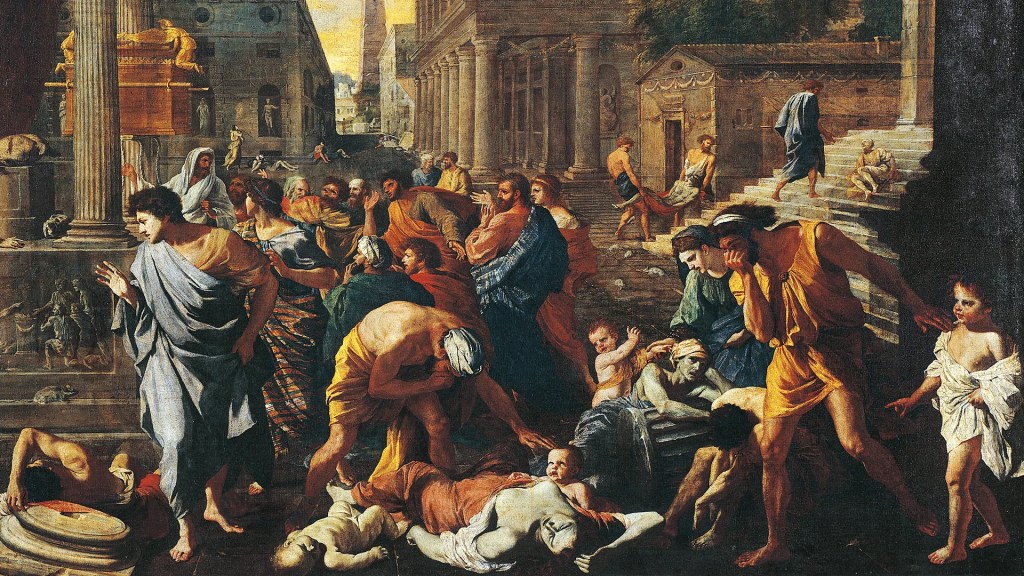
The Plague of Ashdod (1630) Nicholas Poussin

The artwork “The Plague of Ashdod” was created by the French painter Nicolas Poussin in 1630. It portrays the biblical narrative of a divine plague inflicted upon the people of Ashdod. 

This dramatic scene of divine punishment is described in the Old Testament. The Philistines are stricken with plague in their city of Ashdod because they have stolen the Ark of the Covenant from the Israelites and placed it in their pagan temple. You can see the decorated golden casket of the Ark between the pillars of the temple. People look around in horror at their dead and dying companions. One man leans over the corpses of his wife and child and covers his nose to avoid the stench. Rats scurry towards the bodies. The broken statue of their deity, Dagon, and the tumbled down stone column further convey the Philistines’ downfall.

In the artwork, Poussin vividly depicts the turmoil and suffering caused by the plague. The foreground is filled with the stricken inhabitants of Ashdod; their bodies are contorted in agony or limp in the stillness of death, illustrating the mercilessness of the affliction. The variety of postures and expressions captures the range of human suffering and chaos that accompanies such disaster. 

Amongst the afflicted, several figures stand out due to their dynamic gestures or central placement within the composition, drawing the viewer’s eye and emphasizing the emotional impact of the scene. In the background, classical architecture gives a sense of order and permanence that starkly contrasts with the disarray and despair of the figures. Poussin’s use of colour and light skilfully highlights the drama, with the dark and earthy tones of the suffering masses set against the lighter, more serene sky, which suggests divine presence or intervention.

Poussin’s use of color and light skillfully highlights the drama, with the dark and earthy tones of the suffering masses set against the lighter, more serene sky, which suggests divine presence or intervention. The overall effect is one of a carefully structured scene that conveys a narrative full of intensity and profound human drama, characteristic of the religious paintings of the period and the classical style Poussin is renowned for. Poussin began to paint The Plague of Ashdod while the bubonic plague was still raging throughout Italy though sparing Rome. He first called the painting The Miracle in the Temple of Dagon, but later it became known as The Plague of Ashdod.

The painting most importantly provides a view into how illness and diseases were feared at that time in the past and the fact that people had the knowledge that it was transmissible during that time period which was the 16th century.

𝕸𝖊𝖗𝖗𝖞 𝕮𝖍𝖗𝖎𝖘𝖙𝖒𝖆𝖘!🎄🎅𝕸𝖆𝖞 𝖆𝖑𝖑 𝖞𝖔𝖚𝖗 𝕮𝖍𝖗𝖎𝖘𝖙𝖒𝖆𝖘 𝖜𝖎𝖘𝖍𝖊𝖘 𝖈𝖔𝖒𝖊 𝖙𝖗𝖚𝖊!

🥳𝐉𝐮𝐬𝐭 𝐢𝐧𝐬𝐭𝐚𝐥𝐥𝐞𝐝 𝐚 𝐧𝐞𝐰 𝐩𝐥𝐚𝐧 𝐚𝐧𝐝 𝐜𝐡𝐚𝐧𝐠𝐞𝐝 𝐭𝐡𝐞 𝐬𝐢𝐭𝐞 𝐚𝐝𝐝𝐫𝐞𝐬𝐬! 𝐖𝐞’𝐯𝐞 𝐮𝐩𝐠𝐫𝐚𝐝𝐞𝐝 𝐛𝐚𝐛𝐲! 🎉 scrionl.blog ♡
🚨𝐃𝐮𝐞 𝐭𝐨 𝐬𝐨𝐦𝐞 𝐮𝐧𝐟𝐨𝐫𝐞𝐬𝐞𝐞𝐧 𝐜𝐢𝐫𝐜𝐮𝐦𝐬𝐭𝐚𝐧𝐜𝐞 𝐈 𝐰𝐢𝐥𝐥 𝐛𝐞 𝐭𝐚𝐤𝐢𝐧𝐠 𝐚 𝐡𝐢𝐚𝐭𝐮𝐬 𝐟𝐨𝐫 𝐚 𝐩𝐞𝐫𝐢𝐨𝐝 𝐨𝐟 𝐨𝐧𝐞 𝐦𝐨𝐧𝐭𝐡!🚨
𝐖𝐞 𝐧𝐨𝐰 𝐡𝐚𝐯𝐞 𝐚𝐧 𝐈𝐧𝐬𝐭𝐚𝐠𝐫𝐚𝐦 𝐚𝐜𝐜𝐨𝐮𝐧𝐭!📱
𝐀 𝐧𝐞𝐰 𝐬𝐞𝐜𝐭𝐢𝐨𝐧 ‘𝐂𝐨𝐧𝐭𝐚𝐜𝐭’ 𝐡𝐚𝐬 𝐛𝐞𝐞𝐧 𝐚𝐝𝐝𝐞𝐝! 📞

𝐓𝐡𝐞 ‘𝐋𝐢𝐧𝐤𝐬 & 𝐁𝐨𝐨𝐤𝐬 & 𝐘𝐨𝐮𝐓𝐮𝐛𝐞 & 𝐏𝐨𝐝𝐜𝐚𝐬𝐭𝐬’ 𝐬𝐞𝐜𝐭𝐢𝐨𝐧 𝐢𝐬 𝐧𝐨𝐰 𝐚𝐯𝐚𝐢𝐥𝐚𝐛𝐥𝐞!💙
𝐍𝐞𝐰 𝐰𝐚𝐥𝐥𝐩𝐚𝐩𝐞𝐫𝐬 𝐡𝐚𝐯𝐞 𝐛𝐞𝐞𝐧 𝐚𝐝𝐝𝐞𝐝 𝐭𝐨 𝐭𝐡𝐞 ‘𝐄𝐱𝐭𝐫𝐚𝐬’ 𝐬𝐞𝐜𝐭𝐢𝐨𝐧. 𝐃𝐨 𝐜𝐡𝐞𝐜𝐤 𝐢𝐭 𝐨𝐮𝐭!⚡️
𝐀𝐧𝐧𝐨𝐮𝐧𝐜𝐞𝐦𝐞𝐧𝐭: 𝐌𝐨𝐫𝐞 𝐭𝐡𝐚𝐧 𝐚 𝟏𝟎𝟎 𝐭𝐡𝐚𝐧𝐤𝐬! 𝐖𝐞’𝐯𝐞 𝐫𝐞𝐚𝐜𝐡𝐞𝐝 𝟏𝟎𝟎 𝐩𝐨𝐬𝐭𝐬! 🍾 🍷
𝓒𝓮𝓵𝓮𝓫𝓻𝓪𝓽𝓲𝓷𝓰 𝓽𝓱𝓲𝓼 𝓶𝓮𝓭𝓲𝓬𝓪𝓵 𝔀𝓻𝓲𝓽𝓲𝓷𝓰 𝓫𝓵𝓸𝓰’𝓼 1-𝔂𝓮𝓪𝓻 𝓪𝓷𝓷𝓲𝓿𝓮𝓻𝓼𝓪𝓻𝔂!🍾🍷

What you need to know about the Nipah virus as a medical professional…

The Nipah virus was first identified in April 1999 on a pig farm in peninsular Malaysia when it caused an outbreak of neurological and respiratory disease. The outbreak resulted in 257 human cases, 105 human deaths, and the culling of 1 million pigs. Geographical Distribution & Emergence The emergence of NiV as a significant public…

An Unbeknownst Parenting and Summoning an Anxious Generation of Pre-teens

Imagine a billionaire that’s a tech giant having a vision to fulfil, it may bring chaos, violence, and intense human emotions but it also brings a huge lump sum of cash! Your child is one of the few chosen ones to go on a far-away realm in the palms of their hands, it’s Mars! It’s…

PAs Seek Legal Action

The BMA and the RCGP have stated that the role of PA should be phased out. The Leng review, published in July last year, found that there were ‘no convincing reasons to abolish the roles’ completely, but also ‘no case for continuing with the roles unchanged.   The review recommended that they should not triage…

A Life-Changing Eye Injecting Gel

Restoring impairing blindness and repurposing the old techniques…   “It’s incredible, it’s life-changing, it’s given me everything back. It was challenging. I couldn’t see to get around my house, I found it incredibly tough to get outside, How am I gonna see my child when he runs off?” Nicki Guy     Hypotony is a…

An Eye For an Eye Towards Liver Cancer Treatment

Alex Villalta as he was working in his office for his tile business, got a doctor visit who told him that he had “lost a lot of weight.” He was diagnosed with a rare form of cancer called leiomyosarcoma that had spread to his liver and it weighed more than 4 kg. Dr Sinziana Dumitra,…

Vaccine-Hate Brings More Trouble

Vaccines are the single greatest invention known to man. They are the most primitive for the most of the ‘Health for All’ practice. For God’s sake, the great plagues and outbreaks of the past centuries would’ve been rid off, if they have what we have now!   Politics are dirty and it’s dirty for a…

  • Solving the Clinical Mysteries One More Time!

    by

    Nivea Vaz ,
    6–9 minutes

    ‘A Case of an Angry-looking Rash’

    A woman of fifty-six years visited Dr Walter Larsen in the examination room in Portland Oregon on a Tuesday two days earlier. He was now convinced on inspecting the patient in person that the rash was no longer a case of poison oak.

    Back then, the patient was concerned; now she was scared of what her clinical problem was. Her fair hands and arms were hidden vicious-looking streaks of red. Dr Larsen blurted that the case was no longer concerning poison oaks. I told you the patient replied almost instantly, her lowered down gown revealed the scarlet lines to criss-cross up her arms, across her neck, down her back, her chest and abdomen. Dr Larsen still had no clue as to what the strange looking rash might be, but it was certain that it got a whole lot uglier in just a couple of days.

    The patient noticed the rash on a Monday and initially it was just confined to back of her hands and it did not really hurt or itch. As the rest of the same day went on, the rash would turn to become more red and angry looking. Overnight, tiny blisters would form over the red regions. On sight of her sister’s dilemmas, the patient’s sister urged her to see a doctor. The patient was reluctant at first, she was laid of from work at the local power company and had no health insurance. During her first visit with Dr Larsen, he suspected it to be some kind of allergic contact dermatitis, probably from a poison oak. She told him that she’d been outdoors but had not come across any poison oak. The doctor was hell-bent that it was a case of contact dermatitis due contact with poison oak. The patient did find the diagnosis apt enough. This rash was tender on touch but it was not itchy. The doctor administered a steroid cream lest she would visit in back in a couple of days.

    His defence was that she was among plants and that rash closely resembled a poison oak enough to confuse a doctor. After two days, she was back at his examining office, the blisters on her hands had now been hardened and the red streaks were darker and much raised. The welts that had previously been previewed on her neck, legs back and abdomen made her appear flogged. The discomfort of her appearance had gone to the point of her masking it with the aid of gloves and long-sleeves.

    A terror of a view don’t you think?

    The red streaks started to look like she’d scratch herself vigorously as way to cope with her skin condition but she told her doctor that wasn’t the case. The rash was on the middle of her back where she would have not been able to reach. The doctor used his pen to just faintly draw down her back causing a line to form as the tip of his pen moved. As he watched her skin’s reaction to the tracing of the pen’s movement, he explained how some people have a condition called as dermographism. This occurs when the skin responds allergically on being touched. On applying pressure just as he did on to the skin of these patients would cause a red welt and as he waited for a while the mark faded. Dermographism is an exaggerated weal and flare response that occurs within minutes of the skin being stroked or scratched. Dermographism is the most common form of physical or chronic inducible urticaria. It is also called dermatographia and dermographic urticaria.

    Had she started taking any new medications recently? She shook her head; it was a no. There was no fever, no symptoms other than the rash? None, she answered back to him. It was then that Dr Larsen decided to vanish from the room bringing in two of his younger colleagues, Dr Michael Adler had asked her on whether she had consumed any Shiitake mushrooms. “How did you know?” the patient asked. On Friday, she was offered a delicious Shiitake mushroom sample from the local grocery store that she enjoyed rather ravenously. The young doctor thanked her and the three of them walked out of the room. Dr Larsen finally informed her of the condition known as Shiitake dermatitis. It was first described in 1977. It had a much frequent occurrence in Asia but was rarely reported in the US. The rash is thought to be a toxic reaction to the starch-like component present in all Shiitake mushrooms. Its called lentinan, which breaks down on heat and so its only seen in raw or undercooked mushrooms.

    Shiitake Mushrooms seem to be causing the root issue…

    Shiitake dermatitis is a distinctive rash that can occur following the ingestion of raw or undercooked shiitake mushrooms (Lentinula edodes). It is characterised by pruritic, erythematous, linear streaks that resemble whiplash marks, hence the name flagellate. Shiitake dermatitis is also known as flagellate erythema and toxicodermia.

    “So, am I allergic to these mushrooms?!” the patient inquisitively asks. “Well, it’s not a true allergy, when someone is exposed to a bad substance and gets a bad response its only ever allergic when an immune response gets actively involved. When the rash is tested however there is a lack of an immune response, so it’s regarded as a toxic not allergic reaction. Shiitake flagellate dermatitis is a toxic reaction to lentinan, found in fresh, powdered, or lightly cooked shiitake mushrooms. Lentinan is a thermolabile polysaccharide that activates interleukin 1 secretion, leading to vasodilation, haemorrhage and rash. This hypothesis is supported by the observation that shiitake dermatitis is not seen with the ingestion of thoroughly cooked at a temperature > 145 C. Flagellate dermatitis does not result from cutaneous contact with the mushrooms.

    Not everyone though gets this violent of a reaction from this hidden component. Those that don’t get this toxic reaction might be considered lucky as they could avail the benefits of what lentinan has to offer… Larsen orders a biopsy of the rash to ensure nothing was ever missed and he instructs that patient continue using the steroid creams, he recommends that she avoids uncooked shiitake mushrooms. Adler laughs admitting that it was sheer luck, he read a report of a patient developing a crazy-looking rash after eating shiitake mushrooms, the image relapsed his memories of the rash’s looks.

    What’s so great about working in groups is that when you get stumped one of these guys will know the answer… It’s like doing a crossword puzzle with a friend.

    The flagellate rash of shiitake dermatitis typically appears 24 hours after ingestion of raw or undercooked shiitake mushrooms.

    • Onset can occur within a few hours and up to 5 days after ingestion of the mushrooms.
    • Itchy erythematous papules and sometimes petechiae are arranged in linear streaks.
    • There may be localised swelling.
    • They most often affect the trunk, but may also affect limbs, neck and head. It does not affect mucosal surfaces.
    • The rash can be worse on exposure to the sun.
    • Associated gastrointestinal symptoms can occur.

    The rash spontaneously resolves within a few weeks.

    Systemic Symptoms

    Some patients with shiitake flagellate dermatitis have other symptoms.

    • Localised oedema
    • Malaise
    • Fever
    • Lip tingling (has been reported 48 hours after eating)
    • Discomfort when swallowing
    • Diarrhoea
    • Tingling of hands and feet

    The diagnosis is clinical, based on the characteristic history of recent mushroom ingestion and on the appearance of the rash. There are no specific laboratory findings. Usual tests may include:

    • Full blood count
    • Urea and electrolytes
    • Liver function tests.

    Histopathology is nonspecific, demonstrating focal hyperkeratosis, spongiosis, dermal oedema and perivascular lymphocytic Infiltrate with eosinophils.

    Shiitake flagellate dermatitis is a self-limiting condition. It is unknown if treatment speeds up the resolution of the rash.

    • Oral antihistamines
    • Topical corticosteroids
    • Affected individuals should protect their skin from sun exposure while the rash is resolving.

    There is generally improvement within 2 days and complete resolution after 3 weeks. Prevent future attacks by ensuring that Shiitake mushrooms are thoroughly cooked before eating.

    Sources & Credit;

    Diagnosis: Solving the Most Baffling Medical Mysteries-Lisa Sanders. (Cases go in no particular order!)

    https://dermnetnz.org/topics/shiitake-flagellate-dermatitis

    https://dermnetnz.org/topics/dermographism

    Rating: 5 out of 5.

    4,829 hits

    Leave a comment

    𝙷𝚘𝚠 𝚖𝚎𝚍𝚒𝚌𝚒𝚗𝚎 𝚊𝚗𝚍 𝚑𝚎𝚊𝚕𝚝𝚑𝚌𝚊𝚛𝚎 𝚊𝚏𝚏𝚎𝚌𝚝 𝚞𝚜 𝚒𝚗 𝚝𝚑𝚎 𝚜𝚖𝚊𝚕𝚕𝚎𝚜𝚝 𝚘𝚏 𝚠𝚊𝚢𝚜 𝚕𝚎𝚊𝚍𝚒𝚗𝚐 𝚝𝚘 𝚋𝚒𝚐𝚐𝚎𝚛 𝚒𝚖𝚙𝚊𝚌𝚝𝚜 𝚊𝚗𝚍 𝚕𝚒𝚏𝚎-𝚌𝚑𝚊𝚗𝚐𝚒𝚗𝚐 𝚌𝚘𝚗𝚜𝚎𝚚𝚞𝚎𝚗𝚌𝚎𝚜! 𝚄𝚕𝚝𝚒𝚖𝚊𝚝𝚎𝚕𝚢, 𝚌𝚑𝚊𝚗𝚐𝚒𝚗𝚐 𝚠𝚑𝚊𝚝 𝚠𝚎 𝚌𝚊𝚕𝚕 ‘𝚑𝚎𝚊𝚕𝚝𝚑𝚌𝚊𝚛𝚎.’

    “Copyright [2024], [2025], [2026], [Scriveners], [Scriveners Online], All Rights Reserved. Any unauthorised duplication or use of this material is strictly prohibited.”

    ‘𝙰 𝚙𝚛𝚘𝚞𝚍 𝚖𝚎𝚍𝚒𝚌𝚊𝚕 𝚜𝚝𝚞𝚍𝚎𝚗𝚝’𝚜 𝚒𝚗𝚒𝚝𝚒𝚊𝚝𝚒𝚟𝚎 𝚊𝚗𝚍 𝚘𝚠𝚗𝚎𝚛𝚜𝚑𝚒𝚙!’‘