
❝Never do anything by halves if you want to get away with it. Be outrageous. Go the whole hog. Make sure everything you do is so completely crazy it’s unbelievable.❞
-Roald Dahl, Matilda (1988)

A ‘med comms’ site for everyone!

✒︎ Informative

Presenting the latest news, discoveries and innovations in medicine in a blog-style format!

⚕ Global

Reaches the national and the international readers!

♛ Unique & Dynamic

There’s an article for everyone in all areas of medicine!

#scriveners

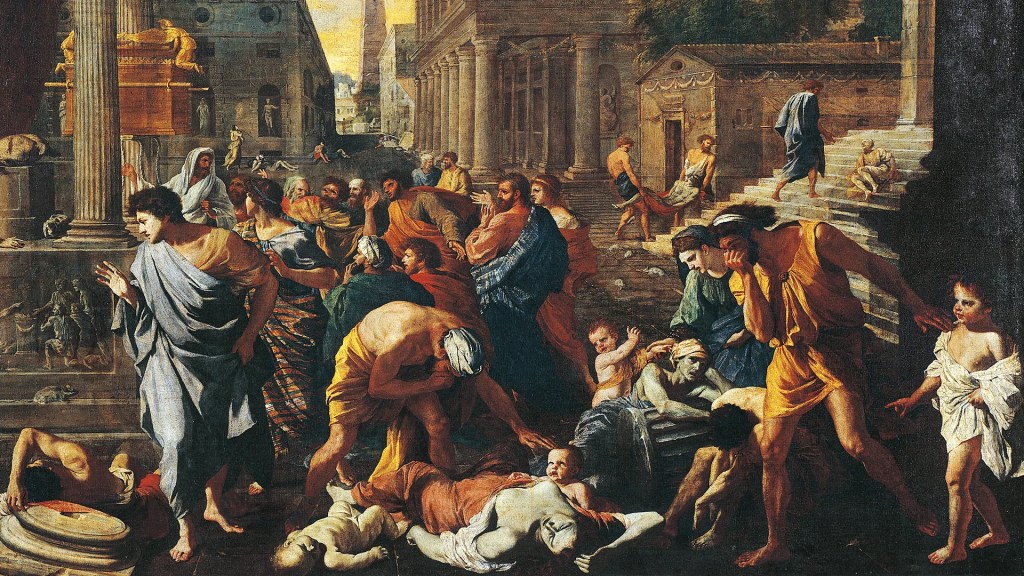
The Plague of Ashdod (1630) Nicholas Poussin

The artwork “The Plague of Ashdod” was created by the French painter Nicolas Poussin in 1630. It portrays the biblical narrative of a divine plague inflicted upon the people of Ashdod. 

This dramatic scene of divine punishment is described in the Old Testament. The Philistines are stricken with plague in their city of Ashdod because they have stolen the Ark of the Covenant from the Israelites and placed it in their pagan temple. You can see the decorated golden casket of the Ark between the pillars of the temple. People look around in horror at their dead and dying companions. One man leans over the corpses of his wife and child and covers his nose to avoid the stench. Rats scurry towards the bodies. The broken statue of their deity, Dagon, and the tumbled down stone column further convey the Philistines’ downfall.

In the artwork, Poussin vividly depicts the turmoil and suffering caused by the plague. The foreground is filled with the stricken inhabitants of Ashdod; their bodies are contorted in agony or limp in the stillness of death, illustrating the mercilessness of the affliction. The variety of postures and expressions captures the range of human suffering and chaos that accompanies such disaster. 

Amongst the afflicted, several figures stand out due to their dynamic gestures or central placement within the composition, drawing the viewer’s eye and emphasizing the emotional impact of the scene. In the background, classical architecture gives a sense of order and permanence that starkly contrasts with the disarray and despair of the figures. Poussin’s use of colour and light skilfully highlights the drama, with the dark and earthy tones of the suffering masses set against the lighter, more serene sky, which suggests divine presence or intervention.

Poussin’s use of color and light skillfully highlights the drama, with the dark and earthy tones of the suffering masses set against the lighter, more serene sky, which suggests divine presence or intervention. The overall effect is one of a carefully structured scene that conveys a narrative full of intensity and profound human drama, characteristic of the religious paintings of the period and the classical style Poussin is renowned for. Poussin began to paint The Plague of Ashdod while the bubonic plague was still raging throughout Italy though sparing Rome. He first called the painting The Miracle in the Temple of Dagon, but later it became known as The Plague of Ashdod.

The painting most importantly provides a view into how illness and diseases were feared at that time in the past and the fact that people had the knowledge that it was transmissible during that time period which was the 16th century.

𝕸𝖊𝖗𝖗𝖞 𝕮𝖍𝖗𝖎𝖘𝖙𝖒𝖆𝖘!🎄🎅𝕸𝖆𝖞 𝖆𝖑𝖑 𝖞𝖔𝖚𝖗 𝕮𝖍𝖗𝖎𝖘𝖙𝖒𝖆𝖘 𝖜𝖎𝖘𝖍𝖊𝖘 𝖈𝖔𝖒𝖊 𝖙𝖗𝖚𝖊!

🥳𝐉𝐮𝐬𝐭 𝐢𝐧𝐬𝐭𝐚𝐥𝐥𝐞𝐝 𝐚 𝐧𝐞𝐰 𝐩𝐥𝐚𝐧 𝐚𝐧𝐝 𝐜𝐡𝐚𝐧𝐠𝐞𝐝 𝐭𝐡𝐞 𝐬𝐢𝐭𝐞 𝐚𝐝𝐝𝐫𝐞𝐬𝐬! 𝐖𝐞’𝐯𝐞 𝐮𝐩𝐠𝐫𝐚𝐝𝐞𝐝 𝐛𝐚𝐛𝐲! 🎉 scrionl.blog ♡
🚨𝐃𝐮𝐞 𝐭𝐨 𝐬𝐨𝐦𝐞 𝐮𝐧𝐟𝐨𝐫𝐞𝐬𝐞𝐞𝐧 𝐜𝐢𝐫𝐜𝐮𝐦𝐬𝐭𝐚𝐧𝐜𝐞 𝐈 𝐰𝐢𝐥𝐥 𝐛𝐞 𝐭𝐚𝐤𝐢𝐧𝐠 𝐚 𝐡𝐢𝐚𝐭𝐮𝐬 𝐟𝐨𝐫 𝐚 𝐩𝐞𝐫𝐢𝐨𝐝 𝐨𝐟 𝐨𝐧𝐞 𝐦𝐨𝐧𝐭𝐡!🚨
𝐖𝐞 𝐧𝐨𝐰 𝐡𝐚𝐯𝐞 𝐚𝐧 𝐈𝐧𝐬𝐭𝐚𝐠𝐫𝐚𝐦 𝐚𝐜𝐜𝐨𝐮𝐧𝐭!📱
𝐀 𝐧𝐞𝐰 𝐬𝐞𝐜𝐭𝐢𝐨𝐧 ‘𝐂𝐨𝐧𝐭𝐚𝐜𝐭’ 𝐡𝐚𝐬 𝐛𝐞𝐞𝐧 𝐚𝐝𝐝𝐞𝐝! 📞

𝐓𝐡𝐞 ‘𝐋𝐢𝐧𝐤𝐬 & 𝐁𝐨𝐨𝐤𝐬 & 𝐘𝐨𝐮𝐓𝐮𝐛𝐞 & 𝐏𝐨𝐝𝐜𝐚𝐬𝐭𝐬’ 𝐬𝐞𝐜𝐭𝐢𝐨𝐧 𝐢𝐬 𝐧𝐨𝐰 𝐚𝐯𝐚𝐢𝐥𝐚𝐛𝐥𝐞!💙
𝐍𝐞𝐰 𝐰𝐚𝐥𝐥𝐩𝐚𝐩𝐞𝐫𝐬 𝐡𝐚𝐯𝐞 𝐛𝐞𝐞𝐧 𝐚𝐝𝐝𝐞𝐝 𝐭𝐨 𝐭𝐡𝐞 ‘𝐄𝐱𝐭𝐫𝐚𝐬’ 𝐬𝐞𝐜𝐭𝐢𝐨𝐧. 𝐃𝐨 𝐜𝐡𝐞𝐜𝐤 𝐢𝐭 𝐨𝐮𝐭!⚡️
𝐀𝐧𝐧𝐨𝐮𝐧𝐜𝐞𝐦𝐞𝐧𝐭: 𝐌𝐨𝐫𝐞 𝐭𝐡𝐚𝐧 𝐚 𝟏𝟎𝟎 𝐭𝐡𝐚𝐧𝐤𝐬! 𝐖𝐞’𝐯𝐞 𝐫𝐞𝐚𝐜𝐡𝐞𝐝 𝟏𝟎𝟎 𝐩𝐨𝐬𝐭𝐬! 🍾 🍷
𝓒𝓮𝓵𝓮𝓫𝓻𝓪𝓽𝓲𝓷𝓰 𝓽𝓱𝓲𝓼 𝓶𝓮𝓭𝓲𝓬𝓪𝓵 𝔀𝓻𝓲𝓽𝓲𝓷𝓰 𝓫𝓵𝓸𝓰’𝓼 1-𝔂𝓮𝓪𝓻 𝓪𝓷𝓷𝓲𝓿𝓮𝓻𝓼𝓪𝓻𝔂!🍾🍷

What you need to know about the Nipah virus as a medical professional…

The Nipah virus was first identified in April 1999 on a pig farm in peninsular Malaysia when it caused an outbreak of neurological and respiratory disease. The outbreak resulted in 257 human cases, 105 human deaths, and the culling of 1 million pigs. Geographical Distribution & Emergence The emergence of NiV as a significant public…

An Unbeknownst Parenting and Summoning an Anxious Generation of Pre-teens

Imagine a billionaire that’s a tech giant having a vision to fulfil, it may bring chaos, violence, and intense human emotions but it also brings a huge lump sum of cash! Your child is one of the few chosen ones to go on a far-away realm in the palms of their hands, it’s Mars! It’s…

PAs Seek Legal Action

The BMA and the RCGP have stated that the role of PA should be phased out. The Leng review, published in July last year, found that there were ‘no convincing reasons to abolish the roles’ completely, but also ‘no case for continuing with the roles unchanged.   The review recommended that they should not triage…

A Life-Changing Eye Injecting Gel

Restoring impairing blindness and repurposing the old techniques…   “It’s incredible, it’s life-changing, it’s given me everything back. It was challenging. I couldn’t see to get around my house, I found it incredibly tough to get outside, How am I gonna see my child when he runs off?” Nicki Guy     Hypotony is a…

An Eye For an Eye Towards Liver Cancer Treatment

Alex Villalta as he was working in his office for his tile business, got a doctor visit who told him that he had “lost a lot of weight.” He was diagnosed with a rare form of cancer called leiomyosarcoma that had spread to his liver and it weighed more than 4 kg. Dr Sinziana Dumitra,…

Vaccine-Hate Brings More Trouble

Vaccines are the single greatest invention known to man. They are the most primitive for the most of the ‘Health for All’ practice. For God’s sake, the great plagues and outbreaks of the past centuries would’ve been rid off, if they have what we have now!   Politics are dirty and it’s dirty for a…

  • An Unbeknownst Parenting and Summoning an Anxious Generation of Pre-teens

    by

    Nivea Vaz
    11–16 minutes

    Imagine a billionaire that’s a tech giant having a vision to fulfil, it may bring chaos, violence, and intense human emotions but it also brings a huge lump sum of cash! Your child is one of the few chosen ones to go on a far-away realm in the palms of their hands, it’s Mars! It’s incredibly revolutionary but that is a  problem too!

    As the child grows up on Mars, their bodies become permanently tailored to it. What legal limits have we imposed on these tech companies so far? In the United States, which ended up setting the norms for most other countries, the main prohibition is the Children’s Online Privacy Protection Act (COPPA), enacted in 1998. It requires children under 13 to get parental consent before they can sign a contract with a company (the terms of service) to give away their data and some of their rights when they open an account. That set the effective age of “internet adulthood” at 13, for reasons that had little to do with children’s safety or mental health. But the wording of the law doesn’t require companies to verify ages, as long as a child checks a box to assert she’s old enough, she can go almost anywhere on the internet without parents’ knowledge or consent.


    While the reward seeking parts of the brain mature earlier, the frontal cortex essential for self-control, delay of gratification, and resistance to temptation—is not up to full capacity until the mid-20s, and preteens are at a particularly vulnerable point in development. As they begin puberty, they are often socially insecure, easily swayed by peer pressure, and easily lured by any activity that seems to offer social validation. We don’t let preteens buy tobacco or alcohol, or enter casinos. The costs of using social media in particular are high for adolescents. Let children grow up on Earth first, before sending them to Mars.


    This is how age will be categorised in the rest of this book:

    • Children: 0 through 12

    • Adolescents: 10 through 20

    • Teens: 13 through 19

    • Minors: Everyone who is under 18.


    The author is a social psychologist not a clinical psychologist or a media studies professional. The studies and theories represented throughout the course of the book however, are from various subjects like clinical studies with evidence, psychology, clinical psychology and psychiatry as well.

    There was little sign of an impending mental illness crisis among adolescents in the 2000s. Then, quite suddenly, in the early 2010s, things changed. Each case of mental illness has many causes; there is always a complex backstory involving genes, childhood experiences, and sociological factors. My focus is on why the rates of mental illness went up in so many countries between 2010 and 2015 for Gen Z and some late millennials while older generations were much less affected. Why was there a synchronised international increase in rates of adolescent anxiety and depression?


    In a survey conducted every year by the U.S. government, teens are asked a series of questions about their drug use, along with a few questions about their mental health. Those who answered yes to more than five out of the nine questions about symptoms of major depression are classified as being highly likely to have suffered from a “major depressive episode” in the past year. You can see a very large upturn in major depressive episodes, beginning around 2012.

    Depression became roughly two and a half times more prevalent.

    What on earth happened to these teens in the early 2010s?

    We found important clues to this mystery by digging into more data on adolescent mental health. The first clue is that the rise is concentrated in disorders related to anxiety and depression, which are classed together in the psychiatric category known as internalising disorders. These are disorders in which a person feels strong distress and experiences symptoms inwardly. The person with an internalising disorder feels emotions such as anxiety, fear, sadness, and hopelessness. They ruminate. They often withdraw from social engagement.


    In contrast, externalising disorders are those in which a person feels distress and turns the symptoms and responses outward, aimed at other people. These conditions include conduct disorder, difficulty with anger management, and tendencies toward violence and excessive risk-taking. Across ages, cultures, and countries, girls and women suffer higher rates of internalising disorders, while boys and men suffer from higher rates of externalising disorders. That said, both sexes suffer from both, and both sexes have been experiencing more internalising disorders and fewer externalising disorders since the early 2010s.


    You can see the ballooning rates of internalising disorders in figure 1.2, which shows the percentage of college students who said that they had received various diagnoses from a professional. The data comes from a standardised survey from universities, aggregated by the American College Health Association. The lines for depression and anxiety start out much higher than all other diagnoses and then increase more than any other in both relative and absolute terms. Nearly all of the increases in mental illness on any college campuses in 2010s came from increases in anxiety and/or depression.


    A second clue is that the surge is concentrated in Gen Z, with some spillover to younger millennials. You can see this in Fig 1.3, which shows the percentage of respondents in four age-groups who reported feeling nervous in the past month “most of the time” or “all of the time.” There is no trend in any of the four age-groups before 2012, but then the youngest age group starts to rise sharply. The next older age-group rises too, though not as much, and the two oldest age groups are relatively flat: a slight rise for Gen Z and a slight decrease for baby boomers.


    Across a variety of mental health diagnoses, you can see that anxiety rates rose most in figure 1.2, with depression following closely behind. A 2022 study of more than 37,000 high school students in Wisconsin found an increase in the prevalence of anxiety from 34% in 2012 to 44% in 2018, with larger increases among girls and LGBTQ teens. A 2023 study of American college students found that 37% reported feeling anxious “always” or “most of the time.” This means that only one third of college students said they feel anxiety less than half the time or never.

    The second most common psychological disorder among younger people today is depression, as you can see in figure 1.2. The main psychiatric category here is called major depressive disorder (MDD). It’s two key symptoms are depressed mood and a list of interest or pleasure in most or all activities. For a diagnosis of MDD, these symptoms must be consistently present for at least two weeks.


    The day after we published The Coddling of the American Mind, an essay appeared in The New York Times with the headline “The Big Myth About Teenage Anxiety.” In it, a psychiatrist raised several important objections to what he saw as a rising moral panic around teens and smartphones. He pointed out that most of the studies showing a rise in mental illness were based on “self-reports,” like the data in fig 1.2. A change in self-reports does not necessarily mean that there is a change in underlying rates of mental illness.


    Perhaps young people’s just became more willing to talk honestly about their symptoms? Or perhaps they started till mistake mild symptoms of anxiety for a mental disorder? Was the psychiatrist right to be skeptical? He was certainly right that we need to look at multiple indicators to know if mental illness really is increasing.


    The rate of self-harm for these young adolescent girls nearly tripled from 2010 to 2020. The rate for older girls (ages 15-19) doubled, while the rate for women over 24 actually went down during that time. So whatever happened in the early 2010s, it hit preteen and young teens harder than any other group. This is a major clue. Acts of intentional self-harm in fig 1.4 include both non fatal suicide attempts, which indicate very high levels of distress and hopelessness, and NSSI, such as cutting. The latter are better understood as coping behaviour that some people use to manage debilitating anxiety and depression.

    Adolescent suicide in the United States shows a time trend generally similar to depression, anxiety, and self-harm, although the period of rapid increase begins a few years earlier. Fig 1.5 shows the suicide rate, expressed as the number of children aged 10-14, per 100,000 such children in the US population, who died by suicide each year. For suicide the rates are nearly always higher for boys than for girls in Western nations, while attempted suicides and non-suicidal self-harm are higher for girls, as we saw above.

    Fig 1.5 shows that the suicide rate for young adolescent girls began to rise in 2008, with a surge in 2012, after having bounced around within a limited range since the 1980s. From 2010 to 2021, the rate increased 167%. This too is a clue guiding us to ask: What changed for pre teen and younger teen girls in the early 2010s?

    This offers a strong rebuttal to those who were skeptical about the existence of a mental health crisis. The pairing of self-reported suffering with behavioural changes tells us that something big changed in the lives of adolescents in the early 2010s perhaps beginning in the late 2000s.


    The arrival of the smartphone changed life for everyone after its introduction in 2007. Like radio and television before it, the smartphone swept the nation and the world. Figure 1.6 shows the percentage of American homes that had purchased various communication technologies over the last century. As you can see, these new technologies spread quickly, always including an early phase where the line seems to go nearly straight up. That’s the decade or so in which “everyone” seems to be buying it.

    Figure 1.6 shows us something important about the internet era: It came in two waves. The 1990s saw a rapid increase in the paired technologies of personal computers and internet access (via modern, back then), both of which could be found in most homes by 2001. Over the next 10 years, there was no decline in teen mental health. Millennial teens, who grew up playing in that first wave, were slightly happier, on average, than Gen X had been when they were teens. The second wave was the rapid increase in paired technologies of social media and the smartphone, which reached the majority of  homes by 2012 or 2013. That is when girls’ mental health began to collapse, and when boys health began to change in a more diffuse set of ways. Of course, teens had cell phones since the late 1990s but they were “basic phones with no internet access-flip phones if you will.

    Figure 1.8 shows the percent of Canadian girls and women who reported that their mental health was either “excellent” or “very good.” If you stopped collecting data in 2009, you’d conclude that the youngest group (aged 15-30) was the happiest, and you’d see no reason for concern. But in 2011 the line for the youngest women began to dip and then went into free fall while the line for the oldest group of women (aged 47 and up) didn’t budge. The graph for men and boys shows the same pattern, though with a smaller decline. As in the United States and Canada, something seems to have happened to British teens in the early 2010s that caused a sudden and large increase in the number of teens harming themselves. We see similar trends in the other major Anglo-sphere nations including Ireland, New Zealand and Australia.


    Figure 1.11 shows the percent of teens in Finland, Sweden, Denmark, Norway, and Iceland who reported high levels of psychological distress between 2002 and 2018.

    You can see the loss of friend time in finer detail in fig 5.1, from a study on how Americans of all ages spend their time. The figure shows the daily average number of minutes that people in different age brackets spend with their friends. Not surprisingly, the youngest group spend more time with friends, compared with the older groups who are most likely to be employed and married. The difference was very large in the early 2000s, but it was declining, and the decline accelerated after 2013. The data for 2020 was collected after the COVID pandemic arrived, which explains why the line bends downward in the last year for the two older groups.

    Teens need more sleep than adults—atleast nine hours a night for preteens and eight hours a night for teens. Back in 2001, a leading sleep expert wrote that “almost all teenagers, as they reach puberty, become walking zombies because they are getting far too little sleep.” When he wrote that sleep deprivation had been rising for a decade, as you can see in fig 5.2. Sleep deprivation then levelled off through the early 2010s. After 2013, it resumed its upward match.


    A Dutch longitudinal study found that young people who engaged in more addictive social media use at one measurement time had stronger ADHD symptoms at the next measurement time. Another study by a different group of Dutch researchers used a similar design and also found evidence suggesting that heavy media multitasking caused later attention problems but they found this casual effect only among younger adolescents aged 11-13 and it was especially strong for girls.


    Spence vs Meta

    Alexis Spence was born on Long Island, New York, in 2002. She got her first ipad for Christmas in 2012, when she was 10. Initially she used it for Webkinz—a line of stuffed animals that enables children to play with a virtual version of their animal. But in 2013, while in fifth grade, some kids teased her for playing this childish game and urged her to open an Instagram account. Her parents wer very careful about technology use. There were strict prohibitions on screens in bedrooms, she and her brother had to use a shared computer in the living room. They checked her ipad regularly and said no to Instagram.


    She found a way to open an instagram account saying she’s 13 even though she was 11. She would download the app for a while and delete it before her parents could see it. She had learned from other underage Instagram users how to hide the app on her home screen. When her parents found out and put restrictions in place, she made secondary accounts. At first she was elated with Instagram but over the next months her mental health plunged. Five months after her Instagram account was created she drew the picture below.


    In eighth grade, she was hospitalised for anorexia and depression. She battled eating disorders and depression for the rest of her teen years. Alexis is now 21 and had regained control of her life. She works as an emergency medical technician and still struggles with eating disorders.

    You can see this sizeable link in fig 6.2, which reports data from the Millennium Cohort Study, a British study followed roughly 19,000 children born around the year 2000 as they matured through adolescence. The figure shows the percentage. The figure shows the percentage of UK teens who could be considered depressed as a function of how many hours they reported spending on social media on a typical weekday. It’s only when boys are spending more than 2 hours per day that the curve begins to rise.

    Remember internalising and externalising!

     (ps feel free to go crazy with me over these graphs! 🤪)

    The author’s continuing of the book series:

    http://www.afterbabel.com

    Source:

    The Anxious Generation- Jonathan Haidt

    Rating: 5 out of 5.

    4,829 hits

    Leave a comment

    𝙷𝚘𝚠 𝚖𝚎𝚍𝚒𝚌𝚒𝚗𝚎 𝚊𝚗𝚍 𝚑𝚎𝚊𝚕𝚝𝚑𝚌𝚊𝚛𝚎 𝚊𝚏𝚏𝚎𝚌𝚝 𝚞𝚜 𝚒𝚗 𝚝𝚑𝚎 𝚜𝚖𝚊𝚕𝚕𝚎𝚜𝚝 𝚘𝚏 𝚠𝚊𝚢𝚜 𝚕𝚎𝚊𝚍𝚒𝚗𝚐 𝚝𝚘 𝚋𝚒𝚐𝚐𝚎𝚛 𝚒𝚖𝚙𝚊𝚌𝚝𝚜 𝚊𝚗𝚍 𝚕𝚒𝚏𝚎-𝚌𝚑𝚊𝚗𝚐𝚒𝚗𝚐 𝚌𝚘𝚗𝚜𝚎𝚚𝚞𝚎𝚗𝚌𝚎𝚜! 𝚄𝚕𝚝𝚒𝚖𝚊𝚝𝚎𝚕𝚢, 𝚌𝚑𝚊𝚗𝚐𝚒𝚗𝚐 𝚠𝚑𝚊𝚝 𝚠𝚎 𝚌𝚊𝚕𝚕 ‘𝚑𝚎𝚊𝚕𝚝𝚑𝚌𝚊𝚛𝚎.’

    “Copyright [2024], [2025], [2026], [Scriveners], [Scriveners Online], All Rights Reserved. Any unauthorised duplication or use of this material is strictly prohibited.”

    ‘𝙰 𝚙𝚛𝚘𝚞𝚍 𝚖𝚎𝚍𝚒𝚌𝚊𝚕 𝚜𝚝𝚞𝚍𝚎𝚗𝚝’𝚜 𝚒𝚗𝚒𝚝𝚒𝚊𝚝𝚒𝚟𝚎 𝚊𝚗𝚍 𝚘𝚠𝚗𝚎𝚛𝚜𝚑𝚒𝚙!’‘