


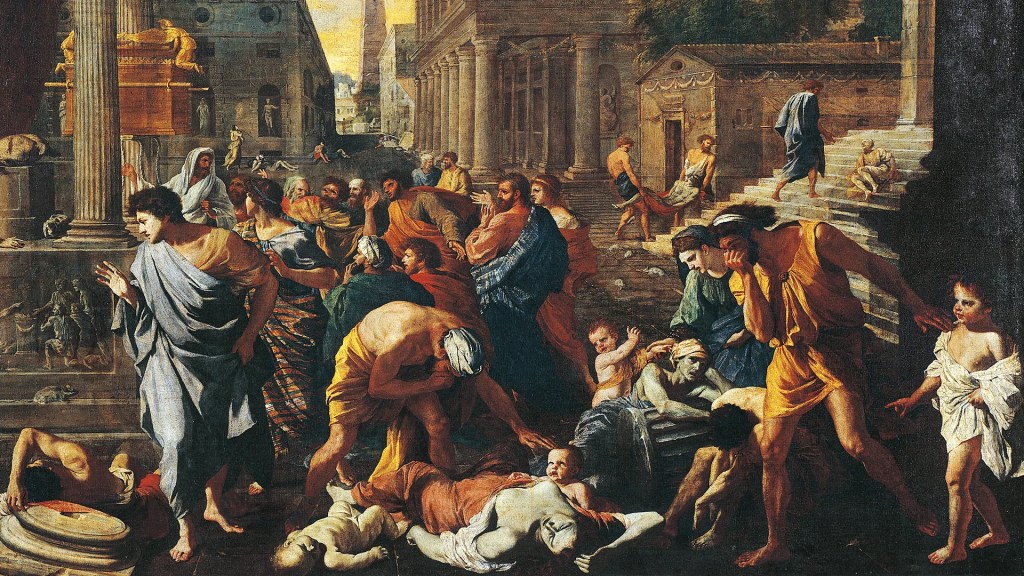



“What drove this writing are my many years of attending on the teaching wards and seeing the bafflement on the faces of very intelligent women and men during their later training in medical school when confronted with errors in medical reasoning that they had seen as standard practice elsewhere. Some students battled the confusion and sought to understand; unfortunately, there were so little time, with so much wrong thinking to be undone and new intellectual rigor to instill. Also, there was the tyranny of trying to be a success at my mainstream academic career, which provided little time for efforts in the epistemology of medical reasoning.”
- Erwin B Montgomery Jr
Epistemology – its a part of philosophical branch that deals with the human understanding on a subject, lets say here its medical reasoning.
Here, our epistemological studies are confined to medical aspects of philosophical reasoning from a clinician’s perspective.
Epistemology, characterised broadly, is an account of knowledge. Within the discipline of philosophy, epistemology is the study of the nature of knowledge and justification: in particular, the study of (a) the defining components, (b) the substantive conditions or sources, and (c) the limits of knowledge and justification.
Categories (a)-(c) have prompted traditional philosophical controversy over the analysis of knowledge and justification (in the case, for instance, of rationalism vs empiricism), and the status of skepticism about knowledge and justification. Epistemologists have distinguished some species of knowledge, including propositional knowledge (that something is so), nonpropositional knowledge of something (for instance, knowledge by acquaintance, or by direct awareness), empirical (a posteriori) propositional knowledge, nonempirical (a priori) propositional knowledge, and knowledge of how to do something.
The epistemological tradition stemming from Immanuel Kant proposes that the supporting ground for a priori knowledge comes solely from purely intellectual processes called “pure reason” or “pure understanding.” In this tradition, knowledge of logical truths is a standard case of priori knowledge, whereas knowledge of the existence or presence of physical objects is a standard case of posteriori knowledge. An account of a priori knowledge should explain what the relevant purely intellectual processes are and how they contribute to nonempirical knowledge. Analogously, an account of a posteriori knowledge should explain what sensory or perceptual experience is and how it contributes to empirical knowledge. Nonemprical knowledge is not dependent on sensory perception like observation, for empirical knowledge, its sole power is the reasoning behind that observational data that’s in its grasp!
In layman terms, priori knowledge would be what you learn from theoretical medical textbooks, and posteriori knowledge is what you would base one’s observations on their clinical rounds as a GP while you’re trying to “investigate” the disease causation/arrive at a prognosis you can also include the inferred data from thoroughly researched clinical data in the clinical trials.
Practitioners are said to come from two opposing schools of medicine; one, is a rationist/allopathic medicine versus the other, which is, the alternative side of medicine/empirics, both were providers of the same medical treatment until the early 1900s.
Allopathic medicine – also called rational or regular medicine. This program or school of medicine constructs diagnosis and treatment on the basis of an economical set of principles from which an explication of the individual patient is reconstructed. As such, allopathic medicine was well poised to take advantage of the emergence of modern medical science with emergence of the cell theory, the germ theory, the histopathology, and microbiology. Allopathic medicine stands in contrast to the Empirics, who held that the health or disease of individual person could not be explained on an economical set of fundamental principles but rather that each patient has to be taken on an epistemic problem in his or her own right, de novo.
Allopathic medicine specifically has long been characterised by a mistrust of empirical observations as a sole basis for diagnosis and treatment.
Empirics – also called irregular medicine — an approach or school of medicine that stands in contrast to allopathic medicine. The fundamental promise of the Empirics is that an explication of any individual patient on the basis of an economical set of principles, such as those related to physiology and pathophysiology, is not possible. Thus, the only means to treatment is to analyse the specific individual symptoms and signs manifested by each patient and direct specific treatments to the specific symptoms and signs. In homeopathy, this is reflected in the saying “like cures like.”
“Understanding the universe in which clinicians operate is both a question of what is the nature of that universe (its ontology) and the means to know that nature (its epistemology). Whatever the ontology of health and disease, there is the presumption that it is regular, and thereby predictable, allowing diagnosis, prognosis and treatment. It is not irrational, at least in its intent, which means that there is logic to it. Whatever the ontology, it encompasses a logic that, if recognised, can be exploited.”
Modus Ponens – its a form of deduction that results in a true conclusion if the premises are true.
The question is how do we strive to gain the new knowledge that aids our medical reasoning in our clinical research while still applying this deductive logic of modus ponens?
A fundamental epistemic question that arises from a variety of phenomena results in an ontological choice. Addressing the fundamental epistemic question in the context of health and disease leads to an epistemic choice: either a reductionist approach based on combinatories of more fundamental premises and prepositions (axions and rules of inference) or an inductive approach that makes no claims as to underlying mechanisms.
(Meaning that would you fancy a reductionist practitioner who follows the research that has a strong reference towards the diagnosis and that’s what’s followed in his practice or do you divert towards a practitioner who’s obliged to tell you that a skeptical/dubious remedy of his/hers does work based on zero evidence-based medicine?)
Mill’s method of concomitant variations, is the basis of statistical method of co-orelation that is widely used in medical practice and research.
One of the Biggest Extra-Logical Steps to Consider
In biomedical research, thresholding relates to internal certainity based on the consequences of either the truth or falsehood of the hypothesis for the larger theory, paradigm, or approach being tested. This is very different in medical practice, where the consequences are external and relate to ethical and socio-economic consequences. Critically, though perhaps not obviously, these external considerations are central to every decision in medical practice.
Also interposed between the patient and the clinician is the clinicians’ sense of their concern for themselves competing with their concern – and hence decision-making – with regards to the patient. The clinician’s self-concerns are not just monetary or for independence. They also are psychological and moral.
Reproducibility in Biomedical Sciences
If healthcare outcomes are poor reflections in medical reasoning, where, then, is one to turn to assess the strength of medical reasoning? Certainly, allopathic medicine could argue that biomedical science and its derivative technologies and treatment algorithms are a better testimony to medical reasoning in ideal settings. Yet more than 20% of preclinical animal based studies in cancer therapies are not reproducible and thus are suspect (Begley and Ellis, 2012, Prinz et al., 2015). However, this intellectual contagion spreads to every biomedical research study, and, if one were honest, everyt publication would have to be suspected until it is demonstrated to be reproducible.
The False Choice Between Universal Scientific Judgement and the Particular Common Sense Judgement
It will be argued that medical reasoning, practical or not, is nearly identical to scientific reasoning, but with a few key distinctions. Some clinicians and academicians tout evidence-based medicine as once again making the claim for scientific medicine. As later historical analysis will demonstrate, medical practitioners were never wholly won over to purely scientific medicine. The resistance to scientific medicine, going back centuries, is of the same cloth as the current resistance to evidence-based medicine. One strong contending argument the author points out is that medical decisions very often are not bracketed between scientifically empirical evidence as even the utlility of interpolation between scientifically empirical data pointing to the individual patient is often unavailable.
Interpolation – a method of inference that “fills the gap” between known observations.
(Epistemology views that evidence based medicinal research is still distinguishingly dissimilar to scientific medicinal research due to few traits).
More on Deduction, Induction and Abduction…
Deduction – a method of arguementation subsumed in the discipline of logic. The value of deductive logic is that, given true premises and valid propositions, then the conclusions must be true. This provides the greatest level of certainity possible. However, the degree of certainity is related reciprocally to the utility of such arguments. Deduction, in short, is determining a true property from some set of entities.
Induction – a form of logic in which commonalities among a set of observations are used to infer a general principle; the generalisation is evidenced, or follows directly from the observations, and thus has the appeal as something self-evident. Induction requires some prior knowledge or circumstance.
Abduction – its a form of reasoning that resembles deduction, a form of reasoning represented under the Fallacy of Confirming the Consequence.
Applied Epistemology
Epistemologists are trained in logic and in the theories of knowledge. Many have strong backgrounds in science, particularly the history of science, that lend some understanding of medical science, which is important in modern allopathic medicine. This knowledge and skill could be brought to bear on interpreting evidence and circumstances that relate to the use of biomedical science in patient care, as well as in the design and conduct of clinical research.
There are two online indices that provide brief introduction to logic and probability and statistics;
http://www.oup.com/us/medicalreasoning
Sources & Credit
Medical Reasoning
THE NATURE AND USE OF MEDICAL KNOWLEDGE
ERWIN B MONTGOMERY JR
The Oxford Handbook of Epistemology (2002)
epistemology noun – Definition, pictures, pronunciation and usage notes | Oxford Advanced Learner’s Dictionary at OxfordLearnersDictionaries.com https://share.google/NG0ygJB4DCAyt0Sad
 Scriveners Online©
Leave a comment