❝Never do anything by halves if you want to get away with it. Be outrageous. Go the whole hog. Make sure everything you do is so completely crazy it’s unbelievable.❞
-Roald Dahl, Matilda (1988)

A ‘med comms’ site for everyone!

✒︎ Informative

Presenting the latest news, discoveries and innovations in medicine in a blog-style format!

⚕ Global

Reaches the national and the international readers!

♛ Unique & Dynamic

There’s an article for everyone in all areas of medicine!

#scriveners

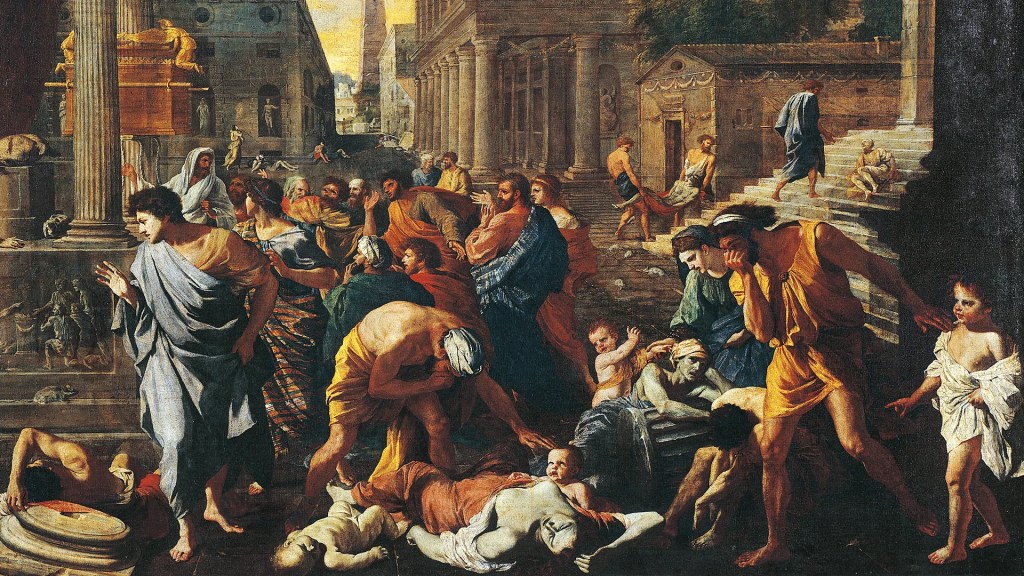
The Plague of Ashdod (1630) Nicholas Poussin

The artwork “The Plague of Ashdod” was created by the French painter Nicolas Poussin in 1630. It portrays the biblical narrative of a divine plague inflicted upon the people of Ashdod. 

This dramatic scene of divine punishment is described in the Old Testament. The Philistines are stricken with plague in their city of Ashdod because they have stolen the Ark of the Covenant from the Israelites and placed it in their pagan temple. You can see the decorated golden casket of the Ark between the pillars of the temple. People look around in horror at their dead and dying companions. One man leans over the corpses of his wife and child and covers his nose to avoid the stench. Rats scurry towards the bodies. The broken statue of their deity, Dagon, and the tumbled down stone column further convey the Philistines’ downfall.

In the artwork, Poussin vividly depicts the turmoil and suffering caused by the plague. The foreground is filled with the stricken inhabitants of Ashdod; their bodies are contorted in agony or limp in the stillness of death, illustrating the mercilessness of the affliction. The variety of postures and expressions captures the range of human suffering and chaos that accompanies such disaster. 

Amongst the afflicted, several figures stand out due to their dynamic gestures or central placement within the composition, drawing the viewer’s eye and emphasizing the emotional impact of the scene. In the background, classical architecture gives a sense of order and permanence that starkly contrasts with the disarray and despair of the figures. Poussin’s use of colour and light skilfully highlights the drama, with the dark and earthy tones of the suffering masses set against the lighter, more serene sky, which suggests divine presence or intervention.

Poussin’s use of color and light skillfully highlights the drama, with the dark and earthy tones of the suffering masses set against the lighter, more serene sky, which suggests divine presence or intervention. The overall effect is one of a carefully structured scene that conveys a narrative full of intensity and profound human drama, characteristic of the religious paintings of the period and the classical style Poussin is renowned for. Poussin began to paint The Plague of Ashdod while the bubonic plague was still raging throughout Italy though sparing Rome. He first called the painting The Miracle in the Temple of Dagon, but later it became known as The Plague of Ashdod.

The painting most importantly provides a view into how illness and diseases were feared at that time in the past and the fact that people had the knowledge that it was transmissible during that time period which was the 16th century.

𝕸𝖊𝖗𝖗𝖞 𝕮𝖍𝖗𝖎𝖘𝖙𝖒𝖆𝖘!🎄🎅𝕸𝖆𝖞 𝖆𝖑𝖑 𝖞𝖔𝖚𝖗 𝕮𝖍𝖗𝖎𝖘𝖙𝖒𝖆𝖘 𝖜𝖎𝖘𝖍𝖊𝖘 𝖈𝖔𝖒𝖊 𝖙𝖗𝖚𝖊!

🥳𝐉𝐮𝐬𝐭 𝐢𝐧𝐬𝐭𝐚𝐥𝐥𝐞𝐝 𝐚 𝐧𝐞𝐰 𝐩𝐥𝐚𝐧 𝐚𝐧𝐝 𝐜𝐡𝐚𝐧𝐠𝐞𝐝 𝐭𝐡𝐞 𝐬𝐢𝐭𝐞 𝐚𝐝𝐝𝐫𝐞𝐬𝐬! 𝐖𝐞’𝐯𝐞 𝐮𝐩𝐠𝐫𝐚𝐝𝐞𝐝 𝐛𝐚𝐛𝐲! 🎉 scrionl.blog ♡
🚨𝐃𝐮𝐞 𝐭𝐨 𝐬𝐨𝐦𝐞 𝐮𝐧𝐟𝐨𝐫𝐞𝐬𝐞𝐞𝐧 𝐜𝐢𝐫𝐜𝐮𝐦𝐬𝐭𝐚𝐧𝐜𝐞 𝐈 𝐰𝐢𝐥𝐥 𝐛𝐞 𝐭𝐚𝐤𝐢𝐧𝐠 𝐚 𝐡𝐢𝐚𝐭𝐮𝐬 𝐟𝐨𝐫 𝐚 𝐩𝐞𝐫𝐢𝐨𝐝 𝐨𝐟 𝐨𝐧𝐞 𝐦𝐨𝐧𝐭𝐡!🚨
𝐖𝐞 𝐧𝐨𝐰 𝐡𝐚𝐯𝐞 𝐚𝐧 𝐈𝐧𝐬𝐭𝐚𝐠𝐫𝐚𝐦 𝐚𝐜𝐜𝐨𝐮𝐧𝐭!📱
𝐀 𝐧𝐞𝐰 𝐬𝐞𝐜𝐭𝐢𝐨𝐧 ‘𝐂𝐨𝐧𝐭𝐚𝐜𝐭’ 𝐡𝐚𝐬 𝐛𝐞𝐞𝐧 𝐚𝐝𝐝𝐞𝐝! 📞

𝐓𝐡𝐞 ‘𝐋𝐢𝐧𝐤𝐬 & 𝐁𝐨𝐨𝐤𝐬 & 𝐘𝐨𝐮𝐓𝐮𝐛𝐞 & 𝐏𝐨𝐝𝐜𝐚𝐬𝐭𝐬’ 𝐬𝐞𝐜𝐭𝐢𝐨𝐧 𝐢𝐬 𝐧𝐨𝐰 𝐚𝐯𝐚𝐢𝐥𝐚𝐛𝐥𝐞!💙
𝐍𝐞𝐰 𝐰𝐚𝐥𝐥𝐩𝐚𝐩𝐞𝐫𝐬 𝐡𝐚𝐯𝐞 𝐛𝐞𝐞𝐧 𝐚𝐝𝐝𝐞𝐝 𝐭𝐨 𝐭𝐡𝐞 ‘𝐄𝐱𝐭𝐫𝐚𝐬’ 𝐬𝐞𝐜𝐭𝐢𝐨𝐧. 𝐃𝐨 𝐜𝐡𝐞𝐜𝐤 𝐢𝐭 𝐨𝐮𝐭!⚡️
𝐀𝐧𝐧𝐨𝐮𝐧𝐜𝐞𝐦𝐞𝐧𝐭: 𝐌𝐨𝐫𝐞 𝐭𝐡𝐚𝐧 𝐚 𝟏𝟎𝟎 𝐭𝐡𝐚𝐧𝐤𝐬! 𝐖𝐞’𝐯𝐞 𝐫𝐞𝐚𝐜𝐡𝐞𝐝 𝟏𝟎𝟎 𝐩𝐨𝐬𝐭𝐬! 🍾 🍷
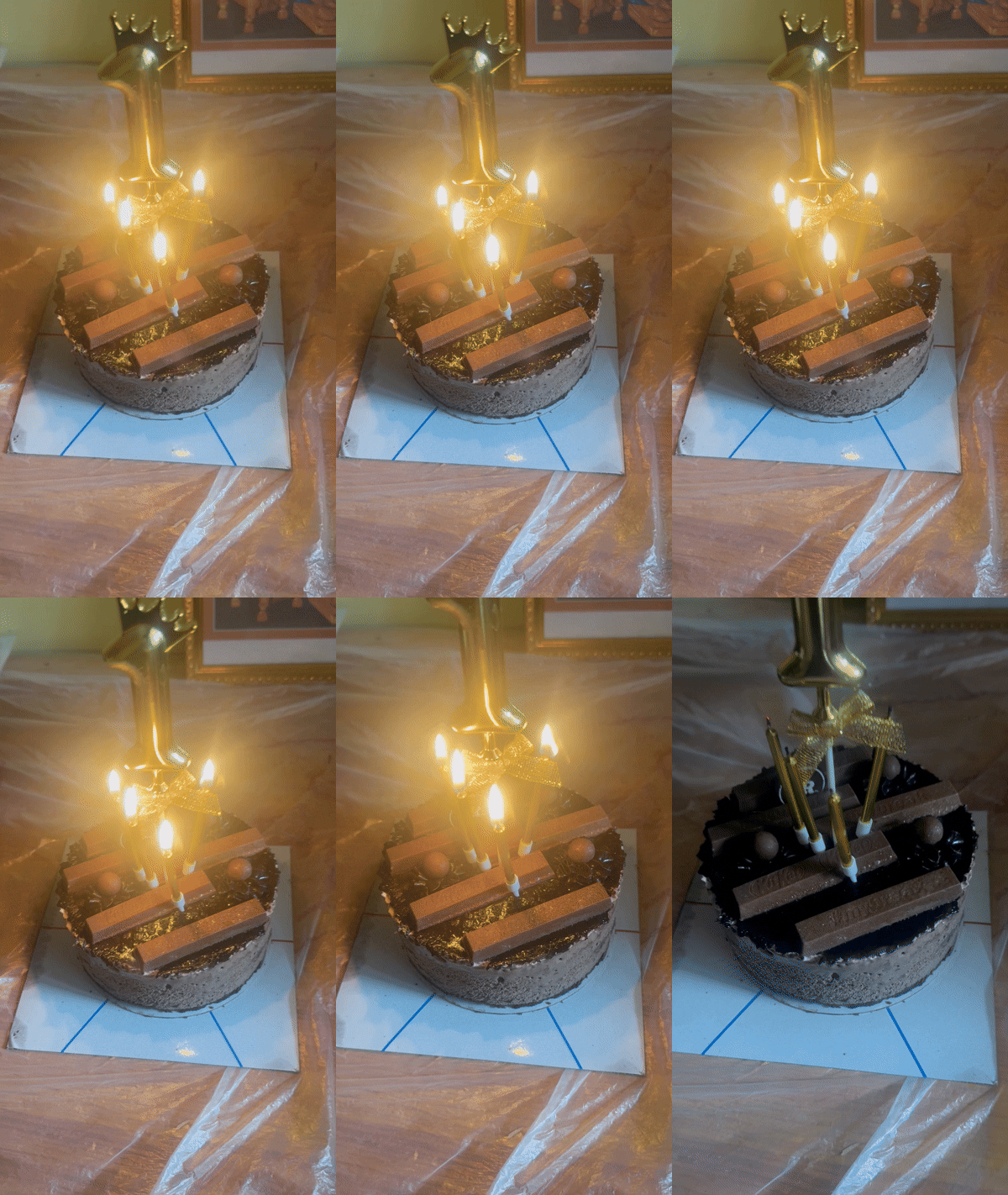
𝓒𝓮𝓵𝓮𝓫𝓻𝓪𝓽𝓲𝓷𝓰 𝓽𝓱𝓲𝓼 𝓶𝓮𝓭𝓲𝓬𝓪𝓵 𝔀𝓻𝓲𝓽𝓲𝓷𝓰 𝓫𝓵𝓸𝓰’𝓼 1-𝔂𝓮𝓪𝓻 𝓪𝓷𝓷𝓲𝓿𝓮𝓻𝓼𝓪𝓻𝔂!🍾🍷

What you need to know about the Nipah virus as a medical professional…

The Nipah virus was first identified in April 1999 on a pig farm in peninsular Malaysia when it caused an outbreak of neurological and respiratory disease. The outbreak resulted in 257 human cases, 105 human deaths, and the culling of 1 million pigs. Geographical Distribution & Emergence The emergence of NiV as a significant public…

An Unbeknownst Parenting and Summoning an Anxious Generation of Pre-teens

Imagine a billionaire that’s a tech giant having a vision to fulfil, it may bring chaos, violence, and intense human emotions but it also brings a huge lump sum of cash! Your child is one of the few chosen ones to go on a far-away realm in the palms of their hands, it’s Mars! It’s…

PAs Seek Legal Action

The BMA and the RCGP have stated that the role of PA should be phased out. The Leng review, published in July last year, found that there were ‘no convincing reasons to abolish the roles’ completely, but also ‘no case for continuing with the roles unchanged.   The review recommended that they should not triage…

A Life-Changing Eye Injecting Gel

Restoring impairing blindness and repurposing the old techniques…   “It’s incredible, it’s life-changing, it’s given me everything back. It was challenging. I couldn’t see to get around my house, I found it incredibly tough to get outside, How am I gonna see my child when he runs off?” Nicki Guy     Hypotony is a…

An Eye For an Eye Towards Liver Cancer Treatment

Alex Villalta as he was working in his office for his tile business, got a doctor visit who told him that he had “lost a lot of weight.” He was diagnosed with a rare form of cancer called leiomyosarcoma that had spread to his liver and it weighed more than 4 kg. Dr Sinziana Dumitra,…

Vaccine-Hate Brings More Trouble

Vaccines are the single greatest invention known to man. They are the most primitive for the most of the ‘Health for All’ practice. For God’s sake, the great plagues and outbreaks of the past centuries would’ve been rid off, if they have what we have now!   Politics are dirty and it’s dirty for a…

  • On Menstruating and Living Through Societal Norms Without Dignity as a Nepali Woman

    by

    Nivea Vaz , ,
    5–7 minutes

    An Example and a Review of the Gender Discrimination Bias and Health Inequalities in Nepal

    Chhaupadi is the practice of sending women to live in ‘period sheds’ which translates to the Nepali words ‘chhau goth’ while they are starting the menstrual cycle or going through it. Chhaupadi is a word derived from a combination of two words in the local Raute dialect spoken in Accham: chhau-menstruation and padi-woman. One of the major causes of death is reported to have been from inhaling the smoke from lighting the fires. This continues for atleast 4 nights but in some regions of Nepal the women have to stay for 7 days this number can vary and can go upto 11 days. “These huts are small, barely four feet high and six feet wide, hardly big enough for one person to sleep inside. They are made from locally available materials, such as wood, mud, or stone. Most huts do not have doors, which leaves menstruating women vulnerable to sexual predators and wild animals.” Since they are built without windows there is limited ventilation. In fact, the beliefs and customs are not just connected to Hinduism but also to the local god Masto. Women are not allowed to enter their own homes as they are considered “impure” and “unclean.” Dhami is a local shaman and in the village he’s considered to be a mediator between the common people and God and spirits. The menstruating women can neither enter their homes nor touch their husbands and are forbidden from doing any work and even their clothes were considered as “polluting”. Menopausal women would refrain from physical contact as they are now considered pure. The Kumaris continue this legacy of promoting the ideology that women should and continue to remain untouchables by society as being a woman, menstrual activities all together are not a part of the cycle of life; birth, growth and development and nurturing but something far malicious and sinister, something that we must be feared upon. ‘Nachhune hune’ means not-touchable and ‘para-sarne’ translates to stay far away. 


    Resistance to comply would anger the family members, village elders, and most importantly the Dhami who could be a man or a woman. Based on the interviews conducted the Brahman Chhetri group were most likely to strictly follow the rules of chhaupadi but the other groups including the lower caste women were involved too. The 3rd generation of women in the household look down upon their grand-daughters for having a more loose/laid back approach towards the rules as that applies to everyone. The Nepali government has made a law criminalising the chhaupadi practice, societal pressure refuses a change. “This newly amended law has been in force since September 2018. The law stipulates that if people who observe chhaupadi are reported, they can be sentenced to three months in jail and a fine of NRs. 3,000 (Adhikari 2020).”


    There’s a brief statement in schoolbooks stating that “…women and girls should stay outside the home during menstruation.” It’s not just a gender discrimination bias but an inequality and inequity to health access in a low-income country. “The law was enacted in late December 2019 with the case of Parbati Buda Rawat.”


    However, it took Nepal until 2018 to categorise the enforcement of chhaupadi practice on a woman as a criminal offence that became then punishable by three months of imprisonment and/or a 3,000 Rs. fine. In 2019 the Nepal police made its first arrest under the new law. The brother-in-law of a woman who died from smoke inhalation in the confined space of a “chhau goth” was arrested in Achham for banishing his sister-in-law to a chhau goth (Ghimire 2019).


    ‘Dignity kits’ are distributed by INGOs, NGOs and local women’s organisations and vary in quality and content. The pad holders are typically made from soft cotton with a press-stud fastener to hold it in place with a set of absorbent liners. The holders have an inner waterproof, anti-bacterial liner and can be cleaned with soap. These are usually provided as part of a kit, with one or two pad holders, several liners, soap and a carry bag. Some kits include underwear (panties), and others have small bags to store the used pads in until they can be washed. When washed and dried correctly, pads can be used for up to three years (Days for Girls 2016).


    One of the best-known global organisations operating in Nepal is Days for Girls (D4G), which started as a volunteer-run organisation in 2008 and has a network of over 70,000 volunteers globally making and donating menstrual kits. These kits are made overseas are in the main donated to communities in the ‘Global South’ as part of outreach activities by NGOs, social enterprises, or menstrual activists. D4G has also produced an educational flip chart, which it recommends is used when the kits are distributed to communities. D4G has also moved into producing the kits in the country by running training courses and has moved towards supporting enterprises in the country whilst maintaining their volunteer networks (Days for Girls 2016). Many organisations and individuals making and distributing kits have received training from D4G, although this can be expensive, whilst others have developed their own kits and educational material. The anti-fungal inner plastic lining, integral to the D4G products, is used by many of the organisations; however, due to lack of availability, tent material affected the comfort and functionality of the kits and, hence, their popularity. 


    Menstrual discrimination is a state of taboos, stigma, shame, abuse and restrictions associated with menstruation throughout the life cycle of menstruators. DM (Dignified Menstruation) is defined as a state of freedom from any form of taboos, stigma, shame, abuse, restrictions, or discrimination associated with menstruation throughout the lives of menstruators. Often, the words ‘menstrual dignity’ and ‘dignified menstruation’ are used interchangeably. 


    During the celebration of NHM day on May 28, 2020, the Ministry of Women and Children issued a set of 12-point declaration that included a number of elements, including the distribution of products but also endorsement of policies and continuation of campaigns, as well as mainstreaming plans and building on multi-sector, multi-agency partnerships. 


    The multi-dimensional approach applies to FGM and child marriage as well!
    Approaches that we can take as healthcare providers!

    For DM day, December 8, 2021, the global summit was conducted under the theme “Dignified menopause is a human right not a privilege,” along with Helen Kemp (Scotland) and Sarah Williams (England). The speakers were from all around the globe. The day was inaugurated by the honourable state minister from the Ministry of Health and Population from Nepal. In Nepal, the National Women’s Commission organised programmes in which representatives from commissioners (Dalit, Indigenous, Inclusion) addressed the programme, as well as launched a book titled ‘Surgical Menopause.’

    Source: Menstruation in Nepal, DIGNITY WITHOUT DANGER.

    Rating: 5 out of 5.

    4,835 hits

    Leave a comment

    𝙷𝚘𝚠 𝚖𝚎𝚍𝚒𝚌𝚒𝚗𝚎 𝚊𝚗𝚍 𝚑𝚎𝚊𝚕𝚝𝚑𝚌𝚊𝚛𝚎 𝚊𝚏𝚏𝚎𝚌𝚝 𝚞𝚜 𝚒𝚗 𝚝𝚑𝚎 𝚜𝚖𝚊𝚕𝚕𝚎𝚜𝚝 𝚘𝚏 𝚠𝚊𝚢𝚜 𝚕𝚎𝚊𝚍𝚒𝚗𝚐 𝚝𝚘 𝚋𝚒𝚐𝚐𝚎𝚛 𝚒𝚖𝚙𝚊𝚌𝚝𝚜 𝚊𝚗𝚍 𝚕𝚒𝚏𝚎-𝚌𝚑𝚊𝚗𝚐𝚒𝚗𝚐 𝚌𝚘𝚗𝚜𝚎𝚚𝚞𝚎𝚗𝚌𝚎𝚜! 𝚄𝚕𝚝𝚒𝚖𝚊𝚝𝚎𝚕𝚢, 𝚌𝚑𝚊𝚗𝚐𝚒𝚗𝚐 𝚠𝚑𝚊𝚝 𝚠𝚎 𝚌𝚊𝚕𝚕 ‘𝚑𝚎𝚊𝚕𝚝𝚑𝚌𝚊𝚛𝚎.’

    “Copyright [2024], [2025], [2026], [Scriveners], [Scriveners Online], All Rights Reserved. Any unauthorised duplication or use of this material is strictly prohibited.”

    ‘𝙰 𝚙𝚛𝚘𝚞𝚍 𝚖𝚎𝚍𝚒𝚌𝚊𝚕 𝚜𝚝𝚞𝚍𝚎𝚗𝚝’𝚜 𝚒𝚗𝚒𝚝𝚒𝚊𝚝𝚒𝚟𝚎 𝚊𝚗𝚍 𝚘𝚠𝚗𝚎𝚛𝚜𝚑𝚒𝚙!’‘