
❝Never do anything by halves if you want to get away with it. Be outrageous. Go the whole hog. Make sure everything you do is so completely crazy it’s unbelievable.❞
-Roald Dahl, Matilda (1988)

A ‘med comms’ site for everyone!

✒︎ Informative

Presenting the latest news, discoveries and innovations in medicine in a blog-style format!

⚕ Global

Reaches the national and the international readers!

♛ Unique & Dynamic

There’s an article for everyone in all areas of medicine!

#scriveners

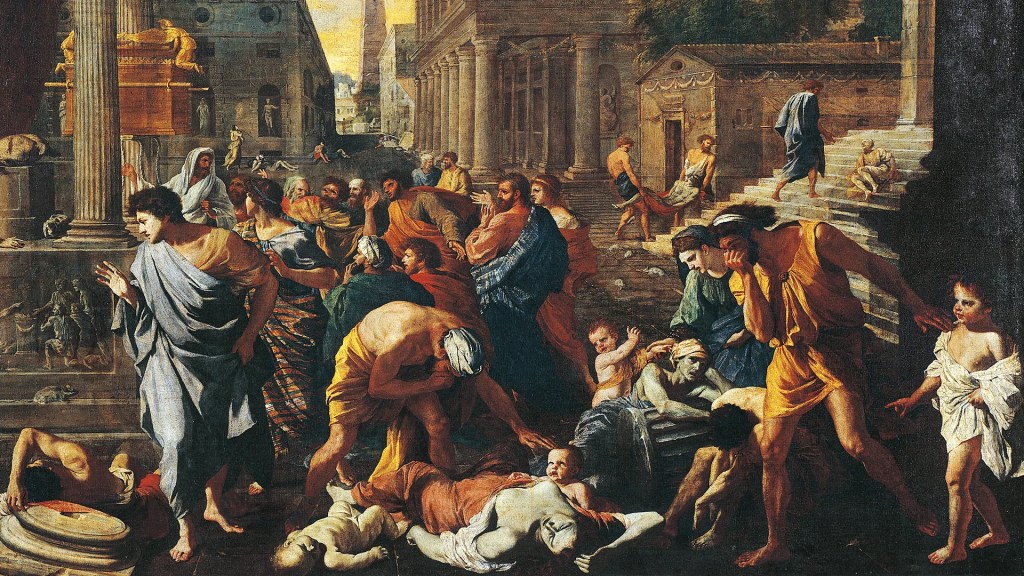
The Plague of Ashdod (1630) Nicholas Poussin

The artwork “The Plague of Ashdod” was created by the French painter Nicolas Poussin in 1630. It portrays the biblical narrative of a divine plague inflicted upon the people of Ashdod. 

This dramatic scene of divine punishment is described in the Old Testament. The Philistines are stricken with plague in their city of Ashdod because they have stolen the Ark of the Covenant from the Israelites and placed it in their pagan temple. You can see the decorated golden casket of the Ark between the pillars of the temple. People look around in horror at their dead and dying companions. One man leans over the corpses of his wife and child and covers his nose to avoid the stench. Rats scurry towards the bodies. The broken statue of their deity, Dagon, and the tumbled down stone column further convey the Philistines’ downfall.

In the artwork, Poussin vividly depicts the turmoil and suffering caused by the plague. The foreground is filled with the stricken inhabitants of Ashdod; their bodies are contorted in agony or limp in the stillness of death, illustrating the mercilessness of the affliction. The variety of postures and expressions captures the range of human suffering and chaos that accompanies such disaster. 

Amongst the afflicted, several figures stand out due to their dynamic gestures or central placement within the composition, drawing the viewer’s eye and emphasizing the emotional impact of the scene. In the background, classical architecture gives a sense of order and permanence that starkly contrasts with the disarray and despair of the figures. Poussin’s use of colour and light skilfully highlights the drama, with the dark and earthy tones of the suffering masses set against the lighter, more serene sky, which suggests divine presence or intervention.

Poussin’s use of color and light skillfully highlights the drama, with the dark and earthy tones of the suffering masses set against the lighter, more serene sky, which suggests divine presence or intervention. The overall effect is one of a carefully structured scene that conveys a narrative full of intensity and profound human drama, characteristic of the religious paintings of the period and the classical style Poussin is renowned for. Poussin began to paint The Plague of Ashdod while the bubonic plague was still raging throughout Italy though sparing Rome. He first called the painting The Miracle in the Temple of Dagon, but later it became known as The Plague of Ashdod.

The painting most importantly provides a view into how illness and diseases were feared at that time in the past and the fact that people had the knowledge that it was transmissible during that time period which was the 16th century.

𝓒𝓱𝓮𝓮𝓻𝓼 𝓽𝓸 𝓪 2𝓷𝓭 𝓪𝓷𝓷𝓲𝓿𝓮𝓻𝓼𝓪𝓻𝔂 𝓸𝓯 𝓽𝓱𝓮 𝓫𝓵𝓸𝓰! 🍾🥂
𝐀𝐧𝐧𝐨𝐮𝐧𝐜𝐞𝐦𝐞𝐧𝐭: 𝐂𝐞𝐥𝐞𝐛𝐫𝐚𝐭𝐢𝐧𝐠 𝟐𝟎𝟎 𝐩𝐨𝐬𝐭𝐬 𝐦𝐢𝐥𝐞𝐬𝐭𝐨𝐧𝐞 𝐫𝐞𝐚𝐜𝐡! 𝐈 𝐜𝐚𝐧’𝐭 𝐭𝐡𝐚𝐧𝐤 𝐞𝐚𝐜𝐡 𝐨𝐧𝐞 𝐨𝐟 𝐲𝐨𝐮 𝐞𝐧𝐨𝐮𝐠𝐡! 𝐖𝐞’𝐫𝐞 𝐚𝐭 𝐚 𝟓𝐤 𝐬𝐭𝐫𝐞𝐚𝐤 𝐚𝐬 𝐰𝐞𝐥𝐥! ♥️🍾🍷#scriveners
𝘗𝘭𝘦𝘢𝘴𝘦 𝘤𝘩𝘦𝘤𝘬 𝘰𝘶𝘵 𝘰𝘶𝘳 𝘯𝘦𝘸𝘭𝘺 𝘶𝘱𝘥𝘢𝘵𝘦𝘥 ‘𝘌𝘹𝘵𝘳𝘢𝘴 𝘗𝘢𝘨𝘦’!╰(°▽°)╯
𝕸𝖊𝖗𝖗𝖞 𝕮𝖍𝖗𝖎𝖘𝖙𝖒𝖆𝖘!🎄🎅𝕸𝖆𝖞 𝖆𝖑𝖑 𝖞𝖔𝖚𝖗 𝕮𝖍𝖗𝖎𝖘𝖙𝖒𝖆𝖘 𝖜𝖎𝖘𝖍𝖊𝖘 𝖈𝖔𝖒𝖊 𝖙𝖗𝖚𝖊!

🥳𝐉𝐮𝐬𝐭 𝐢𝐧𝐬𝐭𝐚𝐥𝐥𝐞𝐝 𝐚 𝐧𝐞𝐰 𝐩𝐥𝐚𝐧 𝐚𝐧𝐝 𝐜𝐡𝐚𝐧𝐠𝐞𝐝 𝐭𝐡𝐞 𝐬𝐢𝐭𝐞 𝐚𝐝𝐝𝐫𝐞𝐬𝐬! 𝐖𝐞’𝐯𝐞 𝐮𝐩𝐠𝐫𝐚𝐝𝐞𝐝 𝐛𝐚𝐛𝐲! 🎉 scrionl.blog ♡
🚨𝐃𝐮𝐞 𝐭𝐨 𝐬𝐨𝐦𝐞 𝐮𝐧𝐟𝐨𝐫𝐞𝐬𝐞𝐞𝐧 𝐜𝐢𝐫𝐜𝐮𝐦𝐬𝐭𝐚𝐧𝐜𝐞 𝐈 𝐰𝐢𝐥𝐥 𝐛𝐞 𝐭𝐚𝐤𝐢𝐧𝐠 𝐚 𝐡𝐢𝐚𝐭𝐮𝐬 𝐟𝐨𝐫 𝐚 𝐩𝐞𝐫𝐢𝐨𝐝 𝐨𝐟 𝐨𝐧𝐞 𝐦𝐨𝐧𝐭𝐡!🚨
𝐖𝐞 𝐧𝐨𝐰 𝐡𝐚𝐯𝐞 𝐚𝐧 𝐈𝐧𝐬𝐭𝐚𝐠𝐫𝐚𝐦 𝐚𝐜𝐜𝐨𝐮𝐧𝐭!📱
𝐀 𝐧𝐞𝐰 𝐬𝐞𝐜𝐭𝐢𝐨𝐧 ‘𝐂𝐨𝐧𝐭𝐚𝐜𝐭’ 𝐡𝐚𝐬 𝐛𝐞𝐞𝐧 𝐚𝐝𝐝𝐞𝐝! 📞

𝐓𝐡𝐞 ‘𝐋𝐢𝐧𝐤𝐬 & 𝐁𝐨𝐨𝐤𝐬 & 𝐘𝐨𝐮𝐓𝐮𝐛𝐞 & 𝐏𝐨𝐝𝐜𝐚𝐬𝐭𝐬’ 𝐬𝐞𝐜𝐭𝐢𝐨𝐧 𝐢𝐬 𝐧𝐨𝐰 𝐚𝐯𝐚𝐢𝐥𝐚𝐛𝐥𝐞!💙
𝐍𝐞𝐰 𝐰𝐚𝐥𝐥𝐩𝐚𝐩𝐞𝐫𝐬 𝐡𝐚𝐯𝐞 𝐛𝐞𝐞𝐧 𝐚𝐝𝐝𝐞𝐝 𝐭𝐨 𝐭𝐡𝐞 ‘𝐄𝐱𝐭𝐫𝐚𝐬’ 𝐬𝐞𝐜𝐭𝐢𝐨𝐧. 𝐃𝐨 𝐜𝐡𝐞𝐜𝐤 𝐢𝐭 𝐨𝐮𝐭!⚡️
𝐀𝐧𝐧𝐨𝐮𝐧𝐜𝐞𝐦𝐞𝐧𝐭: 𝐌𝐨𝐫𝐞 𝐭𝐡𝐚𝐧 𝐚 𝟏𝟎𝟎 𝐭𝐡𝐚𝐧𝐤𝐬! 𝐖𝐞’𝐯𝐞 𝐫𝐞𝐚𝐜𝐡𝐞𝐝 𝟏𝟎𝟎 𝐩𝐨𝐬𝐭𝐬! 🍾 🍷
𝓒𝓮𝓵𝓮𝓫𝓻𝓪𝓽𝓲𝓷𝓰 𝓽𝓱𝓲𝓼 𝓶𝓮𝓭𝓲𝓬𝓪𝓵 𝔀𝓻𝓲𝓽𝓲𝓷𝓰 𝓫𝓵𝓸𝓰’𝓼 1-𝔂𝓮𝓪𝓻 𝓪𝓷𝓷𝓲𝓿𝓮𝓻𝓼𝓪𝓻𝔂!🍾🍷

Firearm Availability & Its Associated Violence

Firearm availability is closely linked to multiple firearm-injury outcomes.34-36 In 2022, 45% of US households reported owning firearms, and two thirds of those reported having multiple firearms.37 Household firearm ownership is associated with increased risk of firearm-related adult homicide and suicide,35,38–40 adolescent firearm suicide,41 and unintentional firearm-related injury regardless of age.36 Almost 60% of homicides…

The Things We Carry

This piece is dedicated to the real doctors through and through… A hospital-issued photo ID attached to his quarter-zip top with a retractable clip, granting access to countless doors, closets, wards that otherwise would be inaccessible. A silver Zebra F-701 retractable ballpoint pen purchased for $4.99, selected for the particular click it makes when protracting…

When Plan B Wasn’t Your Contract!

There were more questions because it makes things more complicated. The eligibility for the participation of the reimbursement for GPs; locums are to be converted into salaried GPs! Yep! You heard that right! There are so many questions that need to be answered! When politics get involved, answers to certain questions aren’t there! What do…

Securing an Availability for a FDA-approved Tricuspid Valve

Edwards Lifesciences has received FDA approval for their invention TRIFORMIS RESILIA this week, it is the first surgical valve that is designed to specifically replace a diseased tricuspid valve of the human heart. Only 2.5% of patients out of 1.6 million ever receive a tricuspid valve replacement in their lifetime. Historically, innovative efforts to intervene…

Microbes are Everywhere

Introduction: Good Sh*t Dr Ben Mullish, a clinical scientist at Imperial College London, was running a trial of FMT in patients with C. diff infections. Ray was so unwell that Dr Mullish offered him the treatment. Heather understood that there are good and bad bugs and advised her husband to go ahead with it, but…

Adding a New Rule to the NHS Act 2006

Scrapping the legal guarantee that a nurse sits on every foundation trust board is a “brazen attack on patient safety”, the Royal College of Nursing has warned. The Health Bill, published this month, would remove the requirement in primary legislation for foundation trust boards to include a registered nurse or midwife and a registered medical…

  • Bleeding Disorder of Unknown Cause in Women

    by

    Nivea Vaz ,
    3–5 minutes

    HMB is a highly prevalent symptom in women with BD and with BDUC. Menstruation related quality of life was impaired in BDUC patients and even more in BD patients compared to the general population.


    In up to 60% of all patients with MBD, no underlying cause can be identified, despite exhaustive investigations of plas-matic coagulation and platelet function. These patients are categorized with bleeding disorder of unknown cause (BDUC). BDUC patients exhibit a bleeding phenotype and severity indistinguishable from those with well-defined mild bleeding disorders, such as mild von Willebrand disease (VWD), mild platelet function defects (PFDs), or mild coagulation factor deficiencies (CFDs). Furthermore, impaired hemostatic capacity reflected by reduced thrombin generation potential and/or abnormal plasma clot formation and lysis support the diagnosis of BDUC as a separate entity of MBDs.
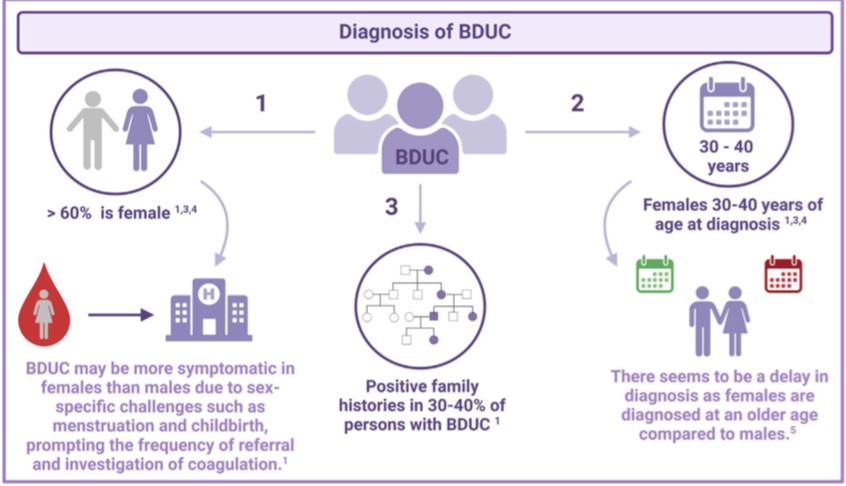
     

    Patients with MBDs, particularly those with BDUC, face a risk of recurrent bleeding, as demonstrated by prospective data from the Vienna Bleeding Biobank (VIBB) and other research cohorts. In fact, a majority of BDUC patients have persistent mild bleeding symptoms, including epistaxis and easy bruising, alongside an elevated risk for more severe bleeding events following surgery, tooth extraction, or during postpartum hemorrhage (PPH). While prophylactic treatments involving desmopressin (DDAVP) and/or tranexa-mic acid (TXA) have shown some efficacy in reducing bleeding complications, a substantial cohort of patients continues to experience bleeding episodes. Moreover, these patients contend with adverse effects on their health-related quality of life, affecting both physical and mental well-being. Overall, clinical and translational data in the last decade have demonstrated the relevance of BDUC as a distinct bleeding disorder and therefore the need for identifying and registering these patients.


    In more than half of the individuals with a clinically relevant bleeding tendency who are referred to hemostasis experts, no biological etiology can be found after extensive laboratory testing. These persons are diagnosed with an unexplained bleeding tendency or “bleeding disorder of unknown cause” (BDUC). The mucocutaneous bleeding phenotype of individuals with BDUC is generally comparable to that of individuals with inherited bleeding disorders such as von Willebrand disease or platelet function disorders. BDUC definitions applied in literature are heterogeneous, but all comprise 2 main criteria: (1) there is an increased bleeding tendency based on the clinical view of the physician and/or an increased bleeding score; (2) no abnormalities are found with available hemostasis laboratory tests. This is reflected in the recent published BDUC definition by the Scientific and Standardization Committee of the International Society on Thrombosis and Haemostasis, stating that BDUC is a diagnosis of exclusion, characterized by normal hemostatic investigations despite a clinically significant bleeding tendency. Importantly, other nonhemostatic and acquired causes of bleeding should be excluded, but details on exclusion criteria and associated diagnostic testing remain undefined. 
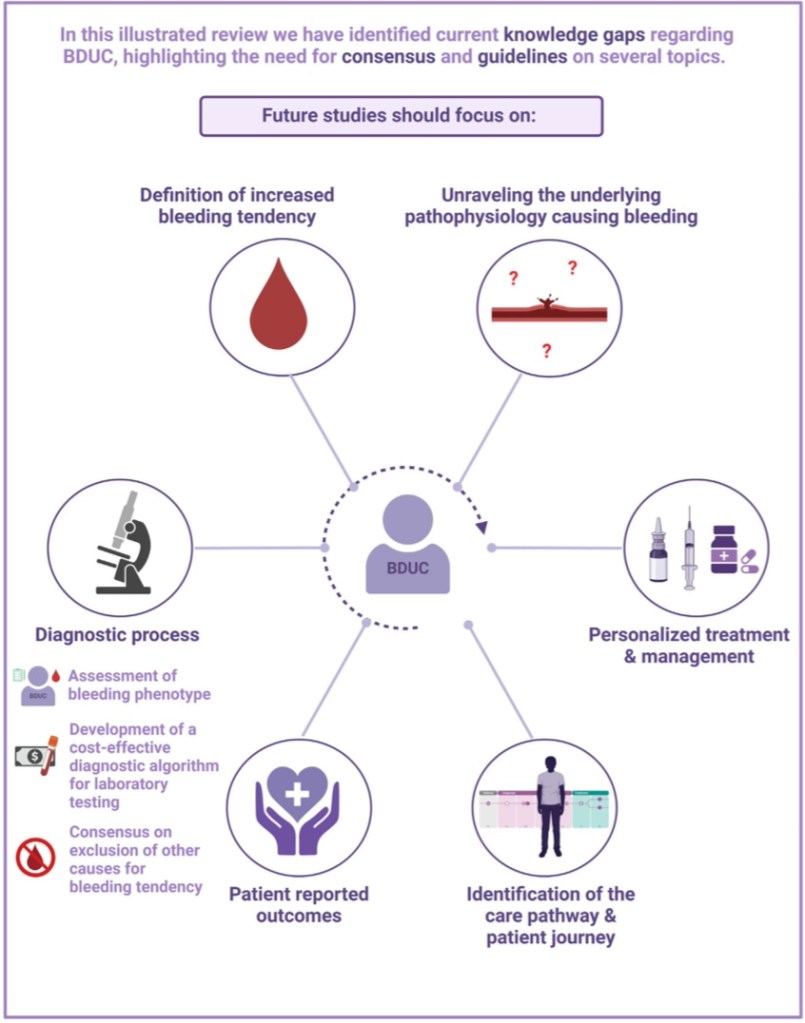
     

    BUC/UBD encompasses a heterogenous group of disorders which may include undiagnosed rare monogenic diseases, polygenic reasons for bleeding; and patients without a clear bleeding disorder but with a previous bleeding event. Nevertheless, these patients may have heavy menstrual bleeding or be at risk of bleeding when undergoing surgical procedures, or childbirth; optimizing haemostasis and establishing a mode of inheritance is important to minimize morbidity.


    To diagnose bleeding disorder of unknown cause (BDUC), normal complete blood count, prothrombin time, activated partial thromboplastin time, thrombin time, von Willebrand factor antigen, von Willebrand factor function, coagulation factors VIII, IX, and XI, and platelet light transmission aggregometry should be the minimum laboratory assessment. In some laboratories, additional specialized hemostasis testing may be performed to identify other rare causes of bleeding. We recommend that patients with a significant bleeding phenotype but normal laboratory investigations should be registered with a diagnosis of BDUC in preference to other terminology.


    (ps most gynaecologists probably don’t even know about it, it’s quite common in women and you might get prescribed hormones/contraceptives (same trash) which are completely irrelevant also it’s similar to haemophilia when it comes to certain clinical features! Women in the old days weren’t aware that they had this! There were not that many doctors nor specialists available in the rural areas/places away from the city at that time! This might have been one of the few insidious phenomena that caused people to bleed to death!) PARTICULARLY WOMEN!

    Another reason on why I cover this is because there are many women who have bleeding disorder like me, it’s not always a picture perfect world we live in when it comes to drugs and treatments, there are still many things that are yet to be discovered by the medical community and that’s what makes medical writing a fascinating read and write! TXA tablets and fresh orange juice were what helped me recover and that too at a slow pace! When I first went to the gynaecologist all she told me was that I was fine! Obviously looking back now I wish my younger self knew that wasn’t the case!


    On further reading;

    https://www.sciencedirect.com/science/article/pii/S247503792400267X


    Sources:

     https://ashpublications.org/blood/article/144/Supplement%201/7554/527177/Heavy-Menstrual-Bleeding-HMB-Is-a-Common-Symptom

    https://www.sciencedirect.com/science/article/pii/S2475037924003200

    https://www.rdm.ox.ac.uk/publications/1152580

    https://cris.maastrichtuniversity.nl/en/publications/standardization-of-definition-and-management-for-bleeding-disorde


    Rating: 5 out of 5.

    5,554 hits

    Leave a comment

    𝙷𝚘𝚠 𝚖𝚎𝚍𝚒𝚌𝚒𝚗𝚎 𝚊𝚗𝚍 𝚑𝚎𝚊𝚕𝚝𝚑𝚌𝚊𝚛𝚎 𝚊𝚏𝚏𝚎𝚌𝚝 𝚞𝚜 𝚒𝚗 𝚝𝚑𝚎 𝚜𝚖𝚊𝚕𝚕𝚎𝚜𝚝 𝚘𝚏 𝚠𝚊𝚢𝚜 𝚕𝚎𝚊𝚍𝚒𝚗𝚐 𝚝𝚘 𝚋𝚒𝚐𝚐𝚎𝚛 𝚒𝚖𝚙𝚊𝚌𝚝𝚜 𝚊𝚗𝚍 𝚕𝚒𝚏𝚎-𝚌𝚑𝚊𝚗𝚐𝚒𝚗𝚐 𝚌𝚘𝚗𝚜𝚎𝚚𝚞𝚎𝚗𝚌𝚎𝚜! 𝚄𝚕𝚝𝚒𝚖𝚊𝚝𝚎𝚕𝚢, 𝚌𝚑𝚊𝚗𝚐𝚒𝚗𝚐 𝚠𝚑𝚊𝚝 𝚠𝚎 𝚌𝚊𝚕𝚕 ‘𝚑𝚎𝚊𝚕𝚝𝚑𝚌𝚊𝚛𝚎.’

    “Copyright [2024], [2025], [2026], [Scriveners], [Scriveners Online], All Rights Reserved. Any unauthorised duplication or use of this material is strictly prohibited.”

    ‘𝙰 𝚙𝚛𝚘𝚞𝚍 𝚖𝚎𝚍𝚒𝚌𝚊𝚕 𝚜𝚝𝚞𝚍𝚎𝚗𝚝’𝚜 𝚒𝚗𝚒𝚝𝚒𝚊𝚝𝚒𝚟𝚎 𝚊𝚗𝚍 𝚘𝚠𝚗𝚎𝚛𝚜𝚑𝚒𝚙!’‘

    Made for medical students by medical students ♡