





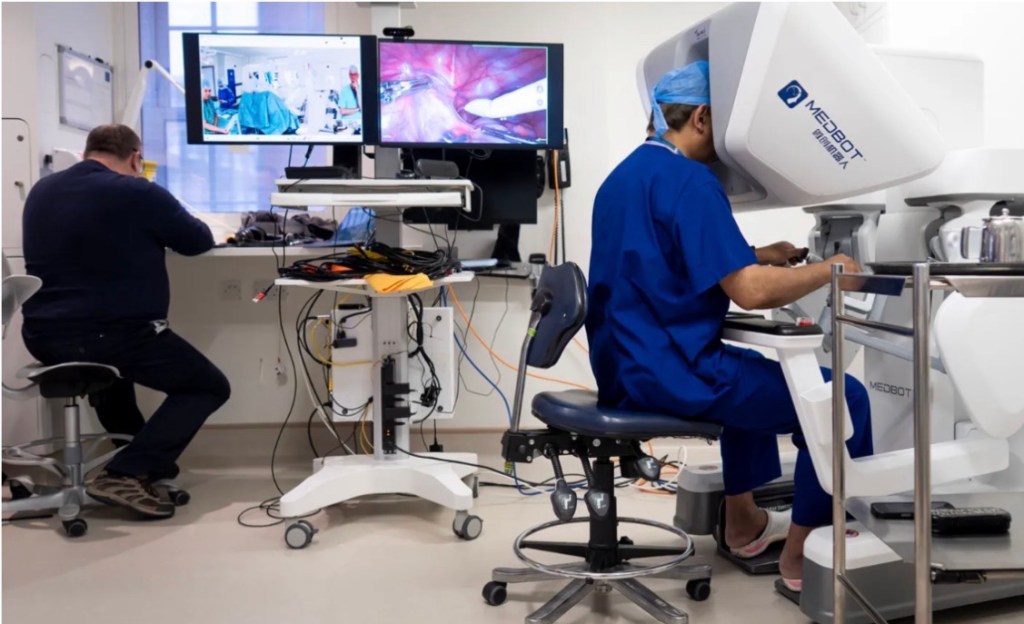
The UK’s first robotic operation that took place long distance for a patient in Gibraltar. That was a total of 1,500 miles! Professor Prokar Dasgupta felt “almost as if I was there” moment with this hands on robotic surgery. Remote robotic surgery holds a special promise that patients avoid the expenses that comes with travelling for treatment as well as receiving surgical treatment in remote areas! UK surgeons have been part of major telesurgery breakthroughs. Gibraltar is a British overseas territory and it has just one hospital meaning that remote access to care is almost impossible! Buxton said he was “really well looked after” and was “feeling fantastic” following the operation on 11 February.
The operation was performed from The London Clinic using a robot equipped with a 3D HD camera and four arms, all controlled through a console with a delay of only 0.06 seconds. The console in the UK was connected to the robot in Gibraltar via fibre‑optic cables, with a backup 5G link. A team in Gibraltar remained on standby in case the connection failed, but it held throughout the procedure. The operation used the Toumai Robotic System, in a collaboration between The London Clinic and the Gibraltar Health Authority. Buxton is originally from Burnham‑on‑Sea in Somerset but moved to Gibraltar 40 years ago. The cancer patient, 62, said it had been a “no-brainer” to take part and become “part of medical history”.
Credit:
 Scriveners Online©
Leave a comment