





The research that I am undertaking here therefore involves a project that is deliberately both historical and critical, in that it is concerned—outside all prescriptive intent—with determining the conditions of possibility of medical experience in modern times. I should like to make it plain once and for all that this book has not been written in favour of one kind of medicine as against another kind of medicine, or against medicine and in favour of an absence of medicine. It is a structural study that sets out to disentangle the conditions of its history from the density of discourse, as do others of my works. What counts in the things said by men is not so much what they may have thought or the extent to which these things represent their thoughts, as that which systematizes them from the outset, thus making them thereafter endlessly accessible to new discourses and open to the task of transforming them.
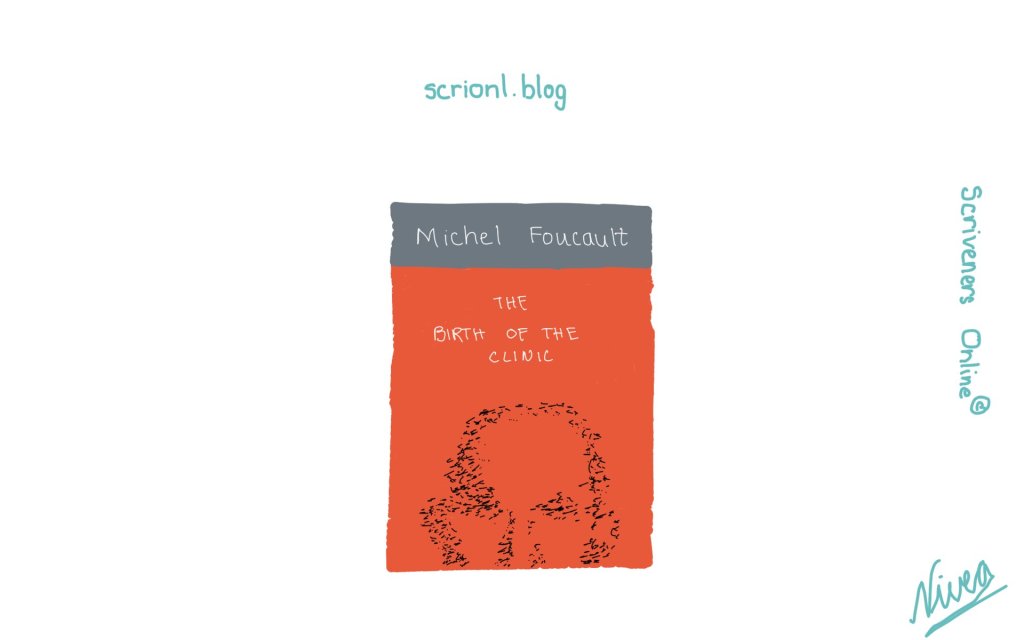
Distinguishing 18th Century Physical Analysis of Disease Patterns on Human Body
When will we be able to define the structures that determine, in the secret volume of the body, the course of allergic reactions? Has anyone ever drawn up the specific geometry of a virus diffusion in the thin layer of a segment of tissue? Is the law governing the spatialization of these phenomena to be found in a Euclidean anatomy? After all, one only has to remember that the old theory of sympathies spoke a vocabulary of correspondences, vicinities, and homologies, terms for which the perceived space of anatomy hardly offers a coherent lexicon. Every great thought in the field of pathology lays down a configuration for disease whose spatial requisites are not necessarily those of classical geometry.
The exact superposition of the ‘body’ of the disease and the body of the sick man is no more than a historical, temporary datum. Their encounter is self-evident only for us, or, rather, we are only just beginning to detach ourselves from it. The space of configuration of the disease and the space of localization of the illness in the body have been superimposed, in medical experience, for only a relatively short period of time—the period that coincides with nineteenth-century medicine and the privileges accorded to pathological anatomy. This is the period that marks the suzerainty of the gaze, since in the same perceptual field, following the same continuities or the same breaks, experience reads at a glance the visible lesions of the organism and the coherence of pathological forms; the illness is articulated exactly on the body, and its logical distribution is carried out at once in terms of anatomical masses. The ‘glance’ has simply to exercise its right of origin over truth.
But how did this supposedly natural, immemorial right come about? How was this locus, in which disease indicated its presence, able to determine in so sovereign a way the figure that groups its elements together? Paradoxically, never was the space of configuration of disease more free, more independent of its space of localization than in classificatory medicine, that is to say, in that form of medical thought that, historically, just preceded the anatomo-clinical method, and made it structurally possible.
What are the principles of this primary configuration of disease?
1. The doctors of the eighteenth century identified it with ‘historical’, as opposed to philosophical, ‘knowledge’. Knowledge is historical that circumscribes pleurisy by its four phenomena: fever, difficulty in breathing, coughing, and pains in the side. Knowledge would be philosophical that called into question the origin, the principle, the causes of the disease: cold, serous discharge, inflammation of the pleura. The distinction between the historical and the philosophical is not the distinction between cause and effect: Cullen based his classificatory system on the attribution of related causes [5]; nor is the distinction between principle and consequences, since Sydenham thought he was engaged in historical research when studying the way in which nature produces and sustains the different forms of diseases’ [6]; nor even is it exactly the difference between the visible and the hidden or conjectural, for one sometimes has to track down a ‘history’ that is enclosed upon itself and develops invisibly, like hectic fever in certain phthisics: ‘reefs caught under water’ [7]. The historical embraces whatever, de facto or de jure, sooner or later, directly or indirectly, may be offered to the gaze. A cause that can be seen, a symptom that is gradually discovered, a principle that can be deciphered from its root do not belong to the order of ‘philosophical’ knowledge, but to a ‘very simple’ knowledge, which ‘must precede all others’, and which situates the original form of medical experience. It is a question of defining a sort of fundamental area in which perspectives are levelled off, and in which shifts of level are aligned: an effect has the same status as its cause, the antecedent coincides with what follows it. In this homogeneous space series are broken and time abolished: a local inflammation is merely the ideal juxta-position of its historical elements (redness, tumour, heat, pain) without their network of reciprocal determinations or their temporal intersection being involved.
2. It is a space in which analogies define essences. The pictures resemble things, but they also resemble one another. The distance that separates one disease from another can be measured only by the degree of their resemblance, without reference to the logico-temporal divergence of genealogy. The disappearance of voluntary movements and reduced activity in the internal or external sense organs form the general outline that emerges beneath such particular forms as apoplexy, syncope, or paralysis. Within this great kinship, minor divergences are established: apoplexy robs one of the use of all the senses, and of all voluntary motility, but it spares the breathing and the functioning of the heart; paralysis affects only a locally assignable sector of the nervous system and motility; like apoplexy, syncope has a general effect, but it also interrupts respiratory movements [9]. The perspective distribution, which enables us to see in paralysis a symptom, in syncope an episode, and in apoplexy an organic and functional attack, does not exist for the classificatory gaze, which is sensitive only to surface divisions, in which vicinity is not defined by measurable distances but by formal similarities. When they become dense enough, these similarities cross the threshold of mere kinship and accede to unity of essence. There is no fundamental difference between an apoplexy that suddenly suspends motility, and the chronic, evolutive forms that gradually invade the whole motor system: in that simultaneous space in which forms distributed by time come together and are superimposed, kinship folds back into identity. In a flat, homogeneous, non-measurable world, there is essential disease where there is a plethora of similarities.
3. The form of the similarity uncovers the rational order of the diseases. When one perceives a resemblance, one does not simply lay down a system of convenient, relative ‘mappings’; one begins to read off the intelligible ordering of the diseases. The veil is lifted from the principle of their creation; this is the general order of nature. As in the case of plants or animals, the action of disease is fundamentally specific: ‘The supreme Being is not subjected to less certain laws in producing diseases or in maturing morbific humours, than in growing plants and animals…. He who observes attentively the order, the time, the hour at which the attack of quart fever begins, the phenomena of shivering, of heat, in a word all the symptoms proper to it, will have as many reasons to believe that this disease is a species as he has to believe that a plant constitutes a species because it grows, flowers, and dies always in the same way’ [10].
This botanical model has a double importance for medical thought. First, it made it possible to turn the principle of the analogy of forms into the law of the production of essences; and, secondly, it allowed the perceptual attention of the doctor-which, here and there, discovers and relates to communicate with the ontological order-which organizes from the inside, prior to all manifestation-the world of disease. The order of disease is simply a ‘carbon copy’ of the world of life; the same structures govern each, the same forms of division, the same ordering. The rationality of life is identical with the rationality of that which threatens it. Their relationship is not one of nature and counter- nature; but, in a natural order common to both, they fit into one another, one superimposed upon the other. In disease, one recognizes (reconnai^t) life because it is on the law of life that knowledge (connaissance) of the disease is also based.
4. We are dealing with species that are both natural and ideal. Natural, because it is in them that diseases state their essential truths; ideal insofar as they are never experienced unchanged and undisturbed. The first disturbance is introduced with and by disease itself. To the pure nosological essence, which fixes and exhausts its place in the order of the species without residue, the patient adds, in the form of so many disturbances, his predispositions, his age, his way of life, and a whole series of events that, in relation to the essential nucleus, appear as accidents. In order to know the truth of the pathological fact, the doctor must abstract the patient: ‘He who describes a disease must take care to distinguish the symptoms that necessarily accompany it, and which are proper to it, from those that are only accidental and fortuitous, such as those that depend on the temperament and age of the patient’ [11]. Paradoxically, in relation to that which he is suffering from, the patient is only an external fact; the medical reading must take him into account only to place him in parentheses. Of course, the doctor must know ‘the internal structure of our bodies’; but only in order to subtract it, and to free to the doctor’s gaze ‘the nature and combination of symptoms, crises, and other circumstances that accompany diseases’ [12]. It is not the pathological that functions, in relation to life, as a counter-nature, but the patient in relation to the disease itself.
And not only the patient; the doctor, too. His intervention is an act of violence if it is not subjected strictly to the ideal ordering of nosology: ‘The knowledge of diseases is the doctor’s compass; the success of the cure depends on an exact knowledge of the disease’; the doctor’s gaze is directed initially not towards that concrete body, that visible whole, that positive plenitude that faces him-the patient-but towards intervals in nature, lacunae, distances, in which there appear, like negatives, ‘the signs that differentiate one disease from another, the true from the false, the legitimate from the bastard, the malign from the benign’ [13].
In the rational space of disease, doctors and patients do not occupy a place as of right; they are tolerated as disturbances that can hardly be avoided: the paradoxical role of medicine consists, above all, in neutralizing them, in maintaining the maximum difference between them, so that, in the void that appears between them, the ideal configuration of the disease becomes a concrete, free form, totalized at last in a motionless, simultaneous picture, lacking both density and secrecy, where recognition opens of itself onto the order of essences.
Seeing Disease as a Visual Map
Disease, which can be mapped out on the picture, becomes apparent in the body. There it meets a space with a quite different configuration: the concrete space of perception. Its laws define the visible forms assumed by disease in a sick organism: the way in which disease is distributed in the organism, manifests its presence there, progresses by altering solids, movements, or functions, causes lesions that become visible under autopsy, triggers off, at one point or another, the interplay of symptoms, causes reactions, and thus moves towards a fatal, and for it favourable, outcome. We are dealing here with those complex, derived figures by means of which the essence of the disease, with its structure of a picture, is articulated upon the thick, dense volume of the organism and becomes embodied within it.
How can the flat, homogeneous, homological space of classes become visible in a geographical system of masses differentiated by their volume and distance? How can a disease, defined by its place in a family, be characterized by its seat in an organism? This is the problem that might be called the secondary spatialization of the pathological.
In this pathology, time plays a limited role. It is admitted that a disease may last, and that its various episodes may appear in turn; ever since Hippocrates doctors have calculated the critical days of a disease, and known the significant values of the arterial pulsations: ‘When the rebounding pulse appears at each thirtieth pulsation, or thereabouts, the haemorrhage occurs four days later, more or less; when it occurs at every sixteenth pulsation, the haemorrhage will occur in three days’ time… Lastly, when it recurs every fourth, third, second pulsation, or when it is continual, one must expect the haemorrhage within twenty-four hours’ [17]. But this numerically fixed duration is part of the essential structure of disease, just as chronic catarrh becomes, after a period of time, phthisic fever. There is no process of evolution in which duration introduces new events of itself and at its own insistence; time is integrated as a nosological constant, not as an organic variable. The time of the body does not affect, and still less determines, the time of the disease.
What communicates the essential ‘body’ of the disease to the real body of the patient are not, therefore, the points of localization, nor the effects of duration, but, rather, the quality. In one of the experiments described before the Prussian Royal Academy in 1764, Meckel explains how he observed the alteration in the brain during different diseases. When he carried out an autopsy, he removed from the brain small cubes of equal volume (‘6 lines in each direction’) in different places in the cerebral mass: he compared these extractions with each other, and with similar cubes taken from other corpses. The instrument used for this comparison were weighing scales; in phthisis, a disease involving exhaustion, the specific weight of the brain was found to be relatively lower than in the case of apoplexy, a disease involving discharge (1 dr 3 gr as against 1 dr 6 or 7 gr); whereas in the case of a normal subject who had died naturally the average weight was 1 dr 5 gr. These weights may vary according to the part of the brain from which the samples have been extracted: in phthisis it is, above all, the cerebellum that is light; in apoplexy the central areas are heavy [18]. Between the disease and the organism, then, there are connexion points that are situated according to a regional principle; but these are only sectors in which the disease secretes or transposes its specific qualities: the brains of maniacs are light, dry, and friable because mania is a lively, hot, explosive disease; those of phthisics are exhausted and languishing, inert, anaemic, because phthisis belongs to the general class of the haemorrhages.
The disease and the body communicate only through the non-spatial element of quality. It is understandable, then, that medicine should turn away from what Sauvages called a ‘mathematical’ form of knowledge: ‘Knowing quantities and being able to measure them, being able, for example, to determine the force and speed of the pulse, the degree of heat, the intensity of pain, the violence of the cough, and other such symptoms’ [19]. Meckel measured, not to obtain knowledge of mathematical form, but to gauge the intensity of the pathological quality that constituted the disease. No measurable mechanics of the body can, in its physical or mathematical particularities, account for a pathological phenomenon; …
Physicians must confine themselves to knowing the forces of medicines and diseases by means of their operations; they must observe them with care and strive to know their laws, and be tireless in the search for physical causes’ [20]. A true mathematization of disease would imply a common, homogeneous space, with organic figures and a nosological ordering.
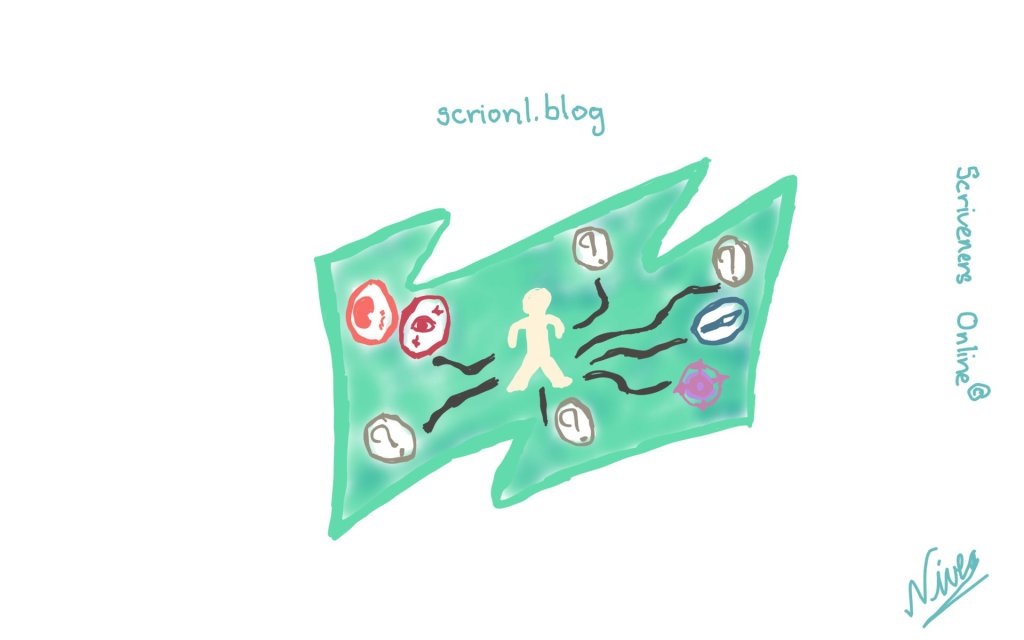
On the contrary, their shift implies a qualitative gaze; in order to grasp the disease, one must look at those parts where there is dryness, ardour, excitation, and where there is humidity, discharge, debility. How can one distinguish, beneath the same fever, the same coughing, the same tiredness, pleurisy of the phthisis, if one does not recognize here a dry inflammation of the lungs, and there a serous discharge? How can one distinguish, if not by their quality, the convulsions of an epileptic suffering from cerebral inflammation, and those of a hypochondriac suffering from congestion of the viscera? A subtle perception of qualities, a perception of the differences between one case and another, a delicate perception of variants—a whole hermeneutics of the pathological fact, based on modulated, coloured experience, is required; one should measure variations, balances, excesses, and defects.
The human body is made up of vessels and fluids;…when the vessels and fibres have neither too much nor too little tone, when the fluids have just the right consistency, when they have neither too much nor too little movement, man is in a state of health; if the movement…is too strong, the solids harden and the fluids thicken; if it is too weak, the fibre slackens and the blood becomes thinner [21].
And the medical gaze, open to these fine qualities, necessarily becomes attentive to all their modulations; the decipherment of disease in its specific characteristics is based on a subtle form of perception that must take account of each particular equilibrium. But in what does this particularity consist? It is not that of an organism in which pathological process and reactions are linked together in a unique way to form a ‘case’. We are dealing, rather, with qualitative varieties of the illness, to which are added the varieties that may be presented by the temperaments, thus modulating the qualitative varieties in the second stage. What classificatory medicine calls particular histories’ are the effects of multiplication caused by the qualitative variations (owing to the temperaments) of the essential qualities that characterize illnesses. The individual patient finds himself at the point at which the result of this multiplication appears.
Justifying Spatial Synthesis and Qualifying Modulations in Disease Types
The patient is a geometrically impossible spatial synthesis, but for that very reason unique, central, and irreplaceable: an order that has become density in a set of qualifying modulations. And the same Zimmermann, who recognized in the patient only the negative of the disease, is ‘sometimes tempted’, contrary to Sydenham’s general descriptions, ‘to admit only of particular histories. However simple nature may be as a whole, it is nevertheless varied in its parts; consequently, we must try to know it both as a whole and in its parts’ [23]. The medicine of species becomes engaged in a renewed attention to the individual-an ever-more impatient attention, ever less able to tolerate the general forms of perception and the hasty inspection of essences.
‘Every morning a certain Aesculapius has fifty or sixty patients in his waiting room; he listens to the complaints of each, arranges them into four lines, prescribes a bleeding for the first, a purge for the second, a clyster for the third, and a change of air for the fourth [24]. This is not medicine; the same is true of hospital practice, which kills the capacity for observation and stifles the talents of the observer by the sheer number of things to observe. Medical perception must be directed neither to series nor to groups; it must be structured as a look through ‘a magnifying glass, which, when applied to different parts of an object, makes one notice other parts that one would not otherwise perceive’ [25], thus initiating the endless task of understanding the individual.
Making Sense of Primary Spatialization, Secondary Spatialization and Tertiary Spatialization
Through the play of primary spatialization, the medicine of species situated the disease in an area of homologies in which the individual could receive no positive status; in secondary spatialization, on the other hand, it required an acute perception of the individual, freed from collective medical structures, free of any group gaze and of hospital experience itself. Doctor and patient are caught up in an ever-greater proximity, bound together, the doctor by an ever-more attentive, more insistent, more penetrating gaze, the patient by all the silent, irreplaceable qualities that, in him, betray—that is, reveal and conceal the clearly ordered forms of the disease. Between the nosological characters and terminal features to be read on the patient’s face, the qualities have roamed freely over the body. The medical gaze need hardly dwell on this body for long, at least in its densities and functioning.
Let us call tertiary spatialization all the gestures by which, in a given society, a disease is circumscribed, medically invested, isolated, divided up into closed, privileged regions, or distributed throughout cure centres, arranged in the most favorable way. Tertiary is not intended to imply a derivative, less essential structure than the preceding ones; it brings into play a system of options that reveals the way in which a group, in order to protect itself, practises exclusions, establishes the forms of assistance, and reacts to poverty and to the fear of death. But to a greater extent than the other forms of spatialization, it is the locus of various dialectics: heterogeneous figures, time lags, political struggles, demands and utopias, economic constraints, social confrontations. In it, a whole corpus of medical practices and institutions confronts the primary and secondary spatializations with forms of a social space whose genesis, structure, and laws are of a different nature. And yet, or, rather, for this very reason, it is the point of origin of the most radical questionings. It so happened that it was on the basis of this tertiary spatialization that the whole of medical experience was overturned and defined for its most concrete perceptions, new dimensions, and a new foundation.
In the medicine of species, disease has, as a birthright, forms and seasons that are alien to the space of societies. There is a ‘savage’ nature of disease that is both its true nature and its most obedient course: alone, free of intervention, without medical artifice, it reveals the ordered, almost vegetal nervure of its essence. But the more complex the social space in which it is situated becomes, the more denatured it becomes. Before the advent of civilization, people had only the simplest, most necessary diseases. Peasants and workers still remain close to the basic nosological table; the simplicity of their lives allows it to show through in its reasonable order: they have none of those variable, complex, intermingled nervous ills, but down- to-earth apoplexies, or uncomplicated attacks of mania [27]. As one improves one’s conditions of life, and as the social network tightens its grip around individuals, ‘health seems to diminish by degrees’; diseases become diversified, and combine with one another; ‘their number is already great in the superior order of the bourgeois;… it is as great as possible in people of quality’ [28].
Magnifying the Entirety of Hospital Acquired Infections and Diseases
Like civilization, the hospital is an artificial locus in which the transplanted disease runs the risk of losing its essential identity. It comes up against a form of complication that doctors call prison or hospital fever: muscular asthenia, dry or coated tongue, livid face, sticky skin, diarrhoea, pale urine, difficulty in breathing, death on the eighth or eleventh day, or on the thirteenth at the latest [29]. More generally, contact with other diseases, in this unkempt garden where the species cross-breed, alters the proper nature of the disease and makes it more difficult to decipher; and how in this necessary proximity can one ‘correct the malign effluvium that exudes from the bodies of the sick, from gangrenous limbs, decayed bones, contagious ulcers, and putrid fevers’? [30] And, in any case, can one efface the unfortunate impression that the sight of these places, which for many are nothing more than ‘temples of death’, will have on a sick man or woman, removed from the familiar surroundings of his home and family? This loneliness in a crowd, this despair disturb, with the healthy reactions of the organism, the natural course of the disease; it would require a very skilful hospital doctor ‘to avoid the danger of the false experience that seems to result from the artificial diseases to which he devotes himself in the hospitals. In fact, no hospital disease is a pure disease’ [31].
(This books follows a more philosophical approach to medicine!! We’ll see if we could include a rapid fire summary for this one!) 😉
Extracted from the book, The Birth of the Clinic – Michel Foucault
 Scriveners Online©
Leave a comment