




Determining the Common Ground for Tertiary Hospital Care
The criticism levelled at hospital foundations was a common-place of eighteenth-century economic analysis. The funds on which they are based are, of course, inalienable: they are the perpetual due of the poor. But poverty is not perpetual; needs change, and assistance must be given to those provinces and towns that need it. To do so would not be to contravene the wishes of the donors, but on the contrary to give them back their true form; their ‘principal aim was to serve the public, to relieve the State; without departing from the intention of the founders, and even in conformity with their views, one must regard as a common mass all the funds donated to the hospitals’ [36]. The single, sacrosanct foundation must be dissolved in favor of a generalized system of assistance, of which society is both the sole administrator and the undifferentiated beneficiary.
Questioning the Benefits of Medical Experience by Key Thinkers
Is a medical experience, diluted in the free space of a society reduced to the single, nodal, and necessary figure of the family, not bound up with the very structure of society? Does it not involve, because of the special attention that it pays to the individual, a generalized vigilance that by extension applies to the group as a whole? It would be necessary to conceive of a medicine sufficiently bound up with the state for it to be able, with the co- operation of the state, to carry out a constant, general, but differentiated policy of assistance; medicine becomes a task for the nation. (Menuret in the early days of the French Revolution dreamt of a system of free medical care administered by doctors who would be paid by the government out of the income from former church property [39].) In this way a certain supervision would be exercised over the doctors themselves; abuses would be prevented and quacks forbidden to practise, and, by means of an organized, healthy, rational medicine, home care would prevent the patient’s becoming a victim of medicine and avoid exposure to contagion of the patient’s family. Good medicine would be given status and legal protection by the state; and it would be the task of the state to make sure that a true art of curing does exist’ [40]. The medicine of individual perception, of family assistance, of home care can be based only on a collectively controlled structure, or on one that is integrated into the social space in its entirety. At this point, a quite new form, virtually unknown in the eighteenth century, of institutional spatialization of disease, makes its appearance. The medicine of spaces disappears.
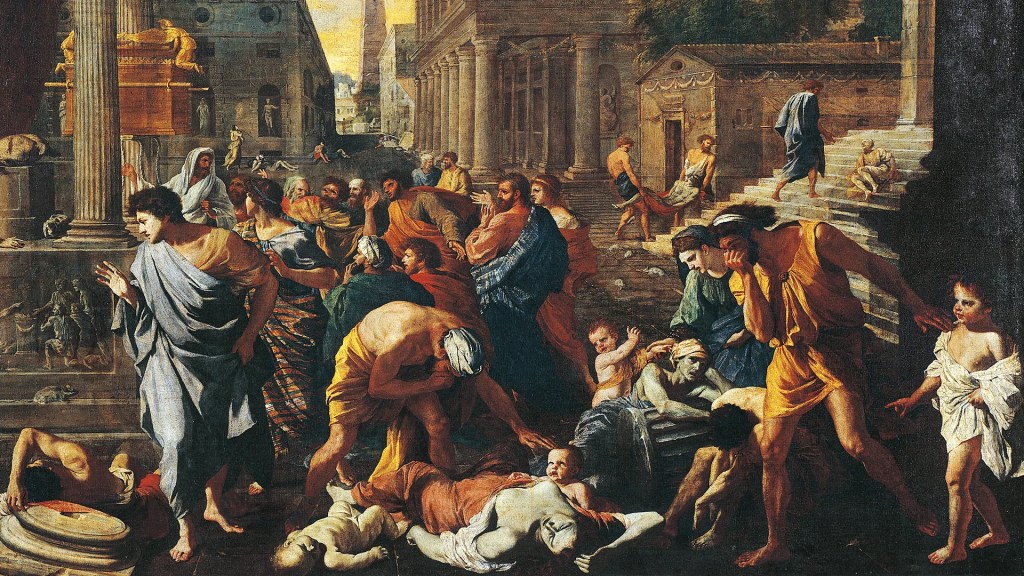
The specific disease is always more or less repeated, the epidemic is never quite repeated.
Historical Developments of Général Médecine
At the end of the eighteenth century, this form of experience was being institutionalized. In each subdelegation a physician and several surgeons were appointed by the Intendant (provincial administrator) to study those epidemics that might break out in their canton; they were in constant correspondence with the chief physician of the généralité (treasury subdivision of old France) concerning ‘both the reigning disease and the medicinal topography of their canton’, and when four or five people succumbed to the same disease, the syndic had to notify the subdelegate, who sent the physician to prescribe the treatment to be administered daily by the surgeons; in more serious cases, the physician of the généralité visited the scene of the outbreak himself [11].
Lastly, a body of health inspectors would have to be set up that could be ‘sent out to the provinces, placing each one in charge of a particular department’; there he would collect information about the various domains related to medicine, as well as about physics, chemistry, natural history, topography, and astronomy, would prescribe the measures to be taken, and would supervise the work of the doctor. ‘It is to be hoped that the state would provide for these physicians and spare them the expense that an inclination to make useful discoveries entails’ [14].
Changing Our Perception of Epidemics and Delivering Tertiary Care
A medicine of epidemics is opposed at every point to a medicine of classes, just as the collective perception of a phenomenon that is widespread but unique and unrepeatable may be opposed to the individual perception of the identity of an essence as constantly revealed in the multiplicity of phenomena. The analysis of a series in the one case, the decipherment of a type in the other; the integration of time in the case of epidemics, the determination of hierarchical place in the case of the species; the attribution of a causality—the search for an essential coherence, the subtle perception of a complex historical and geographical space-the demarcation of a homogeneous surface in which analogies can be read. And yet, in the final analysis, when it is a question of these tertiary figures that must distribute the disease, medical experience and the doctor’s supervision of social structures, the pathology of epidemics and that of the species are confronted by the same requirements: the definition of a political status for medicine and the constitution, at state level, of a medical consciousness whose constant task would be to provide information, supervision, and constraint, all of which ‘relate as much to the police as to the field of medicine proper’ [15].
This was the origin of the Société Roy ale de Médecine and its insuperable conflict with the Faculté (the university authorities). In 1776, the government decided to set up at Versailles a society for the study of the epidemic and epizootic phenomena that had increased considerably in recent years. The precise occasion was a disease affecting livestock that had broken out in southeastern France, and which had forced the Contro^leur Général des Finances to order the killing off of all suspect animals; this led to a fairly serious disruption of the regional economy. The decree of 29 April 1776 declares in its preamble that epidemics are deadly and destructive at the outset only because their character, being little known, leaves the doctor in uncertainty as to the choice of treatment that should be applied; and this uncertainty arises because so little has been done to study the different treatments used, or to describe the symptoms of the different epidemics and the curative methods that have been most successful.
The commission was to have a three-fold role: investigation, by keeping itself informed of the various epidemic movements; elaboration, by comparing facts, recording the treatments used, and organizing experiments; and supervision and prescription, by informing the medical practitioners of the methods that seem to be most suitable to a given situation. It was to be made up of eight doctors: a directeur, entrusted with ‘the correspondence concerning epidemic and epizootic diseases’ (de Lasson), a commissaire général, who would co- ordinate the work of the provincial doctors (Vicq d’Azyr), and six doctors of the Faculté, who would devote themselves to work on these same subjects. The Contro^leur des Finances could send them out to the provinces to make inquiries and ask them for reports. Lastly, Vicq d’Azyr was to give a course in human and comparative anatomy to the other members of the commission, the doctors of the Faculté, and ‘those students who showed themselves to be worthy of it’ [16]. Thus a double check was set up: that of the political authorities over the practice of medicine and that of a privileged medical body over the practitioners as a whole.
The conflict with the Faculté broke out at once. In contemporary eyes, it was a collision of two institutions, one modern and politically supported, the other archaic and inward-looking. A partisan of the Faculté described their opposition thus:
The one ancient, respectable for all manner of reasons and principally in the eyes of the members of the society most of whom have been trained by it; the other, a modern institution whose members have preferred to associate with ministers of the Crown rather than with their own institutions, who have deserted the Assemblies of the Faculté to which the public good and their oaths should have kept them attached for a career of intrigue [17].
For three months, the Faculté ‘went on strike’ in protest: it refused to exercise its functions, and its members refused to consult with the members of the society. But the outcome was determined in advance because the Conseil supported the new committee. By 1778, the letters patent confirming its transformation into the Société Royale de Médecine had been registered, and the Faculté had been forbidden ‘to employ any kind of defence in this affair’. The Société received an income of 40,000 francs raised from mineral waters, while the Faculté received hardly 2,000 francs [18]. But, above all, its role was constantly being enlarged: as a control body for epidemics, it gradually became a point for the centralization of knowledge, an authority for the registration and judgement of all medical activity. At the beginning of the Revolution, the Finance Committee of the National Assembly was to justify its status thus: ‘The object of this society is to link French medicine with foreign medicine by means of a useful correspondence; to gather together isolated observations, to preserve them and to compare them; and, above all, to research into the causes of common diseases, to forecast their occurrence, and to discover the most effective remedies for them’ [19]. The Société no longer consisted solely of doctors who devoted themselves to the study of collective pathological phenomena; it had become the official organ of a collective consciousness of pathological phenomena, a consciousness that operated at both the level of experience and the level of knowledge, in the international as well as the national space.
Attempting to definitely answer what a medical space is…
There was a new style of totalization. The treatises of the eighteenth century, Institutions, Aphorisms, Nosologies, enclosed medical knowledge within a defined space: the table drawn up may not have been complete in every detail, and may have contained gaps here and there owing to ignorance, but in its general form it was exhaustive and closed. It was now replaced by open, infinitely extendable tables. Hautesierck had already provided an example of such a table, when, at Choiseul’s request, he proposed a plan of collective work for military physicians and surgeons, comprising four parallel, unlimited series: the study of topographies (location, terrain, water, air, society, the temperaments of the inhabitants), meteorological observations (pressure, temperature, winds), an analysis of epidemics and common diseases, and a description of extraordinary cases [20]. The theme of the encyclopaedia is replaced by that of constant, constantly revised information, where it is a question, rather, of totalizing events and their determination than of enclosing knowledge in a systematic form: ‘It is so true that there exists a chain linking, throughout the universe, on earth and in man, all beings, all bodies, all affections; a chain whose subtlety eludes the superficial gaze of the meticulous experimenter and the writer of cold dissertations, but is revealed to the truly observant genius’ [21]. At the beginning of the Revolution, Cantin proposed that this work of information should be undertaken in each department by a commission elected from among the doctors [22]; Mathieu Géraud demanded the creation in every large town of a ‘government health centre’ and in Paris of a ‘health court’, sitting beside the National Assembly, centralizing information, conveying it from one part of the country to another, discussing questions that still remain obscure, and indicating what research needs to be carried out [23].
In the eighteenth century, the fundamental act of medical knowledge was the drawing up of a ‘map’ (repérage): a symptom was situated within a disease, a disease in a specific ensemble, and this ensemble in a general plan of the pathological world. In the experience that was being constituted towards the end of the century, it was a question of ‘carving up’ the field by means of the interplay of series, which, in intersecting one another, made it possible to reconstitute the chain referred to by Menuret. Each day Razoux made meteorological and climatic observations, which he then compared with a nosological analysis of patients under observation and with the evolution, crises, and outcome of the diseases [24]. A system of coincidences then appeared that indicated a causal connexion and also suggested kinships or new links between diseases.
‘If anything is able to improve our art,’ Sauvages himself wrote to Razoux, it is work of this kind carried out over a period of fifty years, by a team of thirty doctors as meticulous and industrious as yourself…. I will do all in my power to have one of our doctors carry out the same observations in our Hotel-Dieu’ [25]. What defines the act of medical knowledge in its concrete form is not, therefore, the encounter between doctor and patient, nor is it the confrontation of a body of knowledge and a perception; it is the systematic intersection of two series of information, each homogeneous but alien to each other-two series that embrace an infinite set of separate events, but whose intersection reveals, in its isolable dependence, the individual fact. A sagittal figure of knowledge.
At the institutional level this is apparent in the Société Roy ale de Médecine. And at the beginning of the Revolution there were innumerable projects that schematized this dual and necessary authority (instance) of medical knowledge, with its ceaseless movement between these two levels, at the same time maintaining and traversing the distance between them. Mathieu Géraud proposed the setting up of a Health Court (Tribunal de Salubrité) where a prosecutor would denounce ‘any person who, without having given proof of his ability, exercises upon another, or upon an animal that does not belong to him, anything pertaining to the direct or indirect application of the art of health’ [26]; the decisions of this court concerning professional abuses, inadequacies, and imperfections should constitute the jurisprudence of the medical state. In addition to a Judiciary, there should be an Executive that would exercise a policing function over all aspects of health (la haute et grande police sur toutes les branches de la salubrité). It would prescribe what books were to be read and what new works were to be written; it would indicate, on the basis of the information received, what treatment was to be administered for prevalent diseases; it would publish whatever was required by an enlightened medical practice, whether the results of inquiries carried out under its own supervision or foreign works. Following an autonomous movement, the medical gaze circulates within an enclosed space in which it is controlled only by itself; in sovereign fashion, it distributes to daily experience the knowledge that it has borrowed from afar and of which it has made itself both the point of concentration and the centre of diffusion.
Getting Nitty Gritty about Medical Space & Social Space
In that experience, medical space can coincide with social space, or, rather, traverse it and wholly penetrate it. One began to conceive of a generalized presence of doctors whose intersecting gazes form a network and exercise at every point in space, and at every moment in time, a constant, mobile, differentiated supervision. The problem of the settling of doctors in the countryside was raised [27]; there were requests for a statistical supervision of health based on the registration of births and deaths (which would have to mention the disease from which the individual suffered, his mode of life, and the cause of his death, thus constituting a pathological record); there were demands that the reasons for exemption from military service on medical grounds should be given in detail by the recruiting board; in fact, that a medical topography of each department should be drawn up, ‘with detailed observations concerning the region, housing, people, principal interests, dress, atmospheric constitution, produce of the ground, time of their perfect maturity and their harvesting, and physical and moral education of the inhabitants of the area’ [28]. And since the question of the settling of doctors was not enough, the consciousness of each individual must be alerted; every citizen must be informed of what medical knowledge is necessary and possible. And each practitioner must supplement his supervisory activity with teaching, for the best way of avoiding the propagation of disease is to spread medical knowledge [29]. The locus in which knowledge is formed is no longer the pathological garden where God distributed the species, but a generalized medical consciousness, diffused in space and time, open and mobile, linked to each individual existence, as well as to the collective life of the nation, ever alert to the endless domain in which illness betrays, in its various aspects, its great, solid form.
The years preceding and immediately following the Revolution saw the birth of two great myths with opposing themes and polarities: the myth of a nationalized medical profession, organized like the clergy, and invested, at the level of man’s bodily health, with powers similar to those exercised by the clergy over men’s souls; and the myth of a total disappearance of disease in an untroubled, dispassionate society restored to its original state of health. But we must not be misled by the manifest contradiction of the two themes: each of these oneiric figures expresses, as if in black and white, the same picture of medical experience.
Avernière’s Philosophical Views on Medicine
Sabarot de l’Avernière, a prolific author of projects in the early years of the Revolution, saw priests and doctors as the natural heirs of the Church’s two most visible missions—the consolation of souls and the alleviation of pain. So the wealth of the Church, which has been diverted from its original use by the higher clergy, must be confiscated and returned to the nation, which alone knows its own spiritual and material needs. The revenues would be divided equally between the parish clergy and the doctors. Are not doctors the priests of the body? ‘The soul cannot be considered separately from animate bodies, and if the ministers of the Altars are venerated, and receive from the state a reasonable living, those who tend your health should also receive a salary sufficient to feed themselves and to succour you. They are the tutelary genii of the integrity of your faculties and sensations’ [30]. The doctor would no longer have to demand a fee from his patient; the treatment of the sick would be free and obligatory—a service that the nation would provide as one of its sacred tasks; the doctor would be no more than the instrument of that service [31]. At the end of his studies, the new doctor would occupy not the post of his choice, but the one that was assigned to him according to the needs and vacancies, throughout the country; when he had gained in experience, he could apply for a more responsible, better-paid job. He would have to give an account to his superiors of his activities and would be held responsible for his mistakes. Having become a public, disinterested, supervised activity, medicine could improve indefinitely; in the alleviation of physical misery, it would be close to the old spiritual vocation of the Church, of which it would be a sort of lay carbon copy. To the army of priests watching over the salvation of souls would correspond that of the doctors who concern themselves with the health of bodies.
The other myth proceeds from a historical reflexion carried to its conclusion. Linked as they are with the conditions of existence and with the way of life of individuals, diseases vary from one period and one place to another. In the Middle Ages, at a time of war and famine, the sick were subject to fear and exhaustion (apoplexy, hectic fever); but in the sixteenth and seventeenth centuries, a period of relaxation of the feeling for one’s country and of the obligations that such a feeling involves, egotism returned, and lust and gluttony became more widespread (venereal diseases, congestion of the viscera and of the blood); in the eighteenth century, the search for pleasure was carried over into the imagination: one went to the theatre, read novels, and grew excited in vain conversations; one stayed up at night and slept during the day (hysteria, hypochondria, nervous diseases) [32]. A nation that lived without war, without violent passions, without idleness would know none of these ills, nor, above all, would a nation that did not know the tyranny of wealth over poverty, nor given to abuses. The rich? ‘Living in the midst of ease, surrounded by the pleasures of life…’
Meanwhile, the poor, subjected to the despotism of the rich and of their kings, know only taxes that reduce them to penury, scarcity that benefits only the profiteers, and unhealthy housing that forces them ‘either to refrain from raising families or to procreate weak, miserable creatures’ [34].
The first task of the doctor is therefore political: the struggle against disease must begin with a war against bad government. Man will be totally and definitively cured only if he is first liberated: ‘Who, then, should denounce tyrants to mankind if not the doctors, who make man their sole study, and who, each day, in the homes of poor and rich, among ordinary citizens and among the highest in the land, in cottage and mansion, contemplate the human miseries that have no other origin but tyranny and slavery?’ [35]. If medicine could be politically more effective, it would no longer be indispensable medically. And in a society that was free at last, in which inequalities were reduced, and in which concord reigned, the doctor would have no more than a temporary role: that of giving legislator and citizen advice as to the regulation of his heart and body. There would no longer be any need for academies and hospitals:
By training citizens in frugality by means of simple dietary laws, by showing young people above all the pleasures that may be derived from even a hard life, by making them appreciate the strictest discipline in the army and navy, how many ills would be prevented, how much expense avoided, and what new abilities would reveal themselves… for the greatest, most difficult enterprises.
And gradually, in this young city entirely dedicated to the happiness of possessing health, the face of the doctor would fade, leaving a faint trace in men’s memories of a time of kings and wealth, in which they were impoverished, sick slaves.
And yet they played an important role: by linking medicine with the destinies of states, they revealed in it a positive significance.
Medicine must no longer be confined to a body of techniques for curing ills and of the knowledge that they require; it will also embrace a knowledge of healthy man, that is, a study of non-sick man and a definition of the model man.
The dreamer Lanthenas gave medicine a definition that was brief but heavy with history: ‘At last, medicine will be what it must be, the knowledge of natural and social man’ [38].
Extracted from the book, The Birth of the Clinic – Michel Foucault
 Scriveners Online©
Leave a comment