
❝Never do anything by halves if you want to get away with it. Be outrageous. Go the whole hog. Make sure everything you do is so completely crazy it’s unbelievable.❞
-Roald Dahl, Matilda (1988)

A ‘med comms’ site for everyone!

✒︎ Informative

Presenting the latest news, discoveries and innovations in medicine in a blog-style format!

⚕ Global

Reaches the national and the international readers!

♛ Unique & Dynamic

There’s an article for everyone in all areas of medicine!

#scriveners

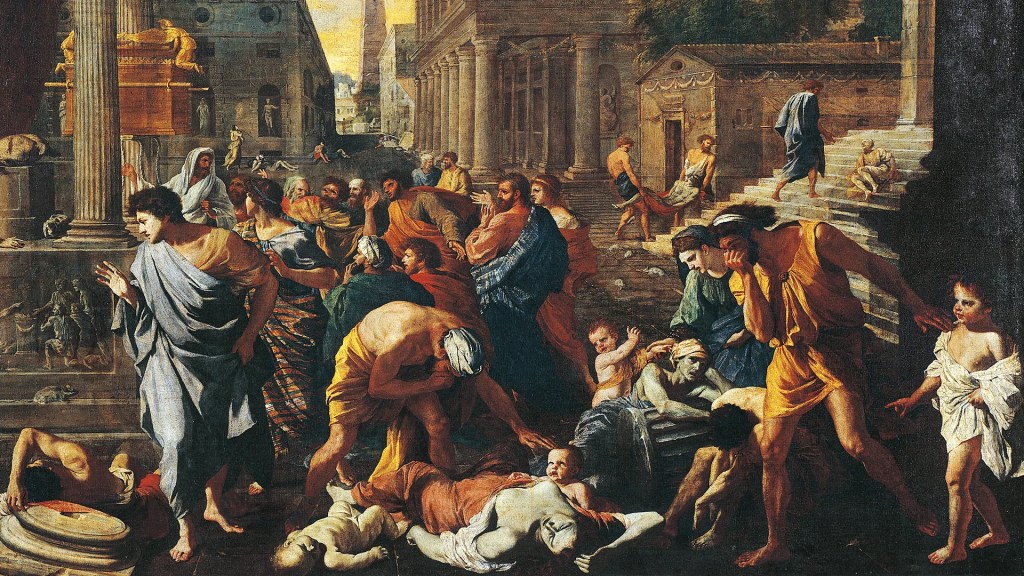
The Plague of Ashdod (1630) Nicholas Poussin

The artwork “The Plague of Ashdod” was created by the French painter Nicolas Poussin in 1630. It portrays the biblical narrative of a divine plague inflicted upon the people of Ashdod. 

This dramatic scene of divine punishment is described in the Old Testament. The Philistines are stricken with plague in their city of Ashdod because they have stolen the Ark of the Covenant from the Israelites and placed it in their pagan temple. You can see the decorated golden casket of the Ark between the pillars of the temple. People look around in horror at their dead and dying companions. One man leans over the corpses of his wife and child and covers his nose to avoid the stench. Rats scurry towards the bodies. The broken statue of their deity, Dagon, and the tumbled down stone column further convey the Philistines’ downfall.

In the artwork, Poussin vividly depicts the turmoil and suffering caused by the plague. The foreground is filled with the stricken inhabitants of Ashdod; their bodies are contorted in agony or limp in the stillness of death, illustrating the mercilessness of the affliction. The variety of postures and expressions captures the range of human suffering and chaos that accompanies such disaster. 

Amongst the afflicted, several figures stand out due to their dynamic gestures or central placement within the composition, drawing the viewer’s eye and emphasizing the emotional impact of the scene. In the background, classical architecture gives a sense of order and permanence that starkly contrasts with the disarray and despair of the figures. Poussin’s use of colour and light skilfully highlights the drama, with the dark and earthy tones of the suffering masses set against the lighter, more serene sky, which suggests divine presence or intervention.

Poussin’s use of color and light skillfully highlights the drama, with the dark and earthy tones of the suffering masses set against the lighter, more serene sky, which suggests divine presence or intervention. The overall effect is one of a carefully structured scene that conveys a narrative full of intensity and profound human drama, characteristic of the religious paintings of the period and the classical style Poussin is renowned for. Poussin began to paint The Plague of Ashdod while the bubonic plague was still raging throughout Italy though sparing Rome. He first called the painting The Miracle in the Temple of Dagon, but later it became known as The Plague of Ashdod.

The painting most importantly provides a view into how illness and diseases were feared at that time in the past and the fact that people had the knowledge that it was transmissible during that time period which was the 16th century.

𝓒𝓱𝓮𝓮𝓻𝓼 𝓽𝓸 𝓪 2𝓷𝓭 𝓪𝓷𝓷𝓲𝓿𝓮𝓻𝓼𝓪𝓻𝔂 𝓸𝓯 𝓽𝓱𝓮 𝓫𝓵𝓸𝓰! 🍾🥂
𝐀𝐧𝐧𝐨𝐮𝐧𝐜𝐞𝐦𝐞𝐧𝐭: 𝐂𝐞𝐥𝐞𝐛𝐫𝐚𝐭𝐢𝐧𝐠 𝟐𝟎𝟎 𝐩𝐨𝐬𝐭𝐬 𝐦𝐢𝐥𝐞𝐬𝐭𝐨𝐧𝐞 𝐫𝐞𝐚𝐜𝐡! 𝐈 𝐜𝐚𝐧’𝐭 𝐭𝐡𝐚𝐧𝐤 𝐞𝐚𝐜𝐡 𝐨𝐧𝐞 𝐨𝐟 𝐲𝐨𝐮 𝐞𝐧𝐨𝐮𝐠𝐡! 𝐖𝐞’𝐫𝐞 𝐚𝐭 𝐚 𝟓𝐤 𝐬𝐭𝐫𝐞𝐚𝐤 𝐚𝐬 𝐰𝐞𝐥𝐥! ♥️🍾🍷#scriveners
𝘗𝘭𝘦𝘢𝘴𝘦 𝘤𝘩𝘦𝘤𝘬 𝘰𝘶𝘵 𝘰𝘶𝘳 𝘯𝘦𝘸𝘭𝘺 𝘶𝘱𝘥𝘢𝘵𝘦𝘥 ‘𝘌𝘹𝘵𝘳𝘢𝘴 𝘗𝘢𝘨𝘦’!╰(°▽°)╯
𝕸𝖊𝖗𝖗𝖞 𝕮𝖍𝖗𝖎𝖘𝖙𝖒𝖆𝖘!🎄🎅𝕸𝖆𝖞 𝖆𝖑𝖑 𝖞𝖔𝖚𝖗 𝕮𝖍𝖗𝖎𝖘𝖙𝖒𝖆𝖘 𝖜𝖎𝖘𝖍𝖊𝖘 𝖈𝖔𝖒𝖊 𝖙𝖗𝖚𝖊!

🥳𝐉𝐮𝐬𝐭 𝐢𝐧𝐬𝐭𝐚𝐥𝐥𝐞𝐝 𝐚 𝐧𝐞𝐰 𝐩𝐥𝐚𝐧 𝐚𝐧𝐝 𝐜𝐡𝐚𝐧𝐠𝐞𝐝 𝐭𝐡𝐞 𝐬𝐢𝐭𝐞 𝐚𝐝𝐝𝐫𝐞𝐬𝐬! 𝐖𝐞’𝐯𝐞 𝐮𝐩𝐠𝐫𝐚𝐝𝐞𝐝 𝐛𝐚𝐛𝐲! 🎉 scrionl.blog ♡
🚨𝐃𝐮𝐞 𝐭𝐨 𝐬𝐨𝐦𝐞 𝐮𝐧𝐟𝐨𝐫𝐞𝐬𝐞𝐞𝐧 𝐜𝐢𝐫𝐜𝐮𝐦𝐬𝐭𝐚𝐧𝐜𝐞 𝐈 𝐰𝐢𝐥𝐥 𝐛𝐞 𝐭𝐚𝐤𝐢𝐧𝐠 𝐚 𝐡𝐢𝐚𝐭𝐮𝐬 𝐟𝐨𝐫 𝐚 𝐩𝐞𝐫𝐢𝐨𝐝 𝐨𝐟 𝐨𝐧𝐞 𝐦𝐨𝐧𝐭𝐡!🚨
𝐖𝐞 𝐧𝐨𝐰 𝐡𝐚𝐯𝐞 𝐚𝐧 𝐈𝐧𝐬𝐭𝐚𝐠𝐫𝐚𝐦 𝐚𝐜𝐜𝐨𝐮𝐧𝐭!📱
𝐀 𝐧𝐞𝐰 𝐬𝐞𝐜𝐭𝐢𝐨𝐧 ‘𝐂𝐨𝐧𝐭𝐚𝐜𝐭’ 𝐡𝐚𝐬 𝐛𝐞𝐞𝐧 𝐚𝐝𝐝𝐞𝐝! 📞

𝐓𝐡𝐞 ‘𝐋𝐢𝐧𝐤𝐬 & 𝐁𝐨𝐨𝐤𝐬 & 𝐘𝐨𝐮𝐓𝐮𝐛𝐞 & 𝐏𝐨𝐝𝐜𝐚𝐬𝐭𝐬’ 𝐬𝐞𝐜𝐭𝐢𝐨𝐧 𝐢𝐬 𝐧𝐨𝐰 𝐚𝐯𝐚𝐢𝐥𝐚𝐛𝐥𝐞!💙
𝐍𝐞𝐰 𝐰𝐚𝐥𝐥𝐩𝐚𝐩𝐞𝐫𝐬 𝐡𝐚𝐯𝐞 𝐛𝐞𝐞𝐧 𝐚𝐝𝐝𝐞𝐝 𝐭𝐨 𝐭𝐡𝐞 ‘𝐄𝐱𝐭𝐫𝐚𝐬’ 𝐬𝐞𝐜𝐭𝐢𝐨𝐧. 𝐃𝐨 𝐜𝐡𝐞𝐜𝐤 𝐢𝐭 𝐨𝐮𝐭!⚡️
𝐀𝐧𝐧𝐨𝐮𝐧𝐜𝐞𝐦𝐞𝐧𝐭: 𝐌𝐨𝐫𝐞 𝐭𝐡𝐚𝐧 𝐚 𝟏𝟎𝟎 𝐭𝐡𝐚𝐧𝐤𝐬! 𝐖𝐞’𝐯𝐞 𝐫𝐞𝐚𝐜𝐡𝐞𝐝 𝟏𝟎𝟎 𝐩𝐨𝐬𝐭𝐬! 🍾 🍷
𝓒𝓮𝓵𝓮𝓫𝓻𝓪𝓽𝓲𝓷𝓰 𝓽𝓱𝓲𝓼 𝓶𝓮𝓭𝓲𝓬𝓪𝓵 𝔀𝓻𝓲𝓽𝓲𝓷𝓰 𝓫𝓵𝓸𝓰’𝓼 1-𝔂𝓮𝓪𝓻 𝓪𝓷𝓷𝓲𝓿𝓮𝓻𝓼𝓪𝓻𝔂!🍾🍷

Adding a New Rule to the NHS Act 2006

Scrapping the legal guarantee that a nurse sits on every foundation trust board is a “brazen attack on patient safety”, the Royal College of Nursing has warned. The Health Bill, published this month, would remove the requirement in primary legislation for foundation trust boards to include a registered nurse or midwife and a registered medical…

An Exciting Reversal of Spinal Cord Damage

Is there a way to reverse the declining axon elongation? Scientists at Cambridge have proved otherwise. The three-dimensional patient-specific induced pluripotent stem cell (iPSC)-derived organoids emerge as vital discovery models shedding light on human aspects of neural physiology and disease. They generated and validated a human corticospinal connectoid system, comprising regionally segregated air-liquid interface cortical…

Lack of Skilled Healthcare Professionals in Rural India

There is a shortage of SHPs (skilled health professionals) in India. Limited research has been conducted to emphasise on this shortage. Beyond availability, the contrasting distribution of SHPs across public vs private healthcare sectors and rural vs urban regions is a concerning find. Over 80% of doctors and 70% of nurses work in the private…

Striving to Improve the National Health Insurance Program in Nepal

Nepal’s national health insurance program (NHIP) initiative, was launched in 2016, to attain universal health coverage (UHC). There are obstacles towards achieving this coverage across the Nepali population. Although it has made remarkable progress, there are significant problems causing poor enrollment, retention, and challenges while accessing quality healthcare. The social health insurance scheme aims to…

An Ebola Outbreak Crises

The newly declared outbreak of Ebola virus disease caused by Bundibugyo virus in DR Congo and Uganda once again exposes the fragility of epidemic preparedness across sub-Saharan Africa.1 As of May 15, 2026, a total of 246 suspected cases and 80 deaths (including four deaths among confirmed cases) had been reported in Ituri, DR Congo,…

For Every Under-represented Māori

Suicide is the leading cause of death in New Zealanders aged 15–19 years. Advocates are calling for better approaches to prevention and support. Sophie Cousins, Clive Aspin, and Suzy Taylor report. Nicky Stevens was just 21 years of age when he died by suicide as a mental health inpatient at a hospital in the North…

  • An Ebola Outbreak Crises

    by

    Nivea Vaz
    16–24 minutes

    The newly declared outbreak of Ebola virus disease caused by Bundibugyo virus in DR Congo and Uganda once again exposes the fragility of epidemic preparedness across sub-Saharan Africa.1 As of May 15, 2026, a total of 246 suspected cases and 80 deaths (including four deaths among confirmed cases) had been reported in Ituri, DR Congo, with imported cases confirmed in Kampala, Uganda, prompting WHO to declare a Public Health Emergency of International Concern.1,2 WHO estimates previous case fatality rates between 30% and 50%, while the current outbreak has already shown alarming transmission among health-care workers and communities.1 The infection and deaths of health-care workers within days underscore critical weaknesses in infection prevention and control, insufficient laboratory capacity, and delayed case recognition in overwhelmed health systems.

    The epidemiological context is particularly concerning. Ituri, DR Congo, represents a highly mobile commercial and mining corridor bordering Uganda and South Sudan, increasing the risk of regional dissemination. However, the threat extends far beyond immediate neighbouring countries. Countries such as Angola, Rwanda, Tanzania, and Zambia remain highly vulnerable due to porous borders, minimal genomic surveillance, shortages of personal protective equipment, insufficient isolation units, and chronic underinvestment in public health infrastructure. For example, Angola’s health-care system continues to face severe workforce limitations and dependence on external funding, leaving the country poorly prepared for another cross-border filovirus emergency.3

    Ebola Virus Creative artwork featuring a scanning electron micrograph of a single filamentous Ebola virus particle (colorized yellow and orange) in the foreground, and a second scanning electron micrograph of filamentous Ebola virus particles (red) budding from a chronically infected VERO E6 cells in the background. Both images, which have been colorized in Halloween-appropriate colors, were captured at the NIAID Integrated Research Facility in Ft. Detrick, Maryland.


    This outbreak also highlights persistent inequity in global research priorities. Unlike Zaire ebolavirus (Orthoebolavirus zairense) outbreaks, this epidemic involves Bundibugyo virus (Orthoebolavirus bundibugyoense), for which there is currently no licensed vaccine or specific antiviral therapy.2 More than a decade after previous Bundibugyo virus disease outbreaks in Uganda and DR Congo, the continued absence of approved countermeasures reflects chronic underinvestment in diseases that disproportionately affect low-income populations in sub-Saharan Africa. Although WHO has activated research and development initiatives for candidate vaccines and therapeutics, these efforts repeatedly emerge only after outbreaks escalate.

    Our recent fieldwork in health-care facilities in Bunia (Ituri) highlights a remarkable clinical cluster that might explain this anomaly. We observed several fatalities among patients from Mungwalu (Ituri, Djugu territory), a region dominated by artisanal gold mining. These individuals, mostly from the same family, presented with acute respiratory distress and rapidly progressive multiorgan failure, with variable haemorrhagic manifestations. Crucially, diagnostic workups revealed early positivity (<8 h incubation) in both aerobic and anaerobic blood cultures, alongside high malaria parasitaemia. These findings strongly suggest a severe syndemic condition combining a viral haemorrhagic infection, fulminant bacterial sepsis, and severe malaria. Such lethal pathophysiological interactions could drive the high mortality observed on the ground, independent of the virus’s intrinsic virulence. Additionally, structural failures such as diagnostic delays, minimal intensive care capacity, and the cocirculation of other undetected haemorrhagic pathogens must be aggressively investigated.

    Furthermore, this crisis challenges the assumption that institutional memory from 16 previous outbreaks guarantees an adequate response. Unlike the 2018–20 response in North Kivu and Ituri during the Zaire ebolavirus outbreak, which benefited from massive international funding and rapid deployment of the Ervebo vaccine,4 the current response faces major vulnerabilities. No licensed vaccine exists for Bundibugyo virus, and provincial reference laboratories lack preparedness for rapid molecular identification of non-Zaire orthoebolaviruses. Logistical and security constraints are equally severe. Infrastructure deficits and armed group activity impede field interventions, while the M23 rebellion in North Kivu complicates contact tracing and safe sample transport.5 The high density of camps of internally displaced individuals around Bunia, coupled with intense cross-border mobility across a porous frontier with Uganda, creates a high-risk environment for regional dissemination.

    Alarmingly, this outbreak is generating a severe systemic and humanitarian crisis. Nosocomial transmission and rising mortality among health-care workers have induced a “fear of hospitals”,6 leading to medical absenteeism and desertion of health facilities. This trend is exacerbated by critical shortages of personal protective equipment and inadequate financial incentives. This operational vacuum is further compounded by a funding shortfall from international partners compared with previous epidemics, leaving facilities without isolation supplies or rapid tests. Meanwhile, social media-driven misinformation attributing early deaths to occult causes continues to foster community mistrust, delaying care-seeking behaviour and driving silent community spread.

    This outbreak must not be treated as a routine virological emergency.

    Ebola in Africa
    A lack of vaccines, diagnostics, and basic public health capacity is raising fears over the scale of the Ebola outbreak in DR Congo and Uganda. John Agaba reports from Kampala.

    Richard Kojan was sitting at his desk in Kinshasa on May 15, when his telephone buzzed: the Ministry of Health in DR Congo had confirmed an outbreak of an Ebola virus disease in Ituri province in the eastern part of the country.

    Immediately, Kojan—who is a clinician and senior expert in Ebola outbreak responses for the charity organisation The Alliance for International Medical Action (ALIMA)—felt a tinge of fear. The last time the Ministry of Health had declared an Ebola outbreak in Ituri province, in 2018, 2287 people died. And this time round, the outbreak was caused by the Bundibugyo species of ebolavirus, for which there are no approved vaccines or treatments. Kojan knew that the Ministry would have to act fast to stop the outbreak. And he knew that he would want to help. So, he informed his superiors that he would participate in the response, went home, packed his bags, and readied to fly to Bunia in Ituri, where cases were being reported. And, as it turned out, his fears were justified. By the time he landed in Bunia, the outbreak had already spread.

    As of May 26, at least 223 people are reported to have died of the disease, with more than 900 suspected cases, according to the Red Cross. Most of the cases, including in women, children, and health-care providers, have been recorded in the Bunia, Rwampara, and Mongbwalu areas in Ituri province in eastern DR Congo. Seven cases have been confirmed in Uganda, DR Congo’s neighbour to the east.

    But there are fears that the official numbers underestimate the scale of the outbreak. David Heymann, Professor of Infectious Disease Epidemiology at London School of Hygiene & Tropical Medicine, London, UK, told The Lancet: “This outbreak has been going on for quite a while. It’s not clear for how long, but from the genetic sequences of the virus identified in certain people, it suggests that the virus may have begun to circulate about two months ago and that it’s been gradually mutating as it spreads from person to person. So, that would be a hypothesis. And, if that’s the case, there may be quite a few people, maybe twice as many as are reported.” Jean Kaseya, the Director General of Africa Centres for Disease Control and Prevention (Africa CDC), said the current Ebola outbreak was the second largest on record in terms of cases, after the 2014 outbreak in west Africa. “People are scared”, Kojan told The Lancet. “Women, children, health workers…all of them are afraid. There is lots of anxiety, uncertainty, because this strain of the Ebola virus does not have any approved vaccines or treatments.”

    On May 25, Tedros Adhanom Ghebreyesus, Director-General of WHO, warned that the fast-moving outbreak was outpacing response efforts.

    Emergency response
    Given the novelty of the species involved, the speed of spread, the lack of medical countermeasures, and the social, humanitarian, and economic situation in the areas involved, the outbreak has prompted severe alarm.

    On May 17, Tedros declared that the Ebola virus outbreak in DR Congo and Uganda constituted a public health emergency of international concern, hoping to help mobilise resources. The Africa CDC also declared a public health emergency of continental security in response.

    Roger Samuel Kamba, Minister of Health of DR Congo, said the country had intensified infection prevention measures, including contact tracing, testing and isolation of patients with confirmed disease, and management of the sick, plus safe burials, to stop the outbreak. In Uganda, Diana Atwine, the permanent secretary of the Ministry of Health, said the country had reactivated its Incident Management Support Team, which was listing contacts, isolating people with confirmed disease, and managing the sick. She said that the country had also increased its surveillance across its border with DR Congo.

    South Sudan, which borders DR Congo and Uganda, says it has also intensified its surveillance. “We have not registered any Ebola case”, Luke Thompson, the Minister of Health of South Sudan, said at an Africa CDC press briefing in Kampala on Saturday. “But we have activated our preparedness mechanisms just in case.”Meanwhile, the US Centers for Disease Control and Prevention has banned entry into the USA for non-US citizens and US permanent residents who have been in DR Congo and Uganda in the past 21 days, the incubation period for Ebola virus.

    On May 22, Tedros said that public health risk from the outbreak in DR Congo was “very high”, whereas the risk in the wider African region is considered “high” but the global risk remains “low”.

    Classic public health measures
    Amanda Rojek, Associate Professor of Health Emergencies, University of Oxford, Oxford, UK, said successful Ebola virus disease outbreak control depended on rapid detection, isolation and supportive care of patients, robust contact tracing, safe and dignified burials, strong infection prevention and control measures, and meaningful community engagement. “One major priority is ensuring that treatment capacity, laboratory diagnostics, surveillance, and community engagement are established early and scaled rapidly. Supporting front-line health-care workers is also critical, both for infection prevention and for maintaining essential health services.”

    Trish Newport, Emergency Coordinator for Médecins Sans Frontières (MSF), said the present outbreak was concerning because of inadequate diagnostics, treatments, and personal protective equipment (PPE). “If we can’t identify who has the virus and who does not, and who we need to be isolating, and who has another illness, it will be extremely hard to control the outbreak.”

    “Usually when you have a confirmed Ebola case, you identify everyone that was in close contact with them. You do this quickly and then you monitor all those people for 21 days to see if they develop symptoms. But you need proper diagnostic capacity to do this. Then there is the challenge of inadequate PPE. You want to care for patients, but you know you can’t touch them because you don’t have the protective material with you at that very moment.”

    Newport said there were parallels between the outbreak in west Africa in 2014 and the current one in Ituri. “The present Bundibugyo ebolavirus outbreak is dogged with conflict, displacement, and weak infrastructure; challenges that were glaring in the 2014 outbreak. And just like in 2014, we do not have approved vaccines and other treatments today. The big difference is that this is the 17th outbreak of Ebola that the Ministry of Health in DRC has managed. So, they know how to do it. They have a lot of staff with experience.”

    “In the absence of specific treatments, the mainstay of care is supportive treatment. Ebola viruses can cause severe systemic illness affecting multiple organ systems”, said Rojek. “Patients often develop fever, gastrointestinal symptoms, profound fluid losses, shock, coagulation abnormalities, and sometimes bleeding manifestations. Much of the mortality relates to severe dehydration, inflammatory dysregulation, vascular dysfunction, and multi-organ failure”, said Rojek. “Supportive care is therefore critically important. This includes fluid and electrolyte management, treatment of co-infections, oxygen support where needed, and careful monitoring.”

    Nahid Bhadelia, Associate Professor, Boston University School of Medicine, Boston, MA, USA, said “What matters most is bringing patients into care early, which improves survival even with supportive care alone. Supportive care means not just fluid resuscitation but treatment for comorbid conditions like malaria and other bacterial infections, as well as managing symptoms like nausea, vomiting, and diarrhea to prevent fluid loss, as well as electrolyte replacement.”

    “All of this sounds simple, but the complication is that personal protective equipment is needed for health-care workers to safely care for these patients”, she said. “PPE shortages—which I’m hearing are already occurring in many affected areas—force health-care workers to choose between safely caring for patients and putting their own lives at risk.”

    “PPE also limits the amount of time a health-care worker can spend at the bedside at one stretch. With few health-care workers whose time is limited by PPE (further complicated by heat), the ability to provide a good standard of care—even supportive care—is reduced.”

    “Equally important is good infection control in areas where patients are being treated, because, as you know, bodily fluids transmit this virus. Crowded clinical wards are dangerous and need good IPC—infection control and prevention—which requires immense amounts of physical resources including bleach and waste management.”

    Heymann said it was important to understand that Ebola virus disease outbreaks were amplified in transmission by health workers who do not practice infection prevention and control. “Health workers are also very important in this outbreak, so that they don’t inadvertently spread it to others, family members or other patients in the hospital.”

    Putting these public health measures into practice is proving difficult, given the shortage of basic equipment. “Most Congolese health centres have a poor standard of hygiene and sanitation”, according to Jean-Jacques Muyembe, General Director of the National Institute of Biomedical Research, Kinshasa, DR Congo.

    “Health workers wear no PPE, no gloves, and sometimes [there is] no running water.”
    Muyembe told The Lancet that they needed protective equipment, including “PPE, gloves, masks, disinfectants, tips, and micropipettes” to stop the outbreak. “We also need transportation (4×4 jeeps, motorcycles). We need financial support to cover the teams’ stay in Ituri.”

    MSF, WHO, and ALIMA are all involved in setting up ebola treatment centres. Eve Robinson, an epidemiologist attached to the MSF response in Goma, said that their health teams in Ituri were working round the clock to set up isolation facilities and treatment centres to receive patients. “Apart from Bunia, which is the capital of Ituri, most of these other parts are remote and their health facilities don’t have running water, adequate PPE, and testing kits. So our teams are working hard to also institute IPCs [Infection Prevention and Control] and other measures.”

    Since the declaration, WHO says it has shipped 18 tonnes of emergency supplies from Kinshasa and WHO’s Dakar and Nairobi Hubs, including PPE, clinical management and laboratory supplies (especially reagents), medicines, and tents. It has also deployed 30 international staff to the field in addition to their staff in DR Congo, said the WHO spokesperson.

    WHO has also set up treatment facilities and helped to strengthen surveillance, laboratory testing, contact tracing, case management, infection prevention and control, risk communication and community engagement, and cross-border coordination, and were engaging neighbouring countries to intensify cross-border preparedness.

    Rojek said that WHO and partners had moved rapidly to support the response, including coordination, laboratory support, deployment of technical teams, and efforts to mobilise research and clinical response activities. “The challenge in Ebola outbreaks is often not simply technical knowledge, we know a great deal more now than in previous decades, but operational implementation in difficult environments and ensuring sufficient resources and coordination early enough.”

    Kaseya said that Africa CDC had also activated its continental IMST and was working with DR Congo, Uganda, and South Sudan to strengthen cross-border surveillance to stop the outbreak. He said that Africa CDC had put in place “one team, one plan, one budget, one implementation model” in collaboration with partners to stop the outbreak.

    He said that Africa CDC and India had agreed a partnership to ship in 20 tonnes of supplies. The supplies have been provided by WHO and UNICEF.“

    This outbreak is not a DRC issue, it’s a regional issue”, said Kaseya. “We need to take it as a regional, or even a continental issue, to deal with it.”

    DR Congo: a complex environment
    Aside from the novelty of the virus, the outbreak is concerning because of the situation in eastern DR Congo. “The current outbreak is occurring in a very complex operational and security environment, which inevitably makes response activities more difficult”, said Rojek.

    “The great challenge in the Ituri outbreak is the security situation caused by the presence of numerous armed groups”, Muyembe told The Lancet. “Some high-risk contacts may be hidden in inaccessible areas occupied by rebel groups. In addition, the population density is very high in Ituri and people are always on the move internally and externally.”

    “There are 4 million people in need of urgent humanitarian assistance and over 2 million people who have been forcibly displaced in both Ituri and North Kivu provinces alone”, said a spokesperson for WHO, “while 85% of facilities in the area face critical drug shortages, which means that even if people are sick, they cannot access health services and therefore cannot be diagnosed.”

    The outbreak is happening against a background of global aid cuts that have affected health and humanitarian services in the affected areas. A spokesperson for WHO said approximately 1·5 million people in DR Congo have lost access to primary health care due to underfunding from donors, leading to facility closures, shortages of vital medicines, and limited capacity to prevent and respond to epidemics, but there were still many “uncertainties and complexities” around this outbreak, including on whether the lack of funding has played a role.

    The humanitarian needs for DR Congo remain dire, said the WHO spokesperson. Decades of instability and recurring violence continue to disrupt DR Congo’s fragile health system. Mass displacement, chronic insecurity, and repeated epidemics are stretching overstressed facilities well beyond capacity, particularly in conflict-affected eastern provinces. More than 9·9 million people in North Kivu, South Kivu, Ituri, and Tanganyika face high levels of acute food insecurity.

    US foreign assistance to DR Congo has fallen sharply—from $1·4 billion in 2024 to $451 million in 2025. Physicians for Human Rights has said that cuts have severely impacted public health efforts in the country. The USA and DR Congo signed a new $1·2 billion health agreement in February.

    There are also broader questions over who will pay for the outbreak response. “We need US$319 million to respond to the outbreak”, Kaseya a press briefing on May 23. “$260M for the response in DRC and Uganda and an additional 54 million for the other ten at risk countries”.

    On May 26, Africa CDC said that about $500 million had been committed or pledged by governments, multilateral agencies, and humanitarian partners in total.

    South African President Cyril Ramaphosa, who is also the African Union Champion for Pandemic Prevention, Preparedness and Response, said African countries themselves have already committed domestic contributions representing roughly 10% of the required financing. South Africa has pledged to provide $5 million.

    WHO, which has faced funding shortages of its own, has released $3·9 million from the Contingency Fund for Emergencies for the outbreak. A number of international partners have also made commitments to the Ebola virus disease outbreak in DR Congo and Uganda. The Gates Foundation has promised $10 million to WHO for the response, as well as $5 million to Africa CDC.

    On May 18, the USA said it has earmarked $250 million in funding for DR Congo and Uganda, which the Department of State is prioritising for imminent funding actions to properly resource the humanitarian and outbreak response in both countries. The UK said it had pledged £20 million.

    Pandemic Fund, a multilateral fund established in 2022 and hosted by the World Bank, to strengthen pandemic prevention, preparedness, and response told The Lancet that its Governing Board is holding an emergency meeting to discuss “the way forward”.

    Issues of trust
    Trust is vital for disease prevention, experts said, particularly where many communities are afraid. “There is a sense of fear in the community, and a lot of uncertainties”, said Robinson, “worsened by the ongoing conflict”.

    “The response should depend on local people doing the job because they speak the language and have the trust, hopefully, of the communities in which they live and work”, said Heymann. “So, it is very important to make sure that their local workers are well trained and understand what they are dealing with so they can mobilise others.”

    Kamba admitted the country had a challenge of trust in the fight against the Ebola outbreak after residents attacked a treatment centre in Rwampara, DR Congo. “There are people who claim that the disease was created to target certain populations”, said Kamba, “but we are intensifying our messaging to improve trust.”

    Kojan said there were lots of rumours on the internet indicating that the crisis was a hoax. “These rumours are fuelling the mistrust”, he said. This echoes previous outbreaks, when arsonists attacked Ebola treatment centres in the outbreak in Kivu, DR Congo, in 2019.

    “Ebola is not only a medical issue but above all a socio-cultural disease”, said Muyembe. “The response teams must take the public’s beliefs into account.”

    The rush for vaccines
    There is now a rush to develop vaccines for the Bundibugyo species. The WHO Technical Advisory Group met last week to advise on potential vaccines that could be prioritised for clinical trials during the outbreak response.

    The WHO spokesperson said that the most promising candidate is an rVSV Bundibugyo vaccine, equivalent to Ervebo—a vaccine licensed for Zaire ebolavirus produced by Merck. However, there are no doses currently available for clinical trials and producing such doses is likely to take 6–9 months.

    Another candidate vaccine that is being developed is based on the ChAdOx1 platform in a collaboration between the Oxford Vaccine Group and the Serum Institute of India. “They are manufacturing that as we speak, but there is no animal data to support that”, said the WHO spokesperson. “It is possible that doses of that could be available for clinical trials in 2 to 3 months, but there is a lot of uncertainty about that. And it will depend on the animal data as to whether that is considered a promising candidate research vaccine for Bundibugyo.”

    Gavi, the Vaccine Alliance said they were working with CEPI and other partners, including the private sector, to assess the suitability and feasibility of various candidate vaccines currently in the research and development pipeline, including how research and development could be accelerated to support outbreak response.

    WHO also said that the agency’s Technical Advisory Group on therapeutics had recommended monoclonal antibodies REGN3479 and MBP134 and antiviral remdesivir for prioritisation in clinical trials, whereas the antiviral obeldesivir could be used for post-exposure prophylaxis for people who are high-risk contacts. “It will be key to use these candidate therapeutics under strict protocol to ensure ethical and rigorous use of products, and get robust efficacy data for an adequate implementation”, said the WHO spokesperson.

    Sources
    da Ascensão Gonçalves M, Montefusco-Pereira C, Junior H
    Ebola outbreaks in DR Congo and Uganda: until when?
    The Lancet, 2026; 0

    Tonen-Wolyec S, Bélec L
    The 17th Ebola outbreak in the Democratic Republic of the Congo: a syndemic challenge
    The Lancet, 2026; 0

    Agaba J
    Ebola in Africa
    The Lancet, 407, e14-e17

    Image
    https://unsplash.com/photos/a-close-up-of-a-cell-phone-with-a-yellow-cord–W5VSXQ45ns

    Rating: 5 out of 5.

    5,410 hits

    Leave a comment

    𝙷𝚘𝚠 𝚖𝚎𝚍𝚒𝚌𝚒𝚗𝚎 𝚊𝚗𝚍 𝚑𝚎𝚊𝚕𝚝𝚑𝚌𝚊𝚛𝚎 𝚊𝚏𝚏𝚎𝚌𝚝 𝚞𝚜 𝚒𝚗 𝚝𝚑𝚎 𝚜𝚖𝚊𝚕𝚕𝚎𝚜𝚝 𝚘𝚏 𝚠𝚊𝚢𝚜 𝚕𝚎𝚊𝚍𝚒𝚗𝚐 𝚝𝚘 𝚋𝚒𝚐𝚐𝚎𝚛 𝚒𝚖𝚙𝚊𝚌𝚝𝚜 𝚊𝚗𝚍 𝚕𝚒𝚏𝚎-𝚌𝚑𝚊𝚗𝚐𝚒𝚗𝚐 𝚌𝚘𝚗𝚜𝚎𝚚𝚞𝚎𝚗𝚌𝚎𝚜! 𝚄𝚕𝚝𝚒𝚖𝚊𝚝𝚎𝚕𝚢, 𝚌𝚑𝚊𝚗𝚐𝚒𝚗𝚐 𝚠𝚑𝚊𝚝 𝚠𝚎 𝚌𝚊𝚕𝚕 ‘𝚑𝚎𝚊𝚕𝚝𝚑𝚌𝚊𝚛𝚎.’

    “Copyright [2024], [2025], [2026], [Scriveners], [Scriveners Online], All Rights Reserved. Any unauthorised duplication or use of this material is strictly prohibited.”

    ‘𝙰 𝚙𝚛𝚘𝚞𝚍 𝚖𝚎𝚍𝚒𝚌𝚊𝚕 𝚜𝚝𝚞𝚍𝚎𝚗𝚝’𝚜 𝚒𝚗𝚒𝚝𝚒𝚊𝚝𝚒𝚟𝚎 𝚊𝚗𝚍 𝚘𝚠𝚗𝚎𝚛𝚜𝚑𝚒𝚙!’‘