

❝Never do anything by halves if you want to get away with it. Be outrageous. Go the whole hog. Make sure everything you do is so completely crazy it’s unbelievable.❞
-Roald Dahl, Matilda (1988)

A ‘med comms’ site for everyone!

✒︎ Informative

Presenting the latest news, discoveries and innovations in medicine in a blog-style format!

⚕ Global

Reaches the national and the international readers!

♛ Unique & Dynamic

There’s an article for everyone in all areas of medicine!

#scriveners

The Plague of Ashdod (1630) Nicholas Poussin

The artwork “The Plague of Ashdod” was created by the French painter Nicolas Poussin in 1630. It portrays the biblical narrative of a divine plague inflicted upon the people of Ashdod. 

This dramatic scene of divine punishment is described in the Old Testament. The Philistines are stricken with plague in their city of Ashdod because they have stolen the Ark of the Covenant from the Israelites and placed it in their pagan temple. You can see the decorated golden casket of the Ark between the pillars of the temple. People look around in horror at their dead and dying companions. One man leans over the corpses of his wife and child and covers his nose to avoid the stench. Rats scurry towards the bodies. The broken statue of their deity, Dagon, and the tumbled down stone column further convey the Philistines’ downfall.

In the artwork, Poussin vividly depicts the turmoil and suffering caused by the plague. The foreground is filled with the stricken inhabitants of Ashdod; their bodies are contorted in agony or limp in the stillness of death, illustrating the mercilessness of the affliction. The variety of postures and expressions captures the range of human suffering and chaos that accompanies such disaster. 

Amongst the afflicted, several figures stand out due to their dynamic gestures or central placement within the composition, drawing the viewer’s eye and emphasizing the emotional impact of the scene. In the background, classical architecture gives a sense of order and permanence that starkly contrasts with the disarray and despair of the figures. Poussin’s use of colour and light skilfully highlights the drama, with the dark and earthy tones of the suffering masses set against the lighter, more serene sky, which suggests divine presence or intervention.

Poussin’s use of color and light skillfully highlights the drama, with the dark and earthy tones of the suffering masses set against the lighter, more serene sky, which suggests divine presence or intervention. The overall effect is one of a carefully structured scene that conveys a narrative full of intensity and profound human drama, characteristic of the religious paintings of the period and the classical style Poussin is renowned for. Poussin began to paint The Plague of Ashdod while the bubonic plague was still raging throughout Italy though sparing Rome. He first called the painting The Miracle in the Temple of Dagon, but later it became known as The Plague of Ashdod.

The painting most importantly provides a view into how illness and diseases were feared at that time in the past and the fact that people had the knowledge that it was transmissible during that time period which was the 16th century.

𝓒𝓱𝓮𝓮𝓻𝓼 𝓽𝓸 𝓪 2𝓷𝓭 𝓪𝓷𝓷𝓲𝓿𝓮𝓻𝓼𝓪𝓻𝔂 𝓸𝓯 𝓽𝓱𝓮 𝓫𝓵𝓸𝓰! 🍾🥂
𝐀𝐧𝐧𝐨𝐮𝐧𝐜𝐞𝐦𝐞𝐧𝐭: 𝐂𝐞𝐥𝐞𝐛𝐫𝐚𝐭𝐢𝐧𝐠 𝟐𝟎𝟎 𝐩𝐨𝐬𝐭𝐬 𝐦𝐢𝐥𝐞𝐬𝐭𝐨𝐧𝐞 𝐫𝐞𝐚𝐜𝐡! 𝐈 𝐜𝐚𝐧’𝐭 𝐭𝐡𝐚𝐧𝐤 𝐞𝐚𝐜𝐡 𝐨𝐧𝐞 𝐨𝐟 𝐲𝐨𝐮 𝐞𝐧𝐨𝐮𝐠𝐡! 𝐖𝐞’𝐫𝐞 𝐚𝐭 𝐚 𝟓𝐤 𝐬𝐭𝐫𝐞𝐚𝐤 𝐚𝐬 𝐰𝐞𝐥𝐥! ♥️🍾🍷#scriveners
𝘗𝘭𝘦𝘢𝘴𝘦 𝘤𝘩𝘦𝘤𝘬 𝘰𝘶𝘵 𝘰𝘶𝘳 𝘯𝘦𝘸𝘭𝘺 𝘶𝘱𝘥𝘢𝘵𝘦𝘥 ‘𝘌𝘹𝘵𝘳𝘢𝘴 𝘗𝘢𝘨𝘦’!╰(°▽°)╯
𝕸𝖊𝖗𝖗𝖞 𝕮𝖍𝖗𝖎𝖘𝖙𝖒𝖆𝖘!🎄🎅𝕸𝖆𝖞 𝖆𝖑𝖑 𝖞𝖔𝖚𝖗 𝕮𝖍𝖗𝖎𝖘𝖙𝖒𝖆𝖘 𝖜𝖎𝖘𝖍𝖊𝖘 𝖈𝖔𝖒𝖊 𝖙𝖗𝖚𝖊!

🥳𝐉𝐮𝐬𝐭 𝐢𝐧𝐬𝐭𝐚𝐥𝐥𝐞𝐝 𝐚 𝐧𝐞𝐰 𝐩𝐥𝐚𝐧 𝐚𝐧𝐝 𝐜𝐡𝐚𝐧𝐠𝐞𝐝 𝐭𝐡𝐞 𝐬𝐢𝐭𝐞 𝐚𝐝𝐝𝐫𝐞𝐬𝐬! 𝐖𝐞’𝐯𝐞 𝐮𝐩𝐠𝐫𝐚𝐝𝐞𝐝 𝐛𝐚𝐛𝐲! 🎉 scrionl.blog ♡
🚨𝐃𝐮𝐞 𝐭𝐨 𝐬𝐨𝐦𝐞 𝐮𝐧𝐟𝐨𝐫𝐞𝐬𝐞𝐞𝐧 𝐜𝐢𝐫𝐜𝐮𝐦𝐬𝐭𝐚𝐧𝐜𝐞 𝐈 𝐰𝐢𝐥𝐥 𝐛𝐞 𝐭𝐚𝐤𝐢𝐧𝐠 𝐚 𝐡𝐢𝐚𝐭𝐮𝐬 𝐟𝐨𝐫 𝐚 𝐩𝐞𝐫𝐢𝐨𝐝 𝐨𝐟 𝐨𝐧𝐞 𝐦𝐨𝐧𝐭𝐡!🚨
𝐖𝐞 𝐧𝐨𝐰 𝐡𝐚𝐯𝐞 𝐚𝐧 𝐈𝐧𝐬𝐭𝐚𝐠𝐫𝐚𝐦 𝐚𝐜𝐜𝐨𝐮𝐧𝐭!📱
𝐀 𝐧𝐞𝐰 𝐬𝐞𝐜𝐭𝐢𝐨𝐧 ‘𝐂𝐨𝐧𝐭𝐚𝐜𝐭’ 𝐡𝐚𝐬 𝐛𝐞𝐞𝐧 𝐚𝐝𝐝𝐞𝐝! 📞

𝐓𝐡𝐞 ‘𝐋𝐢𝐧𝐤𝐬 & 𝐁𝐨𝐨𝐤𝐬 & 𝐘𝐨𝐮𝐓𝐮𝐛𝐞 & 𝐏𝐨𝐝𝐜𝐚𝐬𝐭𝐬’ 𝐬𝐞𝐜𝐭𝐢𝐨𝐧 𝐢𝐬 𝐧𝐨𝐰 𝐚𝐯𝐚𝐢𝐥𝐚𝐛𝐥𝐞!💙
𝐍𝐞𝐰 𝐰𝐚𝐥𝐥𝐩𝐚𝐩𝐞𝐫𝐬 𝐡𝐚𝐯𝐞 𝐛𝐞𝐞𝐧 𝐚𝐝𝐝𝐞𝐝 𝐭𝐨 𝐭𝐡𝐞 ‘𝐄𝐱𝐭𝐫𝐚𝐬’ 𝐬𝐞𝐜𝐭𝐢𝐨𝐧. 𝐃𝐨 𝐜𝐡𝐞𝐜𝐤 𝐢𝐭 𝐨𝐮𝐭!⚡️
𝐀𝐧𝐧𝐨𝐮𝐧𝐜𝐞𝐦𝐞𝐧𝐭: 𝐌𝐨𝐫𝐞 𝐭𝐡𝐚𝐧 𝐚 𝟏𝟎𝟎 𝐭𝐡𝐚𝐧𝐤𝐬! 𝐖𝐞’𝐯𝐞 𝐫𝐞𝐚𝐜𝐡𝐞𝐝 𝟏𝟎𝟎 𝐩𝐨𝐬𝐭𝐬! 🍾 🍷
𝓒𝓮𝓵𝓮𝓫𝓻𝓪𝓽𝓲𝓷𝓰 𝓽𝓱𝓲𝓼 𝓶𝓮𝓭𝓲𝓬𝓪𝓵 𝔀𝓻𝓲𝓽𝓲𝓷𝓰 𝓫𝓵𝓸𝓰’𝓼 1-𝔂𝓮𝓪𝓻 𝓪𝓷𝓷𝓲𝓿𝓮𝓻𝓼𝓪𝓻𝔂!🍾🍷

The Things We Carry

This piece is dedicated to the real doctors through and through… A hospital-issued photo ID attached to his quarter-zip top with a retractable clip, granting access to countless doors, closets, wards that otherwise would be inaccessible. A silver Zebra F-701 retractable ballpoint pen purchased for $4.99, selected for the particular click it makes when protracting…

When Plan B Wasn’t Your Contract!

There were more questions because it makes things more complicated. The eligibility for the participation of the reimbursement for GPs; locums are to be converted into salaried GPs! Yep! You heard that right! There are so many questions that need to be answered! When politics get involved, answers to certain questions aren’t there! What do…

Securing an Availability for a FDA-approved Tricuspid Valve

Edwards Lifesciences has received FDA approval for their invention TRIFORMIS RESILIA this week, it is the first surgical valve that is designed to specifically replace a diseased tricuspid valve of the human heart. Only 2.5% of patients out of 1.6 million ever receive a tricuspid valve replacement in their lifetime. Historically, innovative efforts to intervene…

Microbes are Everywhere

Introduction: Good Sh*t Dr Ben Mullish, a clinical scientist at Imperial College London, was running a trial of FMT in patients with C. diff infections. Ray was so unwell that Dr Mullish offered him the treatment. Heather understood that there are good and bad bugs and advised her husband to go ahead with it, but…

Adding a New Rule to the NHS Act 2006

Scrapping the legal guarantee that a nurse sits on every foundation trust board is a “brazen attack on patient safety”, the Royal College of Nursing has warned. The Health Bill, published this month, would remove the requirement in primary legislation for foundation trust boards to include a registered nurse or midwife and a registered medical…

An Exciting Reversal of Spinal Cord Damage

Is there a way to reverse the declining axon elongation? Scientists at Cambridge have proved otherwise. The three-dimensional patient-specific induced pluripotent stem cell (iPSC)-derived organoids emerge as vital discovery models shedding light on human aspects of neural physiology and disease. They generated and validated a human corticospinal connectoid system, comprising regionally segregated air-liquid interface cortical…

  • Improving the Prison Health and Rights for Incarcerated Women

    by

    Nivea Vaz
    4–5 minutes

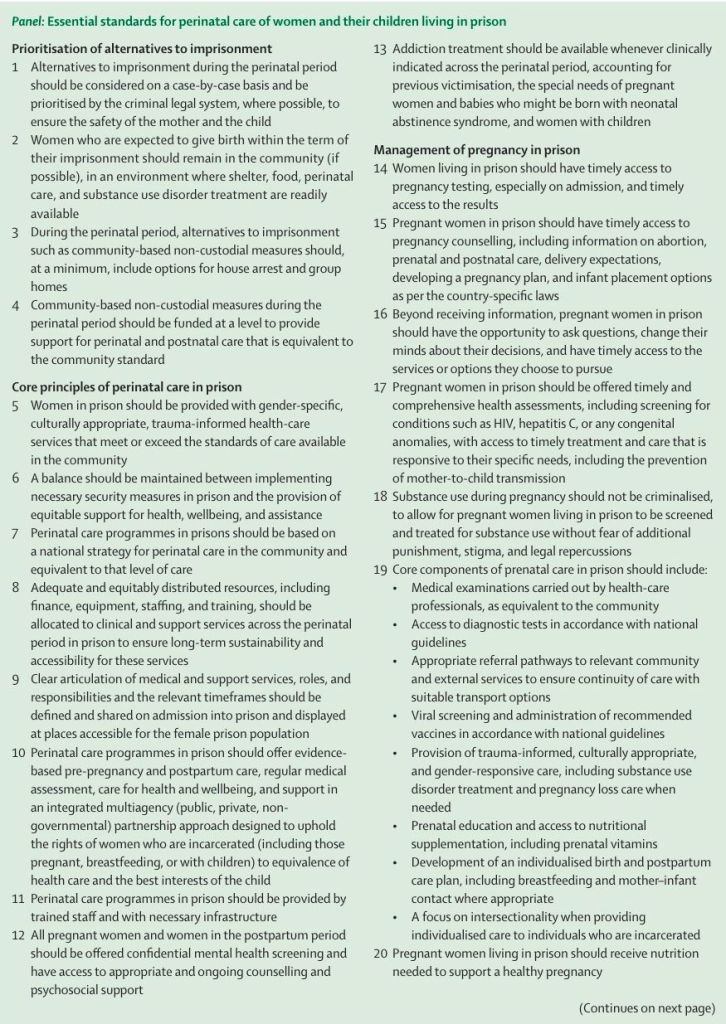
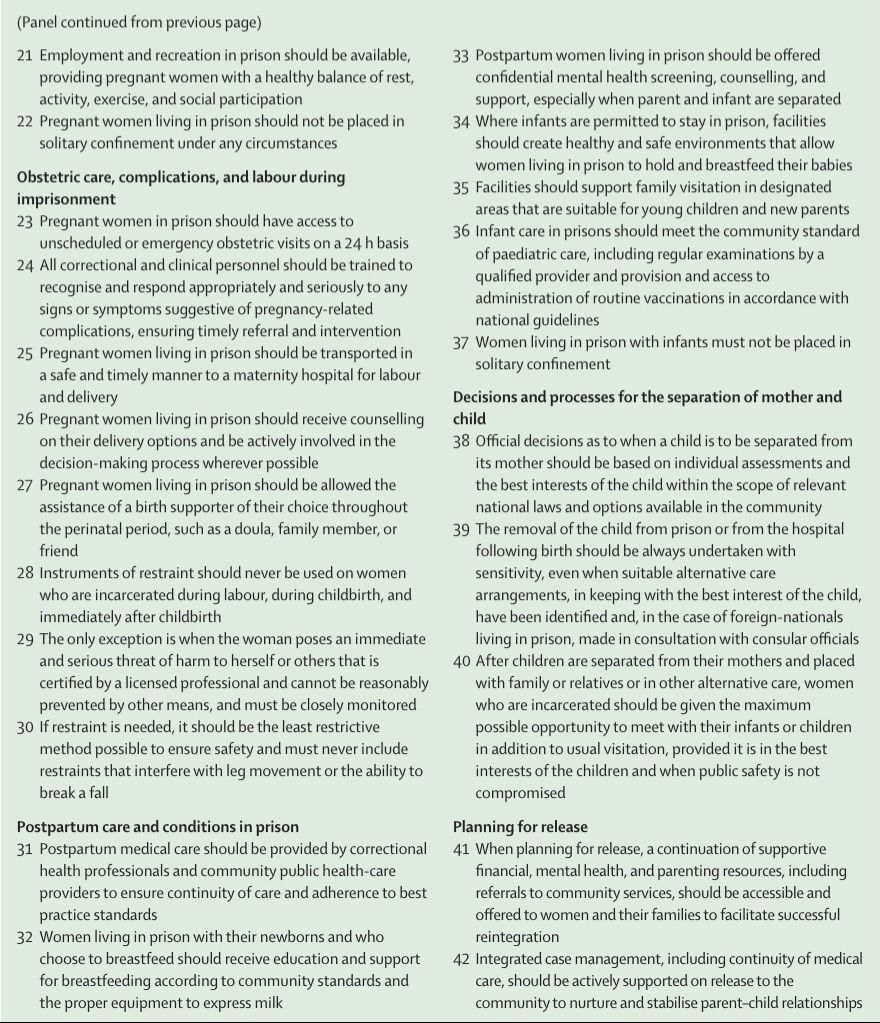
    Essential standards for perinatal care of women and children living in prison

    The female prison population continues to rise, with prisons worldwide failing to meet international human rights standards. Many are overcrowded, poorly resourced, and unsafe, especially for women. Women in prison are an obstetric group at high risk, with deficits in perinatal care leading to preventable maternal and child morbidity and mortality. Mother–child imprisonment and mother–child separation can have substantial intergenerational health and social consequences. In this Viewpoint, we present essential standards for perinatal care of women and children who are incarcerated, aligned to human rights obligations, prioritising alternatives to imprisonment, and where custodial sentences are applied, emphasising essential core best practices in prison (inclusion of prisons in national maternal health strategies, resourcing of prison facilities, services, staffing, and medical competencies, comprehensive medical management of pregnancy, obstetric and postpartum care, and release planning). To ensure the rights of women and children in diverse contexts are upheld, standards should be enforced through independent inspections, clinical audits, and integrated public and prison health monitoring of perinatal health outcomes.

    The global prison population has remained steady, at 11·5 million in 2025.1 However, the proportion of women who are incarcerated is continuing to rise at an alarming rate.1,2 More than 733 000 women and girls are incarcerated worldwide, with the female prison population increasing by 57% since 2000.1,2 Steep increases are observed in South America (Brazil), Central America (El Salvador and Guatemala), and southeast Asia (Cambodia and Indonesia). The USA has the highest number of women living in prison (approximately 174 607) in the world.2 Incarceration rates of women are generally underpinned by punitive responses to drug-related offences, offences directly or indirectly related to gender-based violence, and nonviolent, low-grade offences, often linked to poverty.1–3 Women who are incarcerated often have complex and substantial health needs, including psychiatric illness, substance dependence, and trauma,1,4 and might experience pregnancy and motherhood in prison.5–7

    Despite recognised international human rights norms and obligations regarding the treatment of all people who are incarcerated (eg, UN Standard Minimum Rules for the Treatment of Prisoners 19 and UN Rules for the Treatment of Women Prisoners and Non-Custodial Measures for Women Offenders20), many prisons worldwide fail to meet such standards and are overcrowded, poorly resourced, and unsafe, especially for women.1,21,22 National Preventive Mechanisms under the Optional Protocol to the Convention Against Torture and other Cruel, Inhuman and Degrading Treatment or Punishment (OP-CAT)23 and UN treaty body committees routinely document neglect and rights violations concerning the situation and treatment of pregnant women and mothers worldwide who are incarcerated.14

    Recognising these underlying drivers of disadvantage is essential to understanding the heightened vulnerability of pregnant women in detention and the need for comprehensive, rights-aligned reforms. There is growing international consensus that imprisonment of pregnant and postpartum women is rarely justified and is inconsistent with human rights obligations and the requirement to prioritise the best interests of the child.11–15,17,18 Decongestion measures, including through greater application and prioritisation of alternatives to imprisonment, and immediate, evidence-informed reforms to respect, protect, and fulfil maternal and paediatric health rights and outcomes in prisons are crucial.3,4,7,11–13,15,17,18,24,27–29 Evidence regarding communitybased alternatives remains scarce, yet what is available highlights their potential to reduce harms and strengthen continuity of perinatal care.12,14–17 Combined with identified risks associated with perinatal care in prison, including preventable maternal and neonatal morbidity and mortality, lack of emergency obstetric access, unsafe conditions, and trauma-exacerbated environments, these factors support the argument that non-custodial measures should be the presumptive response, with deprivation of liberty used only when no safe alternative exists.

    By encouraging equivalency of maternal and paediatric outcomes, in addition to care that is at least equivalent to that available in the community, and implementing integrated health care spanning community and prison, maternal and child health can be better protected and ensured. Greater investment in community health care, integration of lived experience, and monitoring of perinatal outcomes through independent oversight mechanisms are essential to reducing preventable morbidity and mortality among mothers and infants affected by the criminal legal system. Clinical audits and independent inspection mechanisms including those created by OP-CAT are crucial to monitoring prison standards and ensuring access to and quality of provided health care. Monitoring efforts help to ensure compliance with human rights and accountability and play an important part in supporting and ensuring positive perinatal health outcomes for mothers and children living in prison.14,22,24,28,29

    In this context, the work of non-governmental organisations (NGOs) in helping to implement the essential minimum standards of perinatal care for women and their children living in prison systems is of particular importance. For example, the international NGO Health through Walls operates globally to strengthen health care in prisons, by partnering with correctional systems in low-income countries to improve continuity of care, including access to medicines and diagnostic equipment, capacity building for support staff, and developing sustainable prison health systems. Their model integrates public, maternal, and paediatric health approaches with human rights obligations by working to address many of the gaps in implementation of such essential minimum standards of perinatal care and management in prisons.
    Sources;

    Lancet Public Health 2026; 11: e197–201

    Vol 11   March 2026

    Rating: 5 out of 5.

    5,536 hits

    Leave a comment

    𝙷𝚘𝚠 𝚖𝚎𝚍𝚒𝚌𝚒𝚗𝚎 𝚊𝚗𝚍 𝚑𝚎𝚊𝚕𝚝𝚑𝚌𝚊𝚛𝚎 𝚊𝚏𝚏𝚎𝚌𝚝 𝚞𝚜 𝚒𝚗 𝚝𝚑𝚎 𝚜𝚖𝚊𝚕𝚕𝚎𝚜𝚝 𝚘𝚏 𝚠𝚊𝚢𝚜 𝚕𝚎𝚊𝚍𝚒𝚗𝚐 𝚝𝚘 𝚋𝚒𝚐𝚐𝚎𝚛 𝚒𝚖𝚙𝚊𝚌𝚝𝚜 𝚊𝚗𝚍 𝚕𝚒𝚏𝚎-𝚌𝚑𝚊𝚗𝚐𝚒𝚗𝚐 𝚌𝚘𝚗𝚜𝚎𝚚𝚞𝚎𝚗𝚌𝚎𝚜! 𝚄𝚕𝚝𝚒𝚖𝚊𝚝𝚎𝚕𝚢, 𝚌𝚑𝚊𝚗𝚐𝚒𝚗𝚐 𝚠𝚑𝚊𝚝 𝚠𝚎 𝚌𝚊𝚕𝚕 ‘𝚑𝚎𝚊𝚕𝚝𝚑𝚌𝚊𝚛𝚎.’

    “Copyright [2024], [2025], [2026], [Scriveners], [Scriveners Online], All Rights Reserved. Any unauthorised duplication or use of this material is strictly prohibited.”

    ‘𝙰 𝚙𝚛𝚘𝚞𝚍 𝚖𝚎𝚍𝚒𝚌𝚊𝚕 𝚜𝚝𝚞𝚍𝚎𝚗𝚝’𝚜 𝚒𝚗𝚒𝚝𝚒𝚊𝚝𝚒𝚟𝚎 𝚊𝚗𝚍 𝚘𝚠𝚗𝚎𝚛𝚜𝚑𝚒𝚙!’‘

    Made for medical students by medical students ♡